
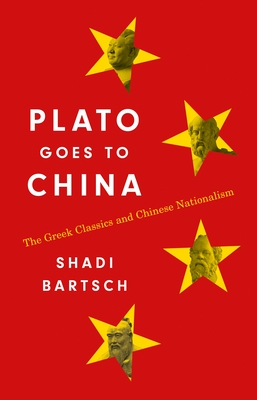
I recently read Shadi Bartsch‘s Plato Goes to China: The Greek Classics and Chinese Nationalism. The book’s topic is fascinating to me: the ways that modern Chinese intellectuals have taken up classical Greek philosophy. In some ways it made me feel oddly hopeful – that even under the totalitarian régime that has run China since 1989, it turns out that classical learning, even foreign classical learning, gets more respect than it does in the anti-intellectual United States. Unfortunately the book itself takes a highly unhelpful method of dealing with the topic: Bartsch spends a great deal of time telling you what’s wrong with the views of Chinese pro-government intellectuals. A Western audience really doesn’t need that: we’re already predisposed to be suspicious of that way of thinking. I wanted to learn about how the Chinese intellectuals themselves think – something I can’t get for myself, since my Chinese isn’t nearly good enough – and the book gives them very little time to speak in their own worlds.
But there was one thing the book sparked in me, which I don’t think was the author’s intent: an appreciation for the work of Leo Strauss.
Continue reading