• About me
  • About this blog
  • Comment rules
  • Other writings

Love of All Wisdom

~ Philosophy through multiple traditions

Love of All Wisdom

Tag Archives: 20th century

Hiding your ideas in plain sight

12 Sunday Apr 2026

Posted by Amod Lele in East Asia, German Tradition, Greek and Roman Tradition, Hermeneutics, Honesty, Metaphilosophy, Politics

≈ 16 Comments

Tags

20th century, Communism, conservatism, Gan Yang, Leo Strauss, Liu Xiaofeng, Shadi Bartsch

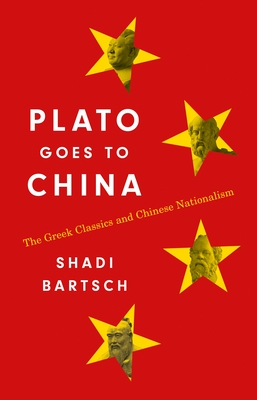
I recently read Shadi Bartsch‘s Plato Goes to China: The Greek Classics and Chinese Nationalism. The book’s topic is fascinating to me: the ways that modern Chinese intellectuals have taken up classical Greek philosophy. In some ways it made me feel oddly hopeful – that even under the totalitarian régime that has run China since 1989, it turns out that classical learning, even foreign classical learning, gets more respect than it does in the anti-intellectual United States. Unfortunately the book itself takes a highly unhelpful method of dealing with the topic: Bartsch spends a great deal of time telling you what’s wrong with the views of Chinese pro-government intellectuals. A Western audience really doesn’t need that: we’re already predisposed to be suspicious of that way of thinking. I wanted to learn about how the Chinese intellectuals themselves think – something I can’t get for myself, since my Chinese isn’t nearly good enough – and the book gives them very little time to speak in their own worlds.

But there was one thing the book sparked in me, which I don’t think was the author’s intent: an appreciation for the work of Leo Strauss.

Continue reading →

Don’t be an Ugly Canadian

05 Sunday Apr 2026

Posted by Amod Lele in Anger, Place, Politics

≈ 12 Comments

Tags

20th century, 21st century, Beothuk, Canada, David Graeber, David Wengrow, Donald Trump, Facebook, fascism, Mark Carney, Nazism, United States, war

The No Kings protest on Boston Common on March 28 was the first time in a long time that I’ve been to a protest march. I was moved by the joyful spirit of defiance there, and I thought especially of the Canadian anti-American anger that I wrote about a couple weeks before. I was moved to make a short video – amateurish by TikToker standards, no doubt, but sincere – aimed at Canadians, reminding them that we left-leaning Americans are as alarmed by Trump as they are. I shared it on Substack Notes as well as on Instagram, which posted it to Facebook in a way open to the public. The video went modestly viral (as in 600+ views on Facebook)… and of course, it drew many comments.

Meme created by author on imgflip, recreating an older meme I couldn’t find.

I am aware of the perils of open social-media comments sections, and as I read I was reminded of the attached meme. There were several heartwarming messages of support from both sides of the border, and at least as many juvenile trollish comments from Trump supporters – including many Canadian Trump supporters (a point that will be quite relevant to what follows). But I knew the Trump supporters were out there. The commenters who saddened me this time were other Canadians.

Continue reading →

Ambedkar and the Nation of Islam as skillful means

09 Sunday Nov 2025

Posted by Amod Lele in Hermeneutics, Islam, Method and Theory in the Study of Religion, Modernized Buddhism, Politics, Rites

≈ 5 Comments

Tags

20th century, B.R. Ambedkar, caste, Elijah Muhammad, Four Noble Truths, identity, Maharashtra, Malcolm X, Nation of Islam, race, United States, upāyakauśalya, W.D. Fard Muhammad

It’s hard for me to view B.R. Ambedkar as a real Buddhist, when he threw out the Four Noble Truths after getting to Buddhism by a mere process of elimination. But then, to a real Buddhist, it shouldn’t matter – at least it shouldn’t matter much – whether you are a “real Buddhist”! Buddhism has no more essence, no more svabhāva, than anything else does. What really matters is relieving suffering. What’s more important than his status as a Buddhist is that Ambedkar’s rejection of the Four Noble Truths deeply inhibits the relief of suffering – or rather, it has the potential to. Yet things might be a bit more complicated than that.

Continue reading →

Globalization was never inevitable

26 Sunday Jan 2025

Posted by Amod Lele in Economics, Politics

≈ Comments Off on Globalization was never inevitable

Tags

20th century, 21st century, Brian Mulroney, Canada, COVID-19, democracy, Donald Trump, Economist, European Union, George W. Bush, Jane Jacobs, Kofi Annan, Margaret Thatcher, Russia, Tony Blair, Ukraine, United States, war

Younger readers may not remember just what an aura of inevitability surrounded the idea of globalizing capitalism in the late 20th century. Former UN secretary-general Kofi Annan, in a 2002 award acceptance speech, proclaimed: “It has been said that arguing against globalization is like arguing against the law of gravity.” And he did not dispute this thing that “has been said”. Margaret Thatcher’s frequent slogan was “there is no alternative“. Tony Blair went so far as to say “I hear people say we have to stop and debate globalisation. You might as well debate whether autumn should follow summer.”

Continue reading →

Trump is a BJP-wala

19 Sunday Jan 2025

Posted by Amod Lele in Islam, Modern Hinduism, Modernized Buddhism, Politics, Protestantism, South Asia

≈ 7 Comments

Tags

20th century, 21st century, BJP, Donald Trump, fundamentalism, George W. Bush, identity, Martin Luther King Jr., religion, Tim Alberta, United States

When Donald Trump first rose to rapid popularity in American politics, many people were shocked and had no explanation. I was not among those people, for a couple of reasons. Among them: one way to make a new phenomenon comprehensible is analogy. And having watched Indian politics for a couple decades, I found it easy to say: Trump is a BJP-wala.

Continue reading →

What Hegelian e-girls understand and Ken Wilber doesn’t

11 Sunday Aug 2024

Posted by Amod Lele in Dialectic, German Tradition, Politics

≈ 5 Comments

Tags

20th century, 21st century, anna kw, Bill Clinton, G.W.F. Hegel, Iraq, Ken Wilber, Margaret Thatcher, New York City, Nicholas Thorne, Nikki the Hegelian, Plato, Ronald Reagan, Thrasymachus, Tony Blair, war

My fortysomething self is trying to come to grips with the apparent phenomenon of Hegelian e-girls (scroll down a bit on the linked page for details). I have still not really figured out exactly what an e-girl is in general: it often seems to involve having an anime-based appearance or aesthetic, like pink pigtails, but the girls in question here don’t look very anime to me.

anna kw and Nikki the Hegelian, from their Twitter feeds.

Specifically, the leading Hegelian e-girls appear to be two young New Yorkers on Twitter who go by anna kw and Nikki the Hegelian. There’s nothing particularly startling about two people combining a feminine online aesthetic with Hegelian philosophy on their own; the Internet is full of people who make a niche by combining one thing with another thing. What’s more striking is their apparent popularity: it appears that these two held a Hegelian e-girl event and 700 people RSVPed.

I don’t think that any of this is a joke. On the internet it is always so hard to tell who is being ironic or trolling. But as far as I can tell, anna and Nikki are serious about being Hegelian philosophers and are not making up the popularity of their event. If so, it feels to me like a really pleasant surprise. I’ve been hoping more young people would discover the continuing relevance of philosophy, but despite my own love for Hegel I would never have expected it would be him – not given the notorious difficulty of his work.

Continue reading →

How can we return to techno-optimism?

30 Sunday Jun 2024

Posted by Amod Lele in Economics, Politics

≈ 5 Comments

Tags

20th century, 21st century, Apple, European Union, Franklin Delano Roosevelt, Google, Lina Khan, Nick Bostrom, technology, Ted Gioia

The technological innovations of the last fifteen years, from advertising enshittifcation to AI cheating, have largely been a disaster. We are sadly at the point where, as Ted Gioia says, “most so-called innovations are now anti-progress by any honest definition.” I dare say that if we could revert all digital technology to where it was in 2009 – before the invention of the retweet – we’d all be better off.

I am not a hard techno-pessimist; I don’t think I could be. I love technology too much. I remember eras where technology was making our lives better; that was most of my life, the ’80s, the ’90s, and especially the ’00s. There’s no iron law that says technology has to make things worse, things have to enshittify. It’s just that they are currently doing so, have been doing so for over a decade. The question is how we change things back – not reverting back to old technology, but reverting back to a state where new technology serves rather than opposes human interests, where it is progress and not regress.

Continue reading →

The varieties of right-wing authoritarianism

11 Sunday Feb 2024

Posted by Amod Lele in Politics, Roman Catholicism

≈ 4 Comments

Tags

20th century, António de Oliveira Salazar, Benito Mussolini, Canada, conservatism, Curtis Yarvin, fascism, Filippo Marinetti, Marc Andreessen, Maurice Duplessis, N.S. Lyons, Portugal, Viktor Orbán

“Fascist” has long been a go-to pejorative to describe political enemies, especially for leftists like myself – I recall using it as a youth against hard libertarians like Mike Harris, even though they bore basically no similarity to fascism beyond the bare fact of being right-wing. But in those days there were very few politicians who had the authoritarianism or nativism characteristic of historical fascism. Today there are more – but it’s still rare for them to call themselves fascists. The word isn’t going to go away, and, it appears, neither are the new more-fascist-like breed of politicians and voters. So it’s probably helpful to think on what historical fascism actually was – the people who once actually called themselves fascists.

I got an education on historical fascism in Lisbon a few years ago, when I visited the Aljube Museum of Resistance and Freedom. The museum was devoted to the dark years 1932-1968 when Antonio de Oliveira Salazar ruled the country, and to the heroic struggles of citizens to fight against his rule – a difficult task when his authoritarianism went as far as the confiscation of typewriters. Salazar had everything I would have considered the hallmarks of fascism: he took dictatorial power over the government with no checks and balances; his não discutimos speech proclaimed there would be no debate over any ideas guiding the country; he had secret police spying on the people to stamp out dissent. None of this surprised me as I read it, until I read one additional thing:

The Fascists opposed Salazar.

Continue reading →

Introducing Canadian Hegelianism

04 Sunday Dec 2022

Posted by Amod Lele in German Tradition, Metaphilosophy, Politics

≈ 12 Comments

Tags

20th century, autobiography, Canada, Charles Taylor, Douglas Adams, G.W.F. Hegel, George Grant, James Doull, John Watson, José Enrique Rodó, Queen's University, Robert Sibley, United States

Hegel wrote about Canada just once, in the Lectures on the Philosophy of History, and what he said comes down to: mostly harmless. His main concern in that passage is the future power of the United States; having noted that the poor organization of the American colonies prevented them from conquering Canada, he then adds that Canada and Mexico “present no serious threat” to the US, and then moves on. It is scarcely more consideration than Voltaire’s dismissal of Canada as “a few acres of snow”; like the fictional Hitchhiker’s Guide to the Galaxy discussing Earth, Hegel pauses on Canada only long enough to say “you don’t need to worry about it.”

And yet, as Robert Sibley notes in beginning his fascinating Northern Spirits, English Canadian philosophers have had a deep, abiding and continuing interest in Hegel, unrequited as it may be – an interest not generally shared by other countries in the anglophone West. Canadian Hegelianism turns out to be its own philosophical tradition – one that’s played a significant role in my own philosophical formation. It is only in the 21st century that people like Sibley have started writing about this Canadian Hegelianism, but it’s been around for longer.

Continue reading →

Of perpetually vulnerable subjects

10 Sunday Apr 2022

Posted by Amod Lele in Early and Theravāda, Economics, Meditation, Mindfulness, Modernized Buddhism, Politics

≈ 21 Comments

Tags

20th century, Aśvaghoṣa, Glenn Wallis, Jon Kabat-Zinn, Margaret Thatcher, Rick Repetti, Ron Purser, Ronald Reagan, Siddhattha Gotama (Buddha), war

The scattershot application of “neoliberalism” is at its worst when the term gets applied to mindfulness meditation. We saw before how Ron Purser described mindfulness meditation as “neoliberal”. What is that supposed to mean? Modern meditation is frequently described as “neoliberal” in the Handbook of Mindfulness, which Purser coedited, and especially the closing essay by Glenn Wallis (which responds to a thoughtful defence of mindfulness by Rick Repetti in the same volume). Wallis’s piece is a good illustration of how a concept with some legitimate and meaningful uses can get bandied around so casually that it becomes completely specious. Here is Wallis:

You don’t have to look too closely to see that Mindfulness’s most recent progenitors are, of course, Ronald Reagan and Margaret Thatcher. As I mentioned earlier, Mindfulness has the same DNA and was raised on the same values that undergirds today’s neoliberal, consumer capitalist social structure (acceptance, resilience, self-help, etc.). So, of course Jon Kabat-Zinn [the creator of secularized and medicalized mindfulness meditation] cozies up to corporate CEOs and American military generals. (Wallis 499)

Continue reading →
← Older posts

Welcome to Love of All Wisdom.

I invite you to leave comments on my blog, even - or especially - if I have no idea who you are. Philosophy is a conversation, and I invite you to join it with me; I welcome all comers (provided they follow a few basic rules). I typically make a new post every Sunday. If you'd like to be notified when a new post is posted, you can get email notifications whenever I add something new via the link further down in this sidebar. You can also follow this blog on Facebook. Or if you use RSS, you can get updates through the RSS feed.

Recent Comments

  • Pail D. Van Pelt on Hiding your ideas in plain sight
  • Paul D. Van Pelt on Should we be polite to AIs?
  • Dennis Fischman on Should we be polite to AIs?
  • Dion Smith on Should we be polite to AIs?
  • Amod Lele on Should we be polite to AIs?

Subscribe to receive Love of All Wisdom by email:

Post Tags

20th century academia Alasdair MacIntyre Aristotle ascent/descent Augustine autobiography Buddhaghosa Canada Confucius conservatism Disengaged Buddhism Engaged Buddhism Evan Thompson expressive individualism Four Noble Truths Friedrich Nietzsche G.W.F. Hegel gender Hebrew Bible identity Immanuel Kant intimacy/integrity justice Karl Marx Ken Wilber law Martha C. Nussbaum modernity music mystical experience nondualism Pali suttas pedagogy Plato race rebirth religion Siddhattha Gotama (Buddha) technology theodicy United States utilitarianism Śaṅkara Śāntideva

Categories

  • African Thought (15)
  • Applied Philosophy (380)
    • Death (44)
    • Family (53)
    • Food (22)
    • Friends (21)
    • Health (33)
    • Place (37)
    • Play (18)
    • Politics (239)
    • Sex (25)
    • Work (48)
  • Asian Thought (459)
    • Buddhism (331)
      • Early and Theravāda (140)
      • Mahāyāna (140)
      • Modernized Buddhism (101)
    • East Asia (101)
      • Confucianism (62)
      • Daoism (22)
      • Shinto (1)
    • South Asia (148)
      • Bhakti Poets (3)
      • Cārvāka-Lokāyata (5)
      • Epics (16)
      • Jainism (24)
      • Modern Hinduism (45)
      • Nyāya-Vaiśeṣika (6)
      • Sāṃkhya-Yoga (16)
      • Sikhism (1)
      • Vedānta (42)
      • Vedas and Mīmāṃsā (7)
  • Blog Admin (28)
  • Indigenous American Thought (8)
  • Method (278)
    • Metaphilosophy (180)
    • Method and Theory in the Study of Religion (155)
  • Practical Philosophy (431)
    • Action (17)
    • Aesthetics (52)
    • Emotion (195)
      • Anger (42)
      • Attachment and Craving (32)
      • Compassion (9)
      • Despair (7)
      • Disgust (5)
      • Faith (20)
      • Fear (15)
      • Grief (9)
      • Happiness (52)
      • Hope (19)
      • Pleasure (37)
      • Shame and Guilt (10)
    • External Goods (55)
    • Flourishing (103)
    • Foundations of Ethics (126)
    • Karma (44)
    • Morality (79)
    • Virtue (187)
      • Courage (7)
      • Generosity (14)
      • Gentleness (7)
      • Gratitude (13)
      • Honesty (15)
      • Humility (27)
      • Leadership (7)
      • Mindfulness (24)
      • Patient Endurance (31)
      • Self-Discipline (10)
      • Serenity (39)
      • Zest (8)
  • Practice (146)
    • Karmic Redirection (5)
    • Meditation (47)
    • Monasticism (47)
    • Physical Exercise (4)
    • Prayer (16)
    • Reading and Recitation (14)
    • Rites (23)
    • Therapy (11)
  • Theoretical Philosophy (403)
    • Consciousness (23)
    • Deity (76)
    • Epistemology (141)
      • Certainty and Doubt (19)
      • Dialectic (21)
      • Logic (15)
      • Prejudices and "Intuitions" (31)
    • Free Will (18)
    • Hermeneutics (66)
    • Human Nature (34)
    • Metaphysics (115)
    • Philosophy of Language (31)
    • Self (78)
    • Supernatural (54)
    • Truth (64)
    • Unconscious Mind (16)
  • Western Thought (525)
    • Analytic Tradition (107)
    • Christianity (162)
      • Early Factions (8)
      • Eastern Orthodoxy (3)
      • Protestantism (27)
      • Roman Catholicism (61)
    • French Tradition (50)
    • German Tradition (97)
    • Greek and Roman Tradition (126)
      • Epicureanism (25)
      • Neoplatonism (2)
      • Pre-Socratics (6)
      • Skepticism (2)
      • Sophists (8)
      • Stoicism (22)
    • Islam (44)
      • Mu'tazila (2)
      • Salafi (3)
      • Sufism (10)
    • Judaism (38)
    • Natural Science (101)
      • Biology (31)
      • Philosophy of Science (50)
      • Physics and Astronomy (11)
    • Social Science (196)
      • Economics (48)
      • Psychology (85)

Recent Posts

  • Should we be polite to AIs?
  • Why teach virtue to a robot
  • Being marginalized doesn’t make you smarter
  • “The future will belong to the mestiza”
  • Hiding your ideas in plain sight

Popular posts

  • One and a half noble truths?
  • Wishing George W. Bush well
  • Do Speculative Realists want us to be Chinese?
  • Why I am not a right-winger
  • On faith in tooth relics

Basic concepts

  • Ascent and Descent
  • Intimacy and integrity
  • Ascent-descent and intimacy-integrity together
  • Perennial questions?
  • Virtuous and vicious means
  • Dialectical and demonstrative argument
  • Chastened intellectualism and practice
  • Yavanayāna Buddhism: what it is
  • Why worry about contradictions?
  • The first philosophy blogger

Personal favourites

  • Can philosophy be a way of life? Pierre Hadot (1922-2010)
  • James Doull and the history of ethical motivation
  • Praying to something you don't believe in
  • What does postmodernism perform?
  • Why I'm getting married

Archives

Search this site

All posts, pages and metadata copyright 2009-2026 Amod Lele unless otherwise noted. Comments copyright 2009-2026 their comment authors. Creative Commons Attribution-NonCommercial-ShareAlike (BY-NC-SA) licence.

Proudly powered by WordPress Theme: Chateau by Ignacio Ricci.