
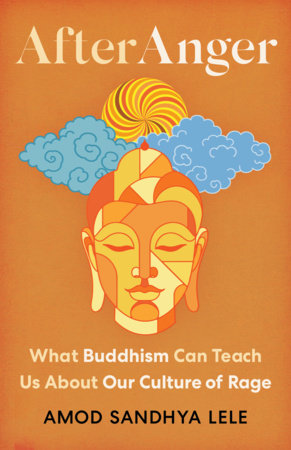
In a world quick to embrace anger, discover a profound philosophical defense of Buddhist serenity. A timely exploration of mindfulness, justice, and the power of inner peace.
Against the rising tide of rage in contemporary discourse, After Anger challenges the popular assumption that anger is necessary to combat injustice and promote a more peaceful world. Drawing from classical Buddhist meditation teachings, Stoic wisdom, Western philosophy, and psychological studies, Amod Sandhya Lele presents a compelling case for mindful serenity as a path to both personal and social peace.
Lele constructs a robust framework for understanding why serenity matters. He expertly dismantles arguments promoting anger as a tool for social justice while offering a nuanced perspective on how mindfulness can serve both individual well-being and collective progress. Through vivid narratives—from the Indian Mahābhārata epic and the life of Kurt Cobain, to the author’s own experiences with racial prejudice—Lele shows why anger cannot be the transformative agent for justice many hope it to be. After Anger speaks directly to those questioning the efficacy of mindfulness in an age of high-stakes global crises, revealing the contemporary relevance of ancient Buddhist teachings and offering practical wisdom for anyone seeking to reduce their mental suffering without sacrificing their commitments to justice and social progress.
After Anger, my first book, will be released on 24 November 2026. You can preorder it now through Barnes & Noble, Amazon, or an independent bookstore near you. It’s written to be friendly and accessible for a popular audience – you don’t need to be a Buddhism specialist or even a Buddhist – but it keeps up scholarly rigour, with many endnotes and bibliography for anyone who wants to check my work.
Praise for After Anger:
“Drawing effectively on his own experience as a practitioner and as a target of harm, on careful readings of Buddhist philosophy, and on clear philosophical and psychological reflection, Amod Lele presents us with the most precise, detailed, and convincing contemporary analyses of anger and its disadvantages, as well as of serenity and its advantages. Nobody who reads this will ever valorize anger again; nobody who reads this will fail to understand the target state of serenity and why it is so valuable.” —Jay Garfield, professor of philosophy, Smith College, and author of Losing Ourselves: Learning to Live without a Self and Buddhist Ethics: A Philosophical Exploration
“Amod Lele has a very distinct and special voice, not only on Buddhist ethics but pretty much on everything. When I want to suggest someone to read, I say, ‘Go read Amod Lele.’ Now I know a book to which to send them. This is special. This is very special.” —Jeffrey J. Kripal, professor of religion, Rice University, and author of Authors of the Impossible: The Paranormal and the Sacred, The Flip: Epiphanies of Mind and the Future of Knowledge, and How to Think Impossibly: About Souls, UFOs, Time, Belief, and Everything Else
“Amod Lele’s After Anger is a carefully argued, eminently readable defense of the Buddhist practices that work to diminish suffering by countering passionate craving and aversion. The pursuit of a mindful self-awareness that brings mental composure is growing in popularity, but it has many doubters and detractors, especially on the political Left. Lele articulates beautifully the arguments in favor of patience or serenity, and provides trenchant replies to a wide range of critiques and misconceptions. This philosophical stabilization is not just a powerful, sustained treatment of an important issue; it is an elegant counter to thinking that might prevent a forward step.” —Jonathan C. Gold, professor of religion, Princeton University, and author of The Dharma’s Gatekeepers: Sakya Paṇḍita on Buddhist Scholarship in Tibet and Paving the Great Way: Vasubandhu’s Unifying Buddhist Philosophy
“In a time of growing political fragmentation, racial mistrust, misogyny, homophobia, and lurking fears of social upheaval and climate collapse, Amod Lele’s deep investigation of mindful serenity comes as a needed antidote. Grounded in his mastery of classical Buddhist teachings and a broad survey of contemporary writings on mindfulness, anger management, and the Serenity Prayer of twelve-step fame, this study is not a recipe for withdrawal and retreat. Lele is a socially engaged scholar who recognises the urgency of our need for cultural healing born of active compassion and resolute inner peace.” —Christopher S. Queen, Professor Emeritus, Harvard University, and editor of Engaged Buddhism: Buddhist Liberation Movements in Asia and Engaged Buddhism in the West