• About me
  • About this blog
  • Comment rules
  • Other writings

Love of All Wisdom

~ Philosophy through multiple traditions

Love of All Wisdom

Tag Archives: Maharashtra

Ambedkar and the Nation of Islam as skillful means

09 Sunday Nov 2025

Posted by Amod Lele in Hermeneutics, Islam, Method and Theory in the Study of Religion, Modernized Buddhism, Politics, Rites

≈ 5 Comments

Tags

B.R. Ambedkar, caste, Elijah Muhammad, Four Noble Truths, identity, Maharashtra, Malcolm X, Nation of Islam, race, United States, upāyakauśalya, W.D. Fard Muhammad

It’s hard for me to view B.R. Ambedkar as a real Buddhist, when he threw out the Four Noble Truths after getting to Buddhism by a mere process of elimination. But then, to a real Buddhist, it shouldn’t matter – at least it shouldn’t matter much – whether you are a “real Buddhist”! Buddhism has no more essence, no more svabhāva, than anything else does. What really matters is relieving suffering. What’s more important than his status as a Buddhist is that Ambedkar’s rejection of the Four Noble Truths deeply inhibits the relief of suffering – or rather, it has the potential to. Yet things might be a bit more complicated than that.

Continue reading →

My complicated relationship with B.R. Ambedkar

02 Sunday Nov 2025

Posted by Amod Lele in Hermeneutics, Method and Theory in the Study of Religion, Modern Hinduism, Modernized Buddhism, Politics, Sikhism

≈ 7 Comments

Tags

autobiography, B.R. Ambedkar, caste, Four Noble Truths, identity, Maharashtra, Narendra Modi, race

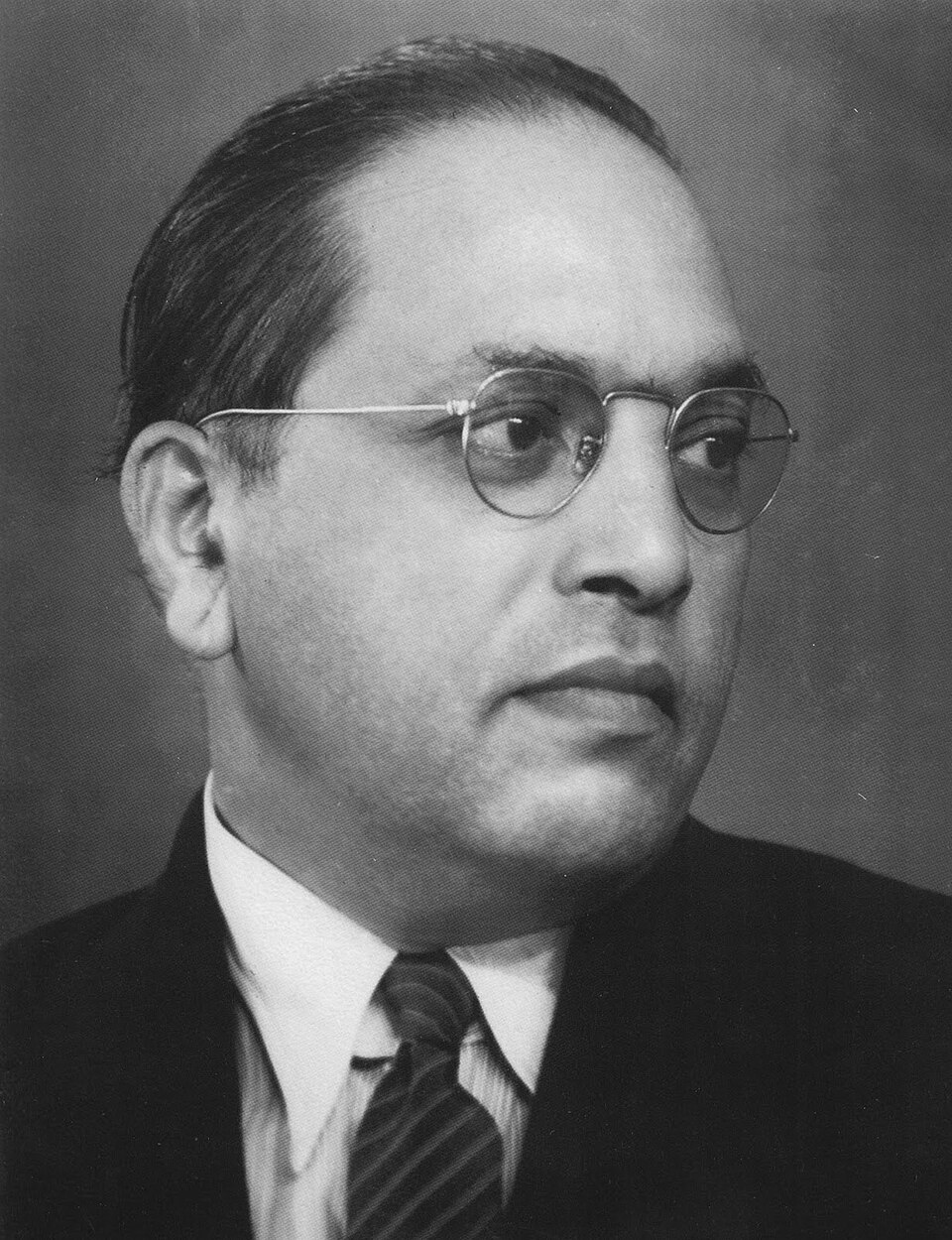
Public-domain image of Ambedkar.

Dr. Ambedkar, the 20th-century leader of the lowest (“Dalit”, formerly “untouchable”) Indian caste groups, might be having a moment. In my Indian philosophy class in 2019, I wanted to have a segment on modern Indian philosophy, so I introduced the students to Gandhi and to Ambedkar as a critic of Gandhi – and was interested to see how the students absolutely loved Ambedkar. This year, I attended a fascinating workshop at Princeton on black Buddhist perspectives, where Ambedkar probably played a larger role than any other figure, even the Buddha himself. I’m glad to see black Americans discovering Ambedkar, since there are such close analogies between American race and Indian caste – already observed by Martin Luther King. A recent Economist article now mentions that even Narendra Modi is trying to proclaim Ambedkar as an ally for his militant Hindu agenda – a claim that should be laughable, given Ambedkar’s clearly expressed hostility to Hinduism, but an understandable attempt given Ambedkar’s huge popularity in India: there are now more statues of Ambedkar than any other Indian political figure, including Nehru, Gandhi and Aśoka.

I find Ambedkar overall a very admirable figure – both his personal story of rising through the ranks intellectually and becoming a leader, and his accomplishments. I also find his approach to caste more sensible than the American approach to race, one that Americans could learn a lot from. My late father admired him greatly. He is also a figure who makes me personally uncomfortable – perhaps in a good way.

Continue reading →

Annihilation of caste and race

30 Sunday Mar 2025

Posted by Amod Lele in Family, Modern Hinduism, Politics, South Asia

≈ 4 Comments

Tags

B.R. Ambedkar, Bhagavad Gītā, caste, dharmaśāstra, identity, Maharashtra, Quico Toro, race, United States, Venezuela

The analogy between Indian caste and American race – an analogy recognized by Martin Luther King, among others – is important for a number of reasons. Not least of these is that when you observe how a different society handles a similar problem, you can see how parochial your own society’s approach might have been.

I was struck by this point in reading the work of B.R. Ambedkar, the famous advocate for the rights of India’s lowest caste groups (formerly called “untouchables” and now called “scheduled caste” or SC, referred to by Ambedkar as Dalit or “oppressed”). The particular work of Ambedkar’s I was reading was a famous undelivered speech entitled Annihilation of Caste.

Continue reading →

Of races and other castes

08 Sunday Oct 2023

Posted by Amod Lele in Family, Modern Hinduism, Politics

≈ Comments Off on Of races and other castes

Tags

autobiography, caste, Cornell University, Isabel Wilkerson, Jayant Lele, Maharashtra, race, United States

While studying development sociology at Cornell in my early twenties, I took a trip to see my Marathi family in India. I was pleasantly sipping tea with older relatives whom my father was making conversation with.

“One of Amod’s colleagues in his graduate program is Marathi,” he said. The family members nodded appreciatively and expressed their approval.

“And her name is Rukmini,” he added. The family nodded appreciatively again. “Ah! Rukmini! Very nice.”

Wanting to add to the conversation, I chimed in: “Yes, Rukmini Potdar.”

Suddenly the tone in the room took a dramatic shift. “Oh, Potdar,” one of them spat as they all rolled their eyes and shook their heads. I looked around in bewilderment – what was so wrong with being called Potdar? – but no further explanation came up. The conversation just moved on to different topics.

After we left, I turned to my father. “What happened there?” I asked him. Rukmini was a perfectly nice person and Potdar seemed to me a perfectly nice name. What did they have to object to?

“Well,” he said, “Rukmini is a nice old-fashioned Marathi name, so they appreciated that. But Potdar is a Bania name.”

I had stumbled into the world of modern Indian caste prejudice.

Continue reading →

Digital philosophy

16 Sunday Jun 2013

Posted by Amod Lele in Friends, Metaphilosophy, Social Science

≈ 10 Comments

Tags

academia, Aristotle, Elisa Freschi, lokatakki (commenter), Maharashtra, Matt Wilkens, Mencius, Randall Collins, skholiast (blogger), technology

The term digital humanities has quickly become trendy over the past couple years. The term has often excited me, since digital technology in the humanities is both a part of what I do for a living, and what makes my humanistic scholarship on this blog possible. So I’ve followed discussions of digital humanities, such as the HUMANIST mailing list, with interest.

I remain deeply interested in the field, but I’ve also begun to acquire some skepticism toward it. Continue reading →

Coming to like modern India

03 Sunday Feb 2013

Posted by Amod Lele in Aesthetics, Family, Food, Modern Hinduism, Place, Pleasure, Rites

≈ 8 Comments

Tags

architecture, autobiography, Maharashtra, Thailand

This post will be a little less philosophical, strictly speaking at least, than is usual here. Readers have found my autobiographical explorations interesting in the past, and I hope this will be similarly so.

I recently returned from India, to have a traditional Indian wedding ceremony. (I’ve been married for two and a half years, but my Indian friends and relatives could not attend that ceremony, nor did it have Indian gods presiding over it.) It’s an unfortunate irony that I have been able to get to India much less frequently ever since I started studying it. My previous trip was at the beginning of 2005; it had been eight years between that trip and the one I just returned from, whereas in my childhood the years between trips were no more than three. And I’m very glad to have had this trip, for it made quite a different impression on me from the previous ones. Continue reading →

Indian intimacy

27 Sunday Jan 2013

Posted by Amod Lele in Confucianism, Early and Theravāda, Family, Jainism, Modern Hinduism, Monasticism, Rites, Social Science

≈ Comments Off on Indian intimacy

Tags

ascent/descent, autobiography, Chad Hansen, intimacy/integrity, Joel Kotkin, Maharashtra, Max Weber, Mozi, puruṣārthas, Thomas P. Kasulis

I’m back from a trip to see my family in India, and have an Indian wedding ceremony. It was wonderful to see everyone there, and it also got me thinking.

When I wrote recently about my Indian background, I put some emphasis on how having an Indian background could be misleading in trying to understand Indian philosophy. It had taken me longer to see that Indian philosophy has an integrity orientation because after living in modern India, I’d spent a long time thinking of India as having an intimacy orientation.

But in my excitement over that realization, I think I’d forgotten that I’d held an intimacy view of India for a reason. Continue reading →

The Catholic Pauls against nondualism

04 Wednesday Aug 2010

Posted by Amod Lele in Bhakti Poets, Foundations of Ethics, French Tradition, Judaism, Mahāyāna, Method and Theory in the Study of Religion, Modern Hinduism, Modernized Buddhism, Morality, Roman Catholicism, Self, Sufism, Vedānta

≈ 62 Comments

Tags

Advaita Vedānta, al-Hallāj, Eknath, Emmanuel Lévinas, Hugh van Skyhawk, Maharashtra, nondualism, Paul Hacker, Paul J. Griffiths, Paul Williams, Ramprasad Sen, Śāntideva, Swami Vivekānanda, T.R. (Thill) Raghunath, Upaniṣads, Wilhelm Halbfass

A curious phenomenon in the study of South Asian and especially Buddhist traditions is the number of Catholic scholars named Paul who have approached these traditions – and especially what Skholiast has called their ātmanism – with a critical eye. The two thinkers I have primarily in mind are the late Paul Hacker (whom I discussed last time, and the living Paul Williams. (The thought of Paul J. Griffiths, who moved in his writings from Buddhology to Catholic theology, bears a strong resemblances to these other Pauls, though I have less to say about him today.) That these men are all named Paul can only be a coincidence. That they are all Catholic is less so; for there are striking affinities in the ways that they (in many respects independently of one another) approach South Asian and Buddhist tradition, affinities that are far less coincidental.
Continue reading →

Welcome to Love of All Wisdom.

I invite you to leave comments on my blog, even - or especially - if I have no idea who you are. Philosophy is a conversation, and I invite you to join it with me; I welcome all comers (provided they follow a few basic rules). I typically make a new post every Sunday. If you'd like to be notified when a new post is posted, you can get email notifications whenever I add something new via the link further down in this sidebar. You can also follow this blog on Facebook. Or if you use RSS, you can get updates through the RSS feed.

Recent Comments

  • Sandhya Lele on The world of the women’s room
  • Nathan on The world of the women’s room
  • Nathan on In praise of alcohol
  • Amod Lele on Do you need anger for respect and accountability?
  • Nathan on Do you need anger for respect and accountability?

Subscribe by Email

Post Tags

20th century academia Alasdair MacIntyre Aristotle ascent/descent Augustine autobiography Buddhaghosa Canada Confucius conservatism Disengaged Buddhism Engaged Buddhism Evan Thompson expressive individualism Four Noble Truths Friedrich Nietzsche G.W.F. Hegel gender Hebrew Bible identity Immanuel Kant intimacy/integrity justice Karl Marx Ken Wilber law Martha C. Nussbaum modernity music mystical experience nondualism Pali suttas pedagogy Plato race rebirth religion Siddhattha Gotama (Buddha) technology theodicy United States utilitarianism Śaṅkara Śāntideva

Categories

  • African Thought (15)
  • Applied Phil (365)
    • Death (44)
    • Family (53)
    • Food (22)
    • Friends (21)
    • Health (32)
    • Place (35)
    • Play (17)
    • Politics (225)
    • Sex (23)
    • Work (45)
  • Asian Thought (456)
    • Buddhism (330)
      • Early and Theravāda (139)
      • Mahāyāna (140)
      • Modernized Buddhism (100)
    • East Asia (99)
      • Confucianism (61)
      • Daoism (22)
      • Shinto (1)
    • South Asia (147)
      • Bhakti Poets (3)
      • Cārvāka-Lokāyata (5)
      • Epics (16)
      • Jainism (24)
      • Modern Hinduism (44)
      • Nyāya-Vaiśeṣika (6)
      • Sāṃkhya-Yoga (16)
      • Sikhism (1)
      • Vedānta (42)
      • Vedas and Mīmāṃsā (7)
  • Blog Admin (28)
  • Indigenous American Thought (8)
  • Method (275)
    • Metaphilosophy (177)
    • Method and Theory in the Study of Religion (155)
  • Practical Philosophy (423)
    • Action (16)
    • Aesthetics (52)
    • Emotion (189)
      • Anger (39)
      • Attachment and Craving (32)
      • Compassion (9)
      • Despair (7)
      • Disgust (5)
      • Faith (20)
      • Fear (15)
      • Grief (9)
      • Happiness (49)
      • Hope (18)
      • Pleasure (36)
      • Shame and Guilt (10)
    • External Goods (53)
    • Flourishing (100)
    • Foundations of Ethics (124)
    • Karma (44)
    • Morality (78)
    • Virtue (182)
      • Courage (7)
      • Generosity (14)
      • Gentleness (6)
      • Gratitude (12)
      • Honesty (14)
      • Humility (26)
      • Leadership (7)
      • Mindfulness (23)
      • Patient Endurance (30)
      • Self-Discipline (10)
      • Serenity (38)
      • Zest (8)
  • Practice (144)
    • Karmic Redirection (5)
    • Meditation (47)
    • Monasticism (46)
    • Physical Exercise (4)
    • Prayer (16)
    • Reading and Recitation (13)
    • Rites (23)
    • Therapy (11)
  • Theoretical Philosophy (395)
    • Consciousness (22)
    • Deity (76)
    • Epistemology (139)
      • Certainty and Doubt (18)
      • Dialectic (19)
      • Logic (15)
      • Prejudices and "Intuitions" (31)
    • Free Will (18)
    • Hermeneutics (63)
    • Human Nature (34)
    • Metaphysics (115)
    • Philosophy of Language (30)
    • Self (78)
    • Supernatural (54)
    • Truth (62)
    • Unconscious Mind (16)
  • Western Thought (511)
    • Analytic Tradition (104)
    • Christianity (162)
      • Early Factions (8)
      • Eastern Orthodoxy (3)
      • Protestantism (27)
      • Roman Catholicism (61)
    • French Tradition (50)
    • German Tradition (94)
    • Greek and Roman Tradition (123)
      • Epicureanism (25)
      • Neoplatonism (2)
      • Pre-Socratics (6)
      • Skepticism (2)
      • Sophists (8)
      • Stoicism (22)
    • Islam (43)
      • Mu'tazila (2)
      • Salafi (3)
      • Sufism (10)
    • Judaism (38)
    • Natural Science (101)
      • Biology (31)
      • Philosophy of Science (50)
      • Physics and Astronomy (11)
    • Social Science (188)
      • Economics (43)
      • Psychology (83)

Recent Posts

  • The world of the women’s room
  • Do you need anger for respect and accountability?
  • In praise of alcohol
  • Who were the Magi?
  • Answering objections to transracialism

Popular posts

  • One and a half noble truths?
  • Wishing George W. Bush well
  • Do Speculative Realists want us to be Chinese?
  • Why I am not a right-winger
  • On faith in tooth relics

Basic concepts

  • Ascent and Descent
  • Intimacy and integrity
  • Ascent-descent and intimacy-integrity together
  • Perennial questions?
  • Virtuous and vicious means
  • Dialectical and demonstrative argument
  • Chastened intellectualism and practice
  • Yavanayāna Buddhism: what it is
  • Why worry about contradictions?
  • The first philosophy blogger

Personal favourites

  • Can philosophy be a way of life? Pierre Hadot (1922-2010)
  • James Doull and the history of ethical motivation
  • Praying to something you don't believe in
  • What does postmodernism perform?
  • Why I'm getting married

Archives

Search this site

All posts, pages and metadata copyright 2009-2026 Amod Lele unless otherwise noted. Comments copyright 2009-2026 their comment authors. Creative Commons Attribution-NonCommercial-ShareAlike (BY-NC-SA) licence.

Proudly powered by WordPress Theme: Chateau by Ignacio Ricci.