
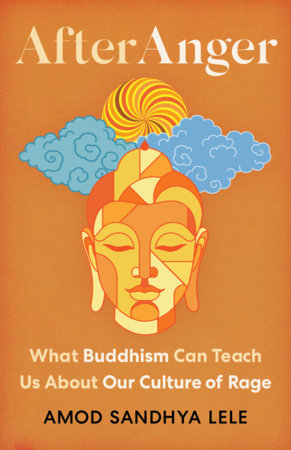
Readers, I’m delighted to announce that my first book is officially scheduled for publication! It’ll come out in November but you can preorder it now, and I would really like to encourage you to do so if you’re interested: preorder numbers encourage bookstores to order more copies, which will help the book do well. I am particularly delighted that the book is coming out with Shambhala Publications – the esteemed Buddhist publisher of Ken Wilber, whose work has inspired a ton of this blog’s reflection, and Pema Chödrön, whom I’ve increasingly found a powerful source of wisdom.
The book will be called After Anger: What Buddhism Can Teach Us About Our Culture of Rage, and it philosophically defends Buddhist ideals of mindful serenity – but you don’t have to be a Buddhist to believe it. The book starts out by jumping into contemporary debates on race and gender – where Myisha Cherry’s The Case for Rage and Amia Srinivasan’s “The aptness of anger”, among others, have argued that anger is a helpful or appropriate response to racial and gender injustice. Drawing on contemporary psychology and on Stoic philosophers like Seneca as well as Buddhists like Śāntideva, I show that anger’s benefits are much smaller, and its harms much greater, than these defenders claim. I make a few qualifications to the point – like transition-anger – but against our contemporary culture that proclaims “If you’re not outraged you’re not paying attention”, the book shows that in general anger is a bad thing.
The most important qualification is that repressing anger can be worse than expressing it: if you just suppress the outward expression of anger but keep the anger inside, that can lead you to passive aggression or other forms of harm that are even more serious. So, the book argues, we need to reduce anger at its roots – in the feeling of mental suffering that comes when we don’t get what we want. But of course that’s easier said than done: how can we actually reduce that suffering?
On that question, too, our contemporary culture of rage gets it wrong. Here too, too often we put the blame on our external social or political circumstances – on insults or material deprivation. But the book shows why that blame doesn’t work. Compare the lives of Kurt Cobain and Anthony Bourdain, on one hand, with the life of Thich Quang Duc on the other. All three ended their lives deliberately – but where Cobain and Bourdain had every material advantage one could imagine yet still found their lives not worth living, Quang Duc remained calm and serene while literally on fire. (Serenely On Fire was my original proposed title for the book, and it’s more descriptive of the book’s overall content, but I trust the publisher’s judgement that the anger-based title is going to get more people noticing the book.) The examples show that our mental suffering comes not from bad external circumstances, but from the interaction of those circumstances with our own states of craving and resistance – states tragically strong in the minds of Cobain and Bourdain, but which Quang Duc had tamed with a lifetime of training.
So, I argue, we need to tame our craving and resistance as well, with the virtue of mindfulness essential to that taming. We may not want to go to Quang Duc’s extreme (or even to the level of a more normal monk), but we do need to tame those troublesome mental tendencies even in a worldly life. We do still need enough resistance to change the things we can – but no more. For this reason I discuss the Serenity Prayer in close connection with a similar verse of Śāntideva’s – noting that it’s important to know the difference between what we can change and what we can’t, but even in the former case it’s important to reduce our mental suffering.
The book is aimed at a popular audience (and multiple editors have helped me stick to that), so you should find it at least as accessible as this blog, probably more so. It is also written as a serious scholarly argument, with copious endnotes so you can check that I’m not making things up – but you can skip them if that’s not your thing.
Longtime Love of All Wisdom readers with strong memories may recall that I had already said I was working on a book six years ago. It is the same book project that I said I was working on then – this project will have been more than eight years start to finish – but the book has taken a very different turn over the six years since I wrote that. My older idea was to defend eudaimonism – the idea that virtue helps us flourish as human beings. As is the case with so many early ideas, that one turned out to be too big for one book. I narrowed in on the specific virtue that Śāntideva calls kṣānti – which is most commonly rendered “patient endurance” in English, but which I translate “serenity” to highlight the connection to the Serenity Prayer.
If you intend to buy the book, I request that you preorder it from a service of your choosing – as the more preorders it gets, the more bookstores are likely to stock it. And I’m really hoping a lot of them do. That’s not about the money – I can’t realistically imagine a world where this book makes me any amount comparable to what I make at my day job – but it is about getting the book seen by people who wouldn’t otherwise. I do happen to think that the book’s message is one the world really needs right now, and I would really like to get it out in front of as many people as possible. If you can help me with that, I’ll be grateful.
Wow, congratulations!
Thank you!
Fabulous! I love the cover and will send this notice out to family and friends.
Looking forward to our book launch in Kingston in December!
Love
Dorothy
Congratulations, Amod! I’m looking forward to reading your book.
Thank you! I hope you enjoy it.
It’s great to read this update about the book! I wonder whether you directly respond in the book to Lama Rod Owens’s 2020 book Love and Rage: The Path of Liberation through Anger? His book title and yours form quite a juxtaposition.
That one’s an interesting one: I read Owens’s book and planned to respond to it, but in the end I didn’t. (I think I allude to it offhandedly but don’t take it on directly.) The reason is that when I read Owens I actually found myself agreeing with more of him than I expected to! The title of his book is something of a misnomer – while he’s not anti-anger, his book is really not an argument for anger, but actually more about keeping it under control. The relatively few things he says in praise of anger are spelled out in more detail by people like Myisha Cherry, so the book’s much more of a response to them.
Pingback: The gap is not glorious | Love of All Wisdom
Pingback: The gap is not glorious – The Indian Philosophy Blog