
Tags
Abe Masao, anxiety, Frans de Waal, Jane Goodall, Japan, Ken Wilber, Kyoto School, Madhyamaka, nonhuman animals
I’ve been moving toward a more East Asian form of Buddhism over the past few years: the kind influenced by Daoism to be gentler, less judgemental, more oriented to the present moment, in a way that improves on Śāntideva’s military metaphors. A decade ago I had told myself “fuck Daoism”, but now I’m trying to learn more from the great Daoist Zhuangzi and the Japanese philosophical Kyoto School.
A couple weeks ago, though, I read an essay by the Kyoto School’s Abe Masao, and it reminded me why I’d said “fuck Daoism” in the first place.
The essay in question is in the marvelous anthology The Buddha Eye, which is the best starting point I’ve found for learning the Kyoto School’s ideas. Influenced as they were by complex German thinkers like Hegel and Heidegger, the Kyoto School’s ideas can often feel difficult enough to be impenetrable; one wonders what exactly they’re getting at. The essays in the Buddha Eye volume give you a much better idea of the Kyoto School’s practical upshot, what their ideas come to mean for life. I was particularly blown away by Nishitani Keiji’s wonderful “Science and Zen”, which I hope to write about another time.
But, cranky bastard that I am, I often feel more inspired to write refuting things that are wrong than celebrating things that are right. Abe Masao’s article “Emptiness is suchness”, it turns out, is very much in the former category, and that’s what I’m writing about today. (Abe – pronounced AH-bay – is his family name, which comes before the personal name in Japan, though his name is often written “Masao Abe”, according to Western custom, because he spent more time in the West than other Kyoto philosophers did.)
The fundamental mistake that Abe advocates in “Emptiness is suchness” is to say we should be more like nonhuman animals. His views are informed by a naïve romanticism of what animals are like. He says:
A dog has no sense of superiority over a cat, a cat no sense of inferiority to a dog, We human beings may think that plants and animals entertain such thoughts, but this is merely a projection of human capacities onto the non-human dimension. In fact, plants and animals do not have such a mode of consciousness; they just live naturally, without any sense of evaluation. (Buddha Eye 209)
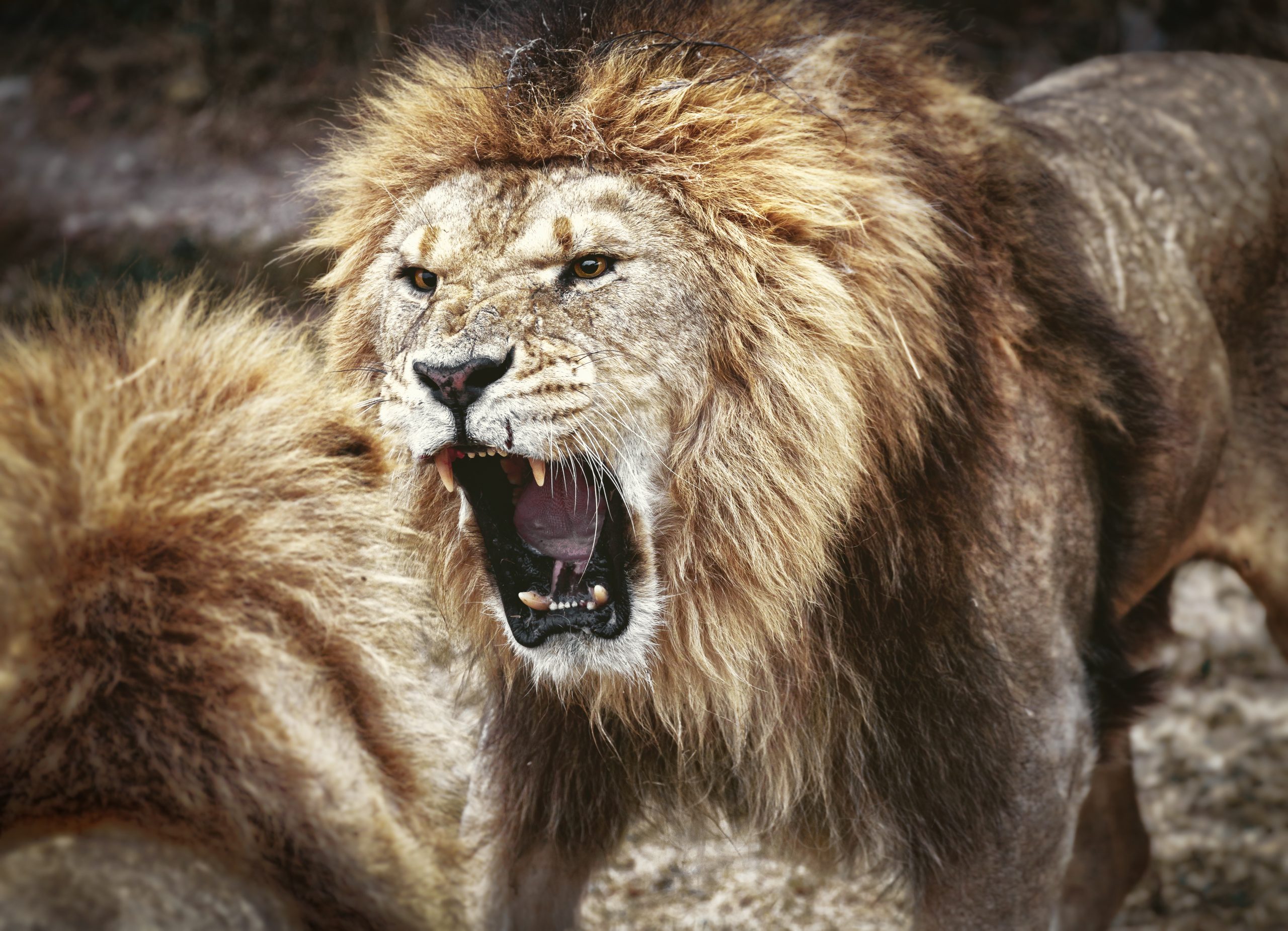
Abe provides no evidence for these assertions – which are, in fact, false. Dogs, like the wolves from which they have descended, often fight among each other for dominance – for social superiority. In his brilliant Chimpanzee Politics, primatologist Frans de Waal pointed out decades ago that chimps fight to establish superiority among each other in ways that can even lead them to murder. Around the same time, Jane Goodall observed chimps fighting a war. de Waal and Goodall were both criticized at the time for “anthropomorphism” – that is, for what Abe calls “a projection of human capacities onto the non-human dimension” – but their views have regularly been vindicated by evidence showing the continuity of human motivations with those of other animals. If anything, post-Christian Westerners haven’t anthropomorphized enough; we’ve falsely seen ourselves as something wholly set apart from nonhuman animals. I observe this as I take the same psych meds as my dog, for a condition of anxiety: our brains work in very similar ways, and often unhealthy ones.
Abe, meanwhile, tries to tell us anxiety is something that “plants and animals do not have. Only human beings are not ‘just as they are.'” (210) The “just as they are” is Abe’s distortion of the traditional Madhyamaka Buddhist doctrine of emptiness or zero-ness (śūnyatā):
I think that ‘Everything is empty’ may be more adequately rendered in this way: ‘Everything is just as it is.’ A pine tree is a pine tree, a bamboo is a bamboo, a dog is a dog, a cat is a cat, you are you, I am I, she is she…. so long as one and everything retain their uniqueness and particularity, they are free from conflict among themselves. This is the meaning of the saying that everything is empty. (209)
But this is not what emptiness, śūnyatā, means. Emptiness is one way of expressing the pan-Buddhist idea that there is something inadequate, even illusory, about our everyday ways of seeing and being in the world, just as we are – and the “our” in this regard very much extends to animals, who, on the accounts of both traditional Indian Buddhism and modern science, suffer just as we do. After all, in Buddhist accounts, to be reborn as an animal is a bad rebirth, like being born as a ghost or in the hells. For that matter, if you think animals are in a state free of conflict and evaluation – let alone anxiety – then you’ve probably never tried to take a dog to the vet.
Ken Wilber has often rightly critiqued the sort of view Abe expresses – because, I think, he had first tended to hold it himself in his early work. In Boomeritis he criticizes the idea that “under the pavement lies the beach” – that all our problems are caused by modern civilization and we just need to get back to animal-like nature. It turns out that that way of existing was never so great. Likewise, Abe’s contrast of “ego” with an “original suchness” possessed by animals looks a lot like Wilber’s idea of the pre-trans fallacy. (Wilber accurately sums up views like Abe’s as “ego boo, non-ego yayyyyy”.) To transcend one’s ego through difficult spiritual practice, and thereby become spiritually advanced, is a very different thing from regressing to the unselfconscious state of babies and animals. The latter are spiritually no better off than we are; they may well be worse.
Amod, I think you are very much misreading Abe here, perhaps due to a lack of familiarity with Japanese spirituality more generally. It’s true that what Abe says about cats and dogs is wrong scientifically. But this is just one sentence and can be refuted without affecting the point he is trying to make. I see this same point made often among Zen teachers simply with reference to plants, not animals; Abe made a mistake by including cats or dogs, who have a kind of consciousness similar to our own.
Here are a couple of quotes from Zen teachers that I take to be making the same point that Abe was making in his paragraph with the unfortunate sentence about cats and dogs.
The first quote is from Kōshō Uchiyama’s Opening the Hand of Thought (1993); a nearly identical passage appeared in his earlier Approach to Zen (1973):
The second quote is from Zenkei Blanche Hartman’s “Just to be alive is enough” (Shambhala Sun, 2005):
I think that to properly interpret what Abe, Uchiyama, and Hartman are all saying, you have to remember that Japanese Zen as received by all three of these 20th-century practitioners is a form of Buddhism that that has undergone hundreds of years of syncretism with indigenous Japanese spirituality. I’m pretty sure that there are echoes of the same spiritual orientation one finds in Shintō, described by Bret Davis in the following passage from his chapter “Natural freedom: human/nature nondualism in Zen and Japanese thought”, in The Oxford Handbook of Japanese Philosophy (Oxford University Press, 2019):
Davis elaborated further on that sentence about Japanese nature spirituality as not being a return to animality in a later section of his chapter titled “A way beyond both licentious naturalism and dualistic supernaturalism”, where he wrote, “An affirmation of the soteriological efficacy of nature is a recurrent theme in Japanese Buddhism as well as in indigenous Shintō thought. The Buddha Way is thought not to lead to a transcendence of nature, but rather to entail a return to naturalness; and natural phenomena themselves help teach us this Way.”
Davis explained that the “naturalness” affirmed in Japanese spirituality is not a licentious naturalism, not a return to some “primitive” animality. So Abe’s contrast of “ego” with an “original suchness” has nothing to do with Wilber’s “pre–trans fallacy”.
It may be true that Abe’s conception of suchness is a distortion of the traditional Madhyamaka Buddhist doctrine of emptiness, but it’s a distortion that he shares with the rest of Japanese Buddhism. This is Japanese Buddhism, not Indian Buddhism! And again, that unfortunate sentence about cats and dogs has to be thrown out to understand this correctly.
This basic pattern of Japanese spirituality is also described in Koji Matsunobu’s “Japanese spirituality and music practice: art as self-cultivation”, in Bresler, L. (ed.), International Handbook of Research in Arts Education (Springer, 2007):