
You probably know the story: Once upon a time, human beings evolved in Africa, looking much like the black people we know today, and then gradually spread out into the rest of the world over a few million years, evolving to look different in each place. This geographical spread created the different groupings we now know as races, each a branch off the human evolutionary tree: white people in Europe, people with similar facial features but brown skin in South Asia, people with narrower eyes in East Asia, and so on. Once each kind of people evolved in each place, they mostly stuck around there, mixing mainly with their own kind, over the millions of years – until the ages of sail and of transport innovations allowed them to move around the world, creating an era where the formerly separate races newly began to mix.
This story is entirely wrong.
In just a few decades, the study of ancient DNA has allowed us to learn a great deal about the movements of prehistoric human populations, in ways that have completely upended that older understanding of “race”. The Harvard geneticist David Reich makes a wonderful (if difficult) introduction to this new evidence in his Who We Are and How We Got Here, which I recommend highly (and is the source for most of my claims here). Thanks to the knowledge of human movements gained from ancient DNA, Reich claims, “the model of an evolutionary tree in which today’s populations have remained unchanged and separate since branching from a central trunk is dead… instead the truth has involved great cycles of population separation and mixture.” (225) That is:
The genome revolution has shown that we are not living in particularly special times when viewed from the perspective of the great sweep of the human past. Mixtures of highly divergent groups have happened time and again, homogenizing populations just as divergent from one another as Europeans, Africans, and Native Americans. (231)
The history of “racial” groups, in other words, is not a story of separate divergent populations that then mixed, but a story of mixture all the way down. Indeed, the “European” and “African” populations we know in the USA are themselves products of that mixing. There is no such thing as “pure white” or “pure black”.
I was particularly struck by this sentence of Reich’s: “Analysis of ancient DNA data shows that western European hunter-gatherers around eight thousand years ago had blue eyes but dark skin and dark hair, a combination that is rare today.” (96) The northern European “white” look was itself a mix of that group with in-migrating light-skinned but dark-eyed farmers – and a different, blonder group first found around Lake Baikal.
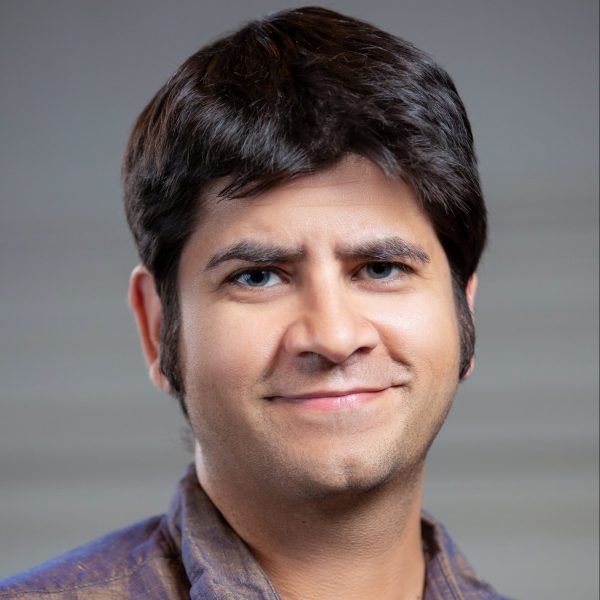
The point struck me since I have blue eyes but dark(ish) skin and naturally dark hair – an “exotic” combination, coming from my mixed Indian and British ancestry, that some might view as only possible in an era of global travel. Yet 8000 years ago in western Europe – a land now mainly occupied by the sort of people we now call “white” – my look was normal. And notice that 8000 years ago – circa 6000 BCE – is not at all long ago in the timescale of human evolution! 6000 BCE is the eve of recorded history – two or three thousand years after that, less than halfway between then on the present, people would start building pyramids. And on that eve, it was people who looked like me who mixed with other differently coloured people to produce the people we now think of as “white”. People who have light skin and hair and light eyes are that way because of mixing between different peoples, including ones that previously looked like me. People who look like that are the novel hybrids! My mixed look is a reversion to something older.
To put it another way: white people are new. And that’s not just referring to the social construction, the idea of calling people “white”. (The first usage of “white people” in English dates back only to 1613.) No, here I’m not even talking about the term but about the phenotype – the set of observable biological characteristics, of light skin together with the prevalence of light hair and eyes – that led us to classify people as “white”. Ten thousand years ago, there were no such people.
As for black people: biologically speaking, there is no such thing. The genetic research of Sarah Tishkoff showed that Africans are more genetically diverse than the rest of the world combined. Genetically, Nigerians, Khoisan people, and Barack Obama’s Kenyan Luo ancestors are at least as far from each other as they are from “white people” or “Asians”. Biologically, “black ancestry” is not a meaningful concept.
What does exist as a biological cluster is ADOS (American descendants of slavery, often misleadingly called “African-Americans”): the capital-B “Black” population of the United States who form their own recent genetic mix in the aftermath of slavery. This group’s mix of West African ancestries (which typically includes some Northern European ancestry as well) produces visible biological differences from those who have more European ancestry – though of course even this is a spectrum, nothing to do with the segregationist one-drop rule.
Thus it is often observed that this group, ADOS, is genetically more prone to sickle-cell anemia than are other populations, as they carry a mutation known as HBB-βS; that much is a biological reality. But it would be wrong to say that that sickle-cell anemia is more prevalent among black people. Because that mutation is not present among many other “black” African populations, from Ethiopia to the indigenous populations of southern Africa; ADOS are no closer genetically to those so-called “black” people than they are to South or East Asians. (Obama’s ancestry is no more predisposed to sickle-cell anemia than mine is.) Indeed, since so many of them do have some European ancestry, genetically ADOS are overall closer to “white” people than they are to East Africans!
The groups typically described as “white” and “black” in the US are biologically both new: the first is less than five thousand years old, the second less than one thousand years old. It’s not just that the conceiving of them as “races” is a social construction, it’s that even the biological reality they have is, well, temporary. 5000 years ago it’s not just that the concepts “white people” and “black people” didn’t exist in any language, it’s that their referents didn’t either. There were no people having the genotypes and phenotypes that Americans now refer to as “white” and “black”.
Thus the biggest problem with Gloria Anzaldúa’s claim “the future will belong to the mestiza” may be that it doesn’t go far enough: in many respects the past did and the present does too. Humans, including “white” and “black” ones, already have been all mixed all along. We just didn’t know it or acknowledge it. The point lends some further credence to B.R. Ambedkar’s desire to solve caste/race discrimination through intermarriage: mixing is the normal state of affairs throughout human prehistory and even history. The weird thing is the desire of segregationists and dharmaśāstra to arbitrarily wall off one group from another and make them discrete and separate. (It’s even weirder when so-called “progressives” try to do so, but that’s another story.) Race as we know it – not just its social construction but the biological groupings that that construction falsely attempts to treat as separate – is temporary. It had a beginning – a beginning now becoming clearer to us – and it should have an end. We are nowhere near that end yet. But that’s the direction we should be moving in.
Spot on. I have always thought the old Adam and Eve tale was far-fetched, at best. A story, concocted for uninitiated folks to explain the unexplainable to the uninitiated.
Humanity, in any sense, cannot be defined in such simplistic stories. Traditionalists were disturbed by challenges to the dogma they supported—they wanted nothing that upset that applecart. Evolution did not=creation period It was heresy. We know differently now, if and only if we have paid attention. My father died a Christian because the Bible told him so. I am heathen to many because I believe in investigation and scientific method. So, what about Vimanas, UFOs, depicted in things I have read? Are they fairy tale material? I don’t know. But, I had a UFO experience, as young boy, I never forgot: floating, luminescent globes, descending from an evening sky, evading touch. Creepy. But, it taught me something important: inquiry.
Yeah, the idea of biological races really needs to be put there in the same category with creationism. The facts that creationists thought they were explaining – the ways organisms are typically so well suited to their environments – were real, but their explanation made no sense. So too, there is a real continuum of biological differences between human populations, but the idea that they make up discrete “races” is hogwash.
There was an article in Nature that got a lot of attention when it came out in 2004: “Modelling the recent common ancestry of all living humans” by Douglas Rohde, Steve Olson, & Joseph Chang. It said:
I don’t know if more recent models have updated these conclusions, but that last quoted sentence is striking (though perhaps obvious after thinking about it): all people alive today have the same set of genealogical ancestors at and before the identical ancestors point in time, estimated by Rohde to be between 5,000 and 15,000 years ago. We may look different from one another, but you don’t have to look very far back in time to see a point where we have the exact same set of ancestors. Likewise, you probably don’t have to look very far forward in time to see a point where any person alive today will be either an ancestor of everyone or an ancestor of no one at that future point. Our genetic mixture occurs in the context of ancestral unity. (There may also be some connection with individualism here, because ancestry is about relations between individuals, not about racialized groups.)
Wow. That’s fascinating. It’s possible that more recent models have updated it, because if it were still current I would have expected that David Reich would have pointed to it in his book (which was published 2018).
But one way or another, agreed on the individualism! Racialized groups are fictions (though fictions which still have real effects); the human species and its individual members are not.
I enjoyed your take on Reich’s book, including, especially, the tie to your own phenotype/photo. However, I wonder if you don’t take his point about mixing a little too far. (Admittedly, I read the book a couple of years ago, so I’m a little hazy on the details.)
You, like Ambedkar, seem to anticipate and welcome the mixing of individuals, leading, one day, to a thoroughly mixed, phenotypically similar global population. But Reich, it seems to me, talks about the movement and blending of groups/populations, not individuals. And so far, at least, this mixing of groups/populations has produced….new groups/populations. So I don’t see Reich suggesting that phenotypical differences have been boiling away, so to speak. They just seem to have been undergoing continuous rearrangements over the millennia. Of course, this doesn’t preclude that humans will blend together in the future. But it doesn’t seem to me that Reich’s argument and evidence implies any secular trend of this kind. But perhaps I’m misremembering his book?
Reich wrote a very interesting op-ed in the Times in 2018 in which he both agreed that “races” were social constructs *and* took progressives to task for denying the existence of genetic differences between populations (for example, in the incidence of diseases, but not only in that). His argument is that this vehement denial of any population-level differences opens the door to uninformed and often truly racist claims.
https://www.nytimes.com/2018/03/23/opinion/sunday/genetics-race.html?eafs_enabled=false
Finally, to Nathan’s point about the most recent common ancestor, I’m skeptical about the claim. How could there be a common ancestor of all currently living humans just 5,000 to 15,000 years ago, when, as Reich says in the above article, “the ancestors of East Asians, Europeans, West Africans and Australians were, until recently, almost completely isolated from one another for 40,000 years or longer”? Isn’t it much more plausible that the most recent common ancestor lived around 55,000 years ago when, apparently, small populations left Africa and began the colonization of the earth? And even this common ancestor who left northwest Africa would hardly have been a close relative of other homo sapiens groups scattered around Africa (including places like Blombos Cave in South Africa), as I believe the current thinking suggests.
I wonder what kind of genetics Rohde relied on. Reich begins his book by drawing a telling contrast between two different kinds of genetic studies. In the 1990s Reich’s own PhD advisor, Luigi Cavalli-Sforza, using samples drawn from *current* populations, argued for a significant flow of genes from southeast to northwest Europe – a putative reflection of the colonization of Europe by farming populations originating in Turkey. Reich, by contrast, used *ancient DNA* to show that the major flow of genes into Europe was orthogonal to that posited by Cavalli-Sforza, namely from the northeast toward the southwest. This was the migration of the Yamnaya, or Proto Indo-Europeans. My guess is that Rohde, writing in 2004, would have been drawing on samples of current populations.
The mixing of groups/populations has produced – newly mixed groups/populations, is the thing. There were different mixes very recently, just as there are already new mixes emerging (like Anzaldúa’s); those mixes are the rule, not the exception. They do not correspond at all to the harmful social construct of “races”, and they are not anything like “branches on the evolutionary tree”. That’s my point; I’m not saying the mix will all get homogenized in the future. And I think Reich would agree with all of that – the point about sickle-cell anemia in my post is there to acknowledge (as he does) that population-level differences are real, they just have very little to do with “race”.
Rohde was doing mathematical genealogy, so he was not working with genetic samples of populations at all, but with a simplified model of geographical migration. Genealogy is about descent of individuals through parent–child relationships. We have genealogical ancestors from whom we do not inherit any genetic material, due to the halving of DNA and genetic recombination in every generation, but those ancestors are still causally necessary for our existence.
Keep in mind that the most recent common ancestor (MRCA) and identical ancestors point (isopoint) are very different. I agree with you, David, that Rohde’s isopoint estimate intuitively seems too recent, but I haven’t looked closely at the model to see where the error would be. But Rohde’s MRCA estimate seems plausible to me; it’s just one person, and again, not a person from whom everybody inherits genetic material.
As Amod said in his response, he never suggested that “phenotypical differences have been boiling away”. That won’t happen due to various causes, one of which is differential selection effects, including by environmental features, that are always happening.
Good and lucid points from Meskill. When we try to insert conjecture(s)and/or assumption into the general scheme of things, the spectre of assumption subsumes reality. Philosophy involves discernment and uncertainty. It is a science, if but for that alone. My eye coloring is neither blue nor brown. My father was as blue-eyed as I have ever seen: cold, haunting blue. My mother’s eyes were hazel: neither blue, nor, brown.
Like other disciplines, genetics has IMPs—interests, motives and preferences. My skin color could have been different. My genetic heritage came from the Netherlands,via a horse trader from the Carolinas. It was rumored my great grandmother was American Indian. Further, I do not know. And don’t need to know. None of it defines ME, see.
Yeah, that’s the thing. I am not my race. I wish we could just get rid of the concept of race entirely and see people as people – shaped by the places and cultures they come from, not the ones where their ancestors did. I absolutely get the critique that getting rid of race is way harder than it sounds, and ignoring it isn’t the way to make that happen. But I do think it’s the direction we should be going – and I think this kind of biological deconstruction is important to help us get there.
Agreed.