
My upcoming book is devoted to the theme that suffering doesn’t come primarily from bad external situations (like political ones), but from the interaction of those bad situations with our mental states of craving and resistance. One might ask: is it possible to split the difference? Could it be that our suffering comes from our mental states but that the institutions make things worse?
Mindfulness critic Ron Purser and Zen teacher David Loy think so. Referring to the traditional “three poisons” of craving (rāga), anger (dosa) and delusion (moha), they claim:
today the three unwholesome motivations that Buddhism highlights—greed, ill will, and delusion—are no longer confined to individual minds, but have become institutionalized into forces beyond personal control.
The emphases are mine, to show what a strong claim is being made here: that our institutions today encourage craving, anger, and delusion in a way that previous societies and institutions did not. Once the problems were confined to individual minds, but they no longer are. Purser and Loy don’t explain their claim in that post, but Loy did so in an important 2004 piece called “What’s Buddhist about socially engaged Buddhism”, no longer available at its original site but thankfully still available through the wonders of archive.org.
I examine Loy’s arguments about institutions encouraging craving and anger in the book. (Overall I don’t think they work, though he’s got more of a case on craving than on anger.) But Loy’s claims about delusion take us far enough afield from the book’s argument that I abbreviated the book’s response to them. Here, I can now give that response in full. Is it true that delusion is “no longer confined to individual minds”, but has become “institutionalized into forces beyond personal control”?
Here’s how Loy begins his case:
There are many aspects to institutionalized delusion. One of them is an extraordinary level of simple ignorance regarding basic history, geography and science. Is there any other “advanced” nation where three times as many people believe in Satan and the virgin birth as in evolution?
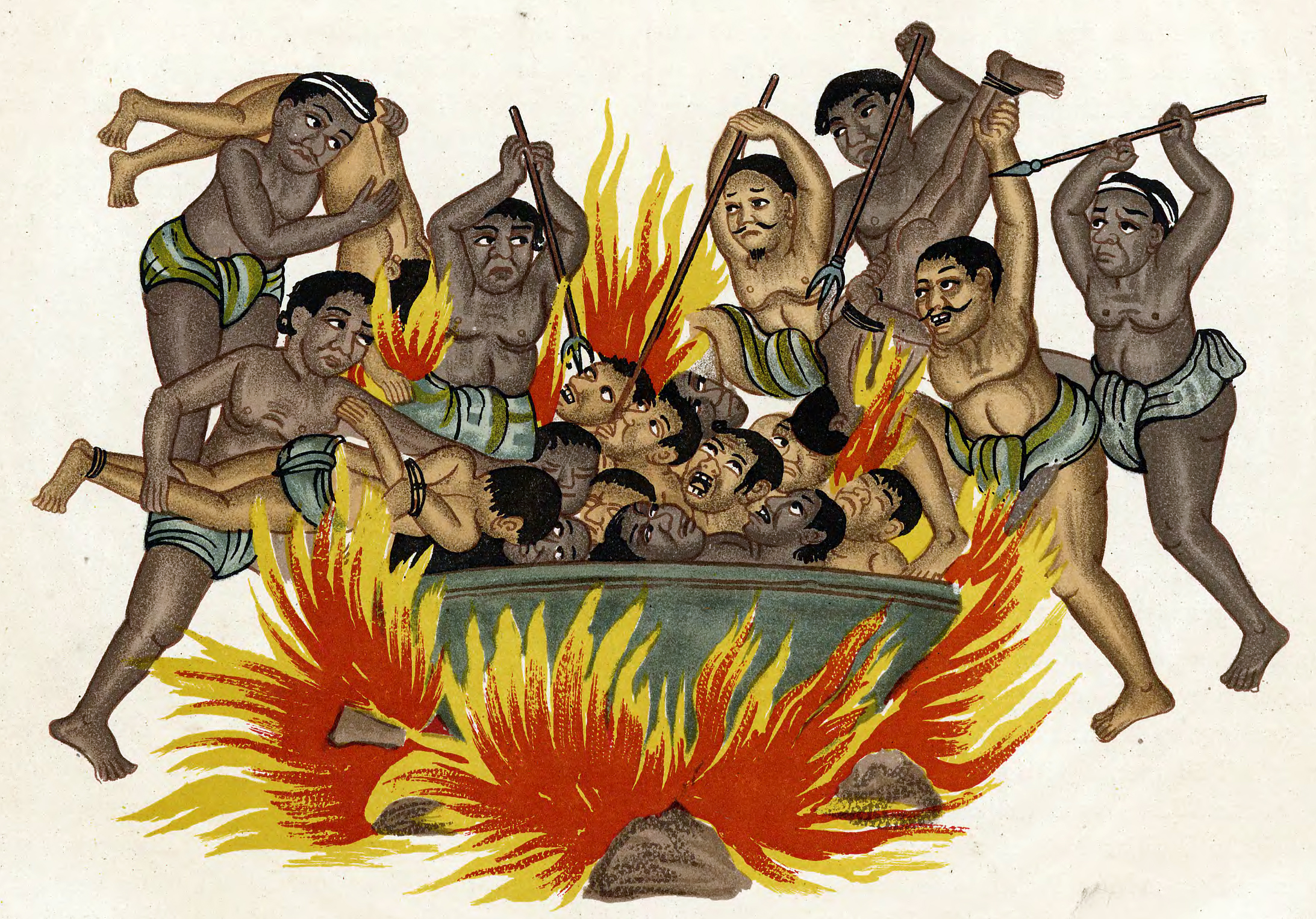
Loy seems unaware that no classical Buddhists believed in the modern theory of evolution, which was discovered long after their deaths. If we take that theory to be accurate (as Loy and I do), no premodern, including Buddhists, knew any more of it than modern creationists do. So there’s no reason whatever to take this as an example of the three poisons being any more institutionalized than they were in the Buddha’s day. As for Satan and the virgin birth, these are teachings that most Americans have inherited from a tradition linked with ethical practice, just as Thais or Tibetans inherit teachings about rebirth in the Buddhist hells. That traditional Buddhist teaching is no more confirmed by scientific evidence than are the traditional Christian beliefs. So if in Loy’s view it is delusion to hold such traditional beliefs, then he is effectively accusing most of the world’s Buddhists of that delusion as well. Such a view at least requires argument, which Loy doesn’t provide.
Loy then adds that “The cumulative effect of this ignorance is a collective wego largely unaware of, and indifferent to, what is going on in the rest of the world.” “Wego” is Loy’s term for a collective ego: “intractable social problems too can usually be traced back to a deluded sense of self — in this case, to a collective sense of self, or ‘wego,’ such as one’s own race, class, gender, nation (the primary secular god of the modern world), religion, or some combination thereof (e.g., in the Middle East, where nationalism and religion have become almost indistinguishable).”
It seems to pass Loy by that nobody was aware of the majority of the world’s affairs before the age of exploration, nor could they have been. The typical inhabitant of a 21st-century capitalist society, with access to digital media, is if anything less ignorant of the world’s affairs than was anyone in the Buddha’s day—and often less indifferent to it.
Perhaps when Loy speaks of “institutionalized delusion”, he is referring not to absolute lack of knowledge, but to relative: a knowledge that is lacking in comparison to the total amount of knowledge available. That is, perhaps his view is that premodern South Asian Buddhists should not be considered deluded about world affairs or the origin of life because there was no way for them to have known such things, but because that knowledge is available to us now, we are obligated to know it. Then not living up to that obligation would constitute delusion, in a way that it would not for people who could not have known these matters.
Loy provides no argument for such an obligation, but even if we were to assume that such an obligation and therefore such a delusion exists, it is worth pointing out: such a “delusion” exists only because there has been an increase in total knowledge. On such an account, our society could be considered more deluded than classical South Asia for the sole reason that more knowledge exists in it, and that knowledge creates an obligation to know it. A modern person who knows exactly as much as, or even a little more than, an ancient South Asian would count as deluded where the ancient would not, simply because the contemporary “deluded” person now has more knowledge available. Thus on such an approach, what creates and constitutes “institutionalized delusion” today is an overall increase in available knowledge—and that seems like rather less of a problem.
Even these critiques of Loy’s account are only necessary if we already grant Loy a major concession: that “ignorance” or “delusion”, moha, has do to with ignorance about facts of the empirical or social world. That is not a meaning it has in any South Asian Buddhist texts that I am aware of. The exact nature of moha in those texts is complex, but it always has to do with specific kinds of ignorance that contribute to our mental suffering, in ways that tie to our craving and resistance. Ignorance of world affairs or the origin of life never counted as moha in the Buddha’s day, and Loy makes no case why it should now.
So. Was delusion always something institutionalized beyond individual minds? That would be a separate question, and I suppose one could reasonably try to make that case. But is delusion something newly institutionalized in the modern world of the 21st, 20th or even 19th centuries, no longer confined to individual minds? The answer is simple: no.
I would argue that what could reasonably be considered delusion falls into two categories.
First, understanding the source of our convictions. Simply knowing whether something I hold to be true comes from I believe or I know is enough.
Second, is my understanding of my convictions correct? This is more complex and where there is a fault line in the modern world that differs from the ancient. This gets really bad when we exploring the border of facts and opinion.
Here I think there is a genuine complexity argument (which was well discussed in this piece) as well as one of experience vs. telling as we have to take more on faith than our ancestors. Even modern science does this because we trust that if we do the experiment we will get the reported results. Or more broadly reading about something on the internet doesn’t make it true.
If we are unaware of that delusion increases.
So for me the question should be reframed as are there modern institutions that are actively trying to pass off opinion as fact in a way not seen before?
Rather than point at any individual, group or position (as again I agree with the view in this post that the specifics not the trends are what has changed in the past few hundred years) I would instead point to the new structure we have created; the Internet.
Attention is the new money, and nothing holds attention like outrage. Outrage is far easier to create and sustain when people mistake opinions for facts and we have made algorithms that are very good at getting us to do that.
So in that sense I would argue that we have increased our societal delusion in the simplest way possible.
We have forgotten that there is no such thing as a free lunch and our worldviews are formed by paying for things in the coin of outraged attention as we doomscroll for that dopamine hit (tying back to craving and anger).
Welcome, Adam! This is an interesting point given your timing relative to Loy’s. When he wrote the original piece it was 2004; the proliferation and encouragement of misinformation and fake news hadn’t happened yet, at a time when Facebook didn’t even exist. So his ideas about institutionalized delusion really just come across as baby-boomer whining. But it’s worth the thought that delusion only actually became institutionalized in the two decades after he wrote that piece.
I don’t remember ever having heard the claim that delusion is a modern institution or that delusion is worse in modernity. This post is a very interesting response to that claim and suggests connections to evolutionary, historical, and developmental epistemology. That claim requires clarifying what ignorance/delusion meant for historical Buddhists and what it could mean for us, a question that is addressed to some degree in this post.
The inverse question is also very interesting and important: what is nonignorance/nondelusion? Or as more famously stated: What is enlightenment? A common answer for Buddhist thinkers and for famous Western philosophers such as Kant and Foucault who answered that question is that enlightenment is a task or process, not a historical period; enlightenment is no more a modern institution than is delusion. Even if we are the beneficiaries of generations of epistemological development, it’s still our ongoing task to actualize enlightenment and nondelusion. As William Bristow summarized in the Stanford Encyclopedia of Philosophy article on “Enlightenment”:
(There are differences between the Western tradition summarized in Bristow’s encyclopedia article and the Buddhist tradition, but on the question of whether enlightenment or nondelusion is specific to a historical, e.g. modern, period or institution, the Western tradition and Buddhist modernism are comparable, as David Cummiskey argued in “Buddhist modernism and Kant on enlightenment”, in Steven M. Emmanuel (ed.), Buddhist Philosophy: A Comparative Approach (pp. 205–220). Hoboken, NJ: Wiley-Blackwell, 2018.)
“Enlightenment” is such a weird term. One of the things I’ve been meaning to look up and never had a chance is how that term got to be so frequently used to describe the Buddhist target state – as opposed to, say, “liberation” or “awakening”. The latter two are direct translations of the Buddhist vocabulary (vimukti, bodhi etc.) but I’ve still never found anywhere in Asian Buddhist languages where a light metaphor is used to describe it. And what Kant and les lumières meant by “enlightenment” seems quite different from the Buddhist version – it has a socio-political thrust even for Kant, and he’s one of the less politically oriented of the thinkers involved.
As I recall, I went through a phase when I too was skeptical of the term “enlightenment” as a Buddhist term, but as I’ve read more, I’ve come to be an enthusiast of the term in a modern context, primarily because it provides a lingua franca for connecting multiple traditions, which is more or less why the term started to be used as a Buddhist term in the 19th century, as David McMahan briefly mentioned in The Making of Buddhist Modernism (Oxford UP, 2008, p. 18). McMahan noted that the English-language connotations of a word like “liberation” are also problematic in a Buddhist context, and said:
Bhikkhu Bodhi has defended the term “enlightenment” in several publications, and Bhikkhu Anālayo has questioned his defense. Anālayo concluded:
Anālayo’s conclusion suggests that in Buddhism “enlightenment” is best associated with teaching, and knowing/understanding and “awakening” are best associated with individual change of consciousness. Using that distinction, we awaken individually and we enlighten others about what we have awakened to, and the Buddha was both an awakener and an enlightener in those senses. This makes awakening more of an individual activity and enlightenment more of a social activity.
However, Bhikkhus Bodhi and Anālayo were mostly discussing the textual context of early Buddhism and didn’t address some of the rather radical doctrinal developments that occurred in later Buddhist schools that could change the context. In Japanese Sōtō Zen, it’s often taught (e.g. by Dōgen) that daigo-tettei, great realization or enlightenment, is not a state of consciousness that one achieves. So one would have to find different arguments than Anālayo’s for which terms to use to translate daigo-tettei into English. A similar issue arises in some Tibetan Buddhist contexts.
An example of what I think is a productive use of the light/enlightenment metaphor as a lingua franca is at the end of the Tibetan Buddhist Anagarika Govinda’s 1962 article “A Tibetan Buddhist looks at Christianity”, where after criticizing insensitive Christian proselytizing efforts in Tibet, he said:
Yeah, I have noticed that “enlightenment” tends to be used more frequently in translations from East Asian traditions. Still, as far as I can tell, even they are not referring to light in their original languages. The relevant word in daigo-tettei appears to be go 悟, wu in Mandarin, which does seem to have more of a context of “awareness”, or, yes, “realization” – but also, again, “awakening”. https://en.wikipedia.org/wiki/Wu_(awareness)
Well, that is the basic objection to the word “enlightenment”: that it’s not faithful enough to Asian-language texts. In contrast, for someone like Bhikkhu Bodhi, the English word is a good free translation of the relevant concept, in his case, budh and its derivatives. Like him, I’m currently pretty comfortable with the word “enlightenment” in general, but I also like Bhikkhu Anālayo’s argument for a more restricted use of the word. Daigo is very often translated as “great realization”, and I wouldn’t prefer “great enlightenment” when doing textual exegesis (not that I’m a scholar who does textual exegesis!). However, I don’t see the post above as being much about exegesis of ancient texts; it’s more about doing original cross-cultural philosophy.
When speaking about Buddhism generally in comparison to or in dialogue with Western heritage, I find the term “enlightenment” helpful to refer to “a process of social, psychological or spiritual development” as Bristow said in the quote above. Bhikkhu Anālayo’s suggestion that enlightenment is appropriately associated with teaching in the early Buddhist context also fits well with this general use of the term. When going into the details of how different traditions model such a process, more specialized terms are needed, but “enlightenment” works well as a general English-language cross-traditional metaphor, in my current thinking. (I said lingua franca above but that’s not the right term; I meant a bridge term rather than a bridge language.)
I was just thinking, continuing my previous comment, that, as Bhikkhu Anālayo pointed out in a different publication (Satipaṭṭhāna: The Direct Path to Realization, Windhorse Publications, 2003, pp. 80–81), early Buddhist texts describe people who attained stream-entry, the initial stage of awakening, while listening to a discourse of the Buddha. Such people were (to an initial degree) awakened and enlightened in Anālayo’s senses mentioned above: they were awakened by being enlightened by a discourse of the Buddha.