• About me
  • About this blog
  • Comment rules
  • Other writings

Love of All Wisdom

~ Philosophy through multiple traditions

Love of All Wisdom

Tag Archives: Burma/Myanmar

There are bad Buddhists and false Buddhist claims

07 Sunday Nov 2021

Posted by Amod Lele in Anger, Early and Theravāda, Method and Theory in the Study of Religion, Modernized Buddhism, Morality, Politics

≈ 6 Comments

Tags

Burma/Myanmar, David Loy, Engaged Buddhism, Evan Thompson, Hebrew Bible, Ian Stevenson, Paul Fuller, Sallie King, Victor Temprano, Wirathu

Paul Fuller’s thoughtful and well researched new introduction to Engaged Buddhism cites my Disengaged Buddhism article together with an article I hadn’t heard of before, Victor Temprano’s 2013 “Defining engaged Buddhism” (Buddhist Studies Review 30.2). (Fuller has very kind words for both Temprano and myself.) I proceeded to read Temprano’s article and was quite struck by it – and by the fact that Fuller had listed our two articles together, as making complementary critiques. Fuller’s putting our two articles together is striking to me because, while Temprano and I do both make a critique of Western engaged Buddhist scholars like Sallie King and David Loy, we do so for entirely different reasons – reasons that are actually opposed to one another. And indeed, I think my differences from Temprano are larger than my differences from King and Loy.

Continue reading →
Karma in society

26 Sunday Jul 2020

Posted by Amod Lele in Buddhism, Early and Theravāda, Karma, Method and Theory in the Study of Religion, Modern Hinduism, Psychology, Social Science

≈ 2 Comments

Tags

Burma/Myanmar, Cindel White, Evan Thompson, Melford Spiro, theodicy

Last time I explained why I think a constructive modern Buddhist philosophy should indeed focus on Buddhist philosophical texts as its sources for karma, and I stand by that. Yet ironically, even if we were to turn away from philosophy to karma’s functioning in society, as Thompson now recommends, we would then notice that even his sources for that point themselves do not establish what he claims they do: i.e. that “the concept is fundamentally a way to handle the problem of why bad things happen to good people and vice-versa”. Just as Obeyesekere never made that claim historically, these sources do not make the claim sociologically.

The sources in question are three articles about karma, all by his UBC colleague Cindel White with some coauthors. Contra Thompson’s claim, these studies do not indicate that the Buddhist concept of karma “is fundamentally a way to handle the problem of why bad things happen to good people and vice-versa”, even in the sociological context of everyday Buddhism. This is for two key reasons.

Continue reading →

Does the kammatic/nibbanic distinction fit the facts?

16 Sunday Feb 2020

Posted by Amod Lele in Early and Theravāda, Karma, Method and Theory in the Study of Religion, Monasticism, Self-Discipline

≈ Comments Off on Does the kammatic/nibbanic distinction fit the facts?

Tags

Burma/Myanmar, Charles Taylor, Damien Keown, Henpitagedara Gnanavasa, Mahāvaṃsa, Melford Spiro, Pali suttas, rebirth

How helpful is Melford Spiro’s kammatic/nibbanic distinction in describing Buddhism? It can be tempting to line it up too closely with other dichotomies – to say that kammatic Buddhism is practised by householders and nibbanic Buddhism by monks, for example. Damien Keown (Nature of Buddhist Ethics 86) notes that in Spiro’s own survey of Burmese villagers, many laypeople say that they would prefer nirvana for their next life and most monks do not describe striving for nirvana as one of their main functions; so such a mapping of kammatic/nibbanic onto householder/monk would be false.

But Keown takes this point about laypeople and monks much too far when he draws the conclusion that therefore Spiro’s kammatic/nibbanic “theory does not fit the facts”. Continue reading →

Listening to contemporary disengaged voices

22 Sunday Jul 2018

Posted by Amod Lele in Early and Theravāda, Method and Theory in the Study of Religion, Modernized Buddhism, Politics

≈ 9 Comments

Tags

Aśvaghoṣa, Buddhist Peace Fellowship, Burma/Myanmar, Disengaged Buddhism, Engaged Buddhism, George Bond, Joseph Cheah, Judith Simmer-Brown, race, Thomas Tweed, United States

My upcoming paper on disengaged Buddhism focuses on classical Indian texts that engaged Buddhist scholarship has generally silenced. As I read more, though, I come to see that contemporary Asian and Asian-American Buddhists also have politically disengaged tendencies, which modern politically active scholarship – not only Buddhist – also tends to silence.

I first noted this tendency of silencing in Judith Simmer-Brown’s introduction to the Buddhist Peace Fellowship, the leading engaged Buddhist organization she helped found. The group, she says, “was concerned that Buddhist practice centers and groups had become entirely removed from the social and political issues of the day: some teachers and organizations were even actively discouraging political involvement.” (69) And that’s it for those “teachers and organizations”. Why were they discouraging political involvement? What did they say? What were their names? No answers are forthcoming; they receive no voice. What we hear instead is the story of how Simmer-Brown and her American fellows put together a politically engaged group in defiance of their teachers.

The tendency plays out in a different way in Joseph Cheah‘s Race and Religion in American Buddhism. Continue reading →

The innovations of S.N. Goenka (1930-2013)

06 Sunday Oct 2013

Posted by Amod Lele in Early and Theravāda, Meditation, Modernized Buddhism, Monasticism

≈ 2 Comments

Tags

Burma/Myanmar, conservatism, obituary, Pali suttas, S.N. Goenka

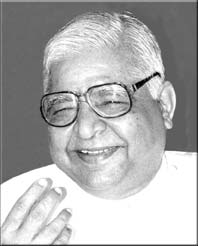
S.N. GoenkaI found out via Justin Whitaker the sad news that S.N. Goenka died this week. The name needs little introduction for Yavanayāna Buddhists, but others may wish some additional insight.

Goenka, born in Burma, was a pioneer – really the pioneer – of what is now known as vipassanā meditation. This term vipassanā (usually translated “insight”) is found in the classical Pali texts, and so is the Satipaṭṭhāna Sutta from which Goenka originally drew the meditation technique. Notably, though, the term vipassanā does not show up in the Satipaṭṭhāna Sutta itself. And that detail, I think, is telling about Goenka’s whole project.

I recall Goenka claiming, like many other contemporary Buddhist teachers, that what he was teaching was not new; it was just the teaching of the Buddha. That statement is not false exactly, but it’s not the whole truth. Continue reading →

Welcome to Love of All Wisdom.

I invite you to leave comments on my blog, even - or especially - if I have no idea who you are. Philosophy is a conversation, and I invite you to join it with me; I welcome all comers (provided they follow a few basic rules). I typically make a new post every Sunday. If you'd like to be notified when a new post is posted, you can get email notifications whenever I add something new via the link further down in this sidebar. You can also follow this blog on Facebook. Or if you use RSS, you can get updates through the RSS feed.

Recent Comments

  • Nathan on Habermas and a road not taken
  • Amod Lele on Habermas and a road not taken
  • Nathan on Habermas and a road not taken
  • Amod Lele on Habermas and a road not taken
  • Nathan on Habermas and a road not taken

Subscribe by Email

Post Tags

20th century academia Alasdair MacIntyre Aristotle ascent/descent Augustine autobiography Buddhaghosa Canada Confucius conservatism Disengaged Buddhism Engaged Buddhism Evan Thompson expressive individualism Four Noble Truths Friedrich Nietzsche G.W.F. Hegel gender Hebrew Bible identity Immanuel Kant intimacy/integrity justice Karl Marx Ken Wilber law Martha C. Nussbaum modernity music mystical experience nondualism Pali suttas pedagogy Plato race rebirth religion Siddhattha Gotama (Buddha) technology theodicy United States utilitarianism Śaṅkara Śāntideva

Categories

  • African Thought (15)
  • Applied Phil (375)
    • Death (44)
    • Family (53)
    • Food (22)
    • Friends (21)
    • Health (33)
    • Place (36)
    • Play (17)
    • Politics (235)
    • Sex (25)
    • Work (48)
  • Asian Thought (458)
    • Buddhism (331)
      • Early and Theravāda (140)
      • Mahāyāna (140)
      • Modernized Buddhism (101)
    • East Asia (100)
      • Confucianism (62)
      • Daoism (22)
      • Shinto (1)
    • South Asia (148)
      • Bhakti Poets (3)
      • Cārvāka-Lokāyata (5)
      • Epics (16)
      • Jainism (24)
      • Modern Hinduism (45)
      • Nyāya-Vaiśeṣika (6)
      • Sāṃkhya-Yoga (16)
      • Sikhism (1)
      • Vedānta (42)
      • Vedas and Mīmāṃsā (7)
  • Blog Admin (28)
  • Indigenous American Thought (8)
  • Method (277)
    • Metaphilosophy (179)
    • Method and Theory in the Study of Religion (155)
  • Practical Philosophy (427)
    • Action (16)
    • Aesthetics (52)
    • Emotion (192)
      • Anger (40)
      • Attachment and Craving (32)
      • Compassion (9)
      • Despair (7)
      • Disgust (5)
      • Faith (20)
      • Fear (15)
      • Grief (9)
      • Happiness (51)
      • Hope (19)
      • Pleasure (37)
      • Shame and Guilt (10)
    • External Goods (55)
    • Flourishing (102)
    • Foundations of Ethics (124)
    • Karma (44)
    • Morality (78)
    • Virtue (184)
      • Courage (7)
      • Generosity (14)
      • Gentleness (6)
      • Gratitude (13)
      • Honesty (14)
      • Humility (27)
      • Leadership (7)
      • Mindfulness (24)
      • Patient Endurance (30)
      • Self-Discipline (10)
      • Serenity (38)
      • Zest (8)
  • Practice (146)
    • Karmic Redirection (5)
    • Meditation (47)
    • Monasticism (47)
    • Physical Exercise (4)
    • Prayer (16)
    • Reading and Recitation (14)
    • Rites (23)
    • Therapy (11)
  • Theoretical Philosophy (400)
    • Consciousness (22)
    • Deity (76)
    • Epistemology (140)
      • Certainty and Doubt (19)
      • Dialectic (19)
      • Logic (15)
      • Prejudices and "Intuitions" (31)
    • Free Will (18)
    • Hermeneutics (65)
    • Human Nature (34)
    • Metaphysics (115)
    • Philosophy of Language (31)
    • Self (78)
    • Supernatural (54)
    • Truth (64)
    • Unconscious Mind (16)
  • Western Thought (521)
    • Analytic Tradition (106)
    • Christianity (162)
      • Early Factions (8)
      • Eastern Orthodoxy (3)
      • Protestantism (27)
      • Roman Catholicism (61)
    • French Tradition (50)
    • German Tradition (95)
    • Greek and Roman Tradition (125)
      • Epicureanism (25)
      • Neoplatonism (2)
      • Pre-Socratics (6)
      • Skepticism (2)
      • Sophists (8)
      • Stoicism (22)
    • Islam (44)
      • Mu'tazila (2)
      • Salafi (3)
      • Sufism (10)
    • Judaism (38)
    • Natural Science (101)
      • Biology (31)
      • Philosophy of Science (50)
      • Physics and Astronomy (11)
    • Social Science (194)
      • Economics (47)
      • Psychology (84)

Recent Posts

  • How to actually decentre whiteness
  • Habermas and a road not taken
  • Canada’s anti-American anger is no small matter
  • The ancient Greeks were neither straight nor white
  • “In praise of negativity”: Now

Popular posts

  • One and a half noble truths?
  • Wishing George W. Bush well
  • Do Speculative Realists want us to be Chinese?
  • Why I am not a right-winger
  • On faith in tooth relics

Basic concepts

  • Ascent and Descent
  • Intimacy and integrity
  • Ascent-descent and intimacy-integrity together
  • Perennial questions?
  • Virtuous and vicious means
  • Dialectical and demonstrative argument
  • Chastened intellectualism and practice
  • Yavanayāna Buddhism: what it is
  • Why worry about contradictions?
  • The first philosophy blogger

Personal favourites

  • Can philosophy be a way of life? Pierre Hadot (1922-2010)
  • James Doull and the history of ethical motivation
  • Praying to something you don't believe in
  • What does postmodernism perform?
  • Why I'm getting married

Archives

Search this site

All posts, pages and metadata copyright 2009-2026 Amod Lele unless otherwise noted. Comments copyright 2009-2026 their comment authors. Creative Commons Attribution-NonCommercial-ShareAlike (BY-NC-SA) licence.

Proudly powered by WordPress Theme: Chateau by Ignacio Ricci.