
Tags
21st century, Alexandria Ocasio-Cortez, Carmen Best, Donald Trump, gender, Joe Biden, race, Tyler Austin Harper, United States
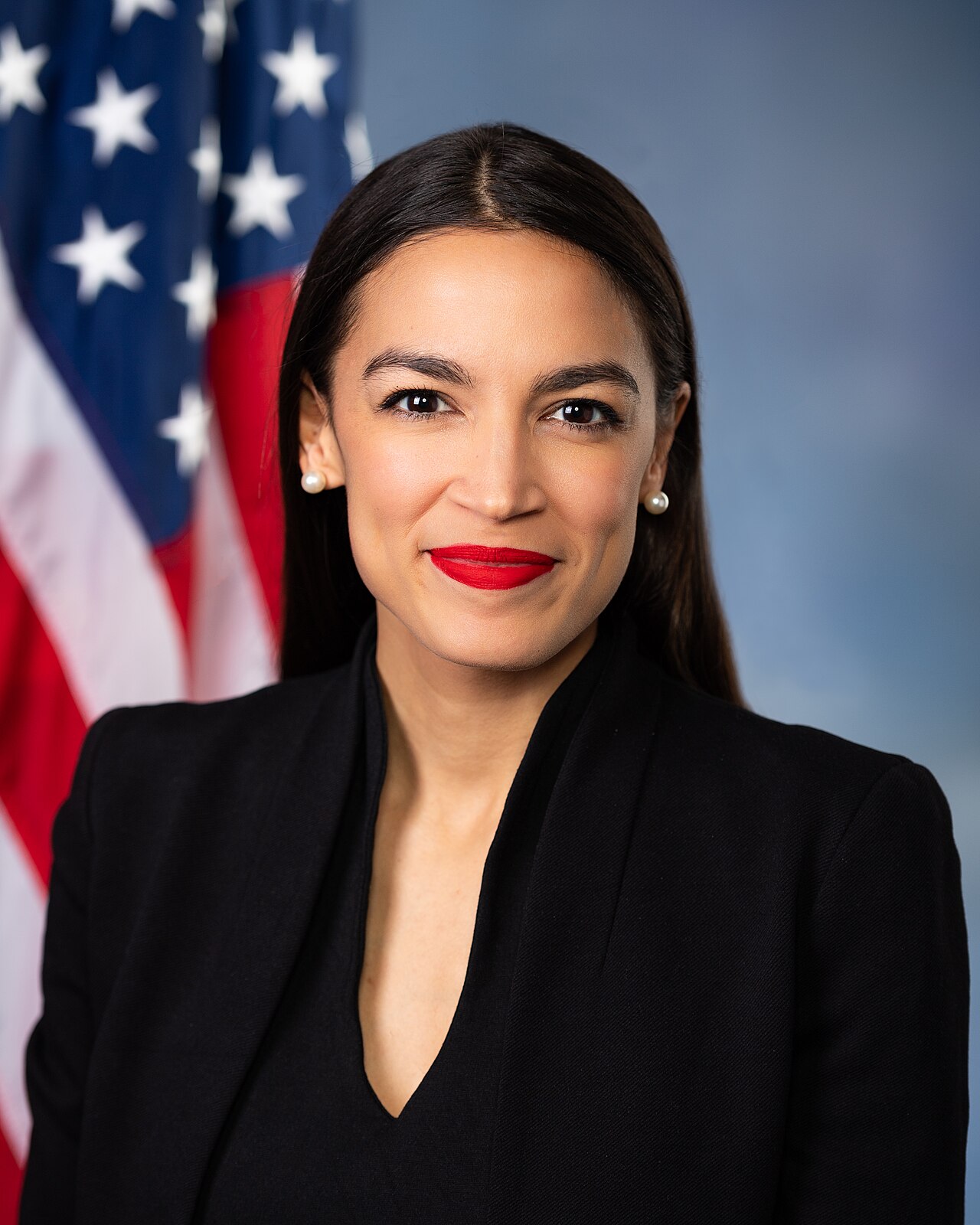
Alexandria Ocasio-Cortez (“AOC”), the charismatic socialist Puerto Rican-American New York representative, made headlines last week for her quip that “Woke 1 was a mistake.” From a career perspective, this was a canny and savvy political move from someone who is, on the one hand, viewed as a major contender for 2028 president, and on the other, perceived as closely linked to the Social Justice movement, also known as “woke”.
But my concerns here aren’t with the prospects of possible American presidential candidates. Rather, they’re with what this claim says about the politics of race and gender in 2026 – in the US for sure, but also around the world, since the impact of the Social Justice movement was global.
Just as a start, AOC is admitting that the woke movement existed, a concession that it can be excruciatingly hard to extract from those involved in it. For those of us who had to live in the Social Justice movement’s heartland and were painfully silenced by it at every turn, the pain is compounded when those who caused it refuse to even admit it happened – a historical revisionism that has been all too characteristic of the movement. But more than that, it is an acknowledgement that, at least on the racial issues that gave the movement its name, the woke movement to date has been a failure – and a costly one.
On gender, I think it’s important to note, the movement made real and significant positive change. One of them, the widespread acceptance of transgender identity in left-leaning places, has been a great personal boon to me and others. So too the #MeToo campaign against sexual harassment and worse forms of sexual misconduct: before the 2010s, the deeply harmful conduct of a Harvey Weinstein was quietly tolerated, in a way that I don’t think it is anymore. There were innocents caught in the crossfire (a risk too many were willing to take), and that problem shouldn’t be neglected, but there were at least central portions of Woke 1 on gender that were not a mistake.
Race, however, is a completely different story.
What famously galvanized the Social Justice movement was the murder of George Floyd by a police officer, captured on video in all its horror, much like the beating of Rodney King decades earlier. The outrage at this event was quite understandable: here was a man not merely acting in the heat of the moment, but taking a full eight minutes, to kill one of the very people he was sworn to serve and protect. That event took the movement global: it was not merely Americans, but the world, who saw that something had gone very wrong. And it all came amid the knowledge that this was a pattern: in the years leading up to it, there had already been a Black Lives Matter movement pointing to police killings of other black people.
But for all the noise it made, the movement did absolutely nothing to fix this problem.
In the years immediately following the 2020 protests, Washington Post data indicates the number of black people killed by police increased. Statista indicates the number of black people killed remained more or less constant, but agrees the total number of killings went up. However one interprets the data, it’s clear that police killings of black people did not go down at all as a result of the movement.
So on its signature racial issue, the one that brought it to worldwide attention, the woke movement accomplished absolutely nothing. And at what cost! The movement destroyed careers and thereby caused a great number of us – including non-white people like me, whom it was theoretically supposed to be helping – to spend years living in terror of it. I have personally seen multiple friendships ended as a result of conflicts it created. It is also worth noting the losses caused by the movement’s sheer joylessness, a cultural criticism so relentless that it objected to even the gently playful pun “black olives matter”.
A secondary goal of the movement was to create a more welcoming and inclusive environment for non-white people, especially in the workplace. But as far as I can tell, the effect was the opposite – as we might expect given how few of us were ever asked whether these changes would be welcoming. The prescription of the term “Latinx”, hated by most people in the group it describes, is the obvious example. Recently Tyler Austin Harper, a black literature professor, left a tenure-track position at Bates College not in spite of Social Justice efforts, but because of them – his race was centred at every turn, even though his academic work had nothing to do with it. Harper’s experience resonates closely with my own: as a “person of colour” I felt a lot less welcome when white people told other white people to racialize us, and when we were threatened with consequences for speaking our minds about this. (Meanwhile, movement activists bullied sympathetic white people to the point of suicide.)
Perhaps most dire of all, the movement was so reflexively pro-immigration that it wound up aiding its worst enemies. In Somerville, Massachusetts where I live – at the heart of the movement – one often saw signs proclaiming OPEN BORDERS. Under the influence of ideas like that, the Biden administration ignored warnings about a massive rise in illegal border crossings, in a way that made it all too easy for centrist observers to think that the crazy immigrant-hating thug Donald Trump actually had a point. If it hadn’t been for ideological pressure from Woke 1, of the “no human is illegal” variety, the administration would likely have recognized the need to do something about the problem, in a way that would have deprived Trump of its biggest issue. Even before the disaster that his second term has been (from any perspective), Trump was among the most unpopular politicians in recent American history. It shouldn’t have been hard to beat him, even with a relatively doddering incumbent – but the woke movement handed him exactly the issue he needed to win.
This is the legacy that Woke 1 left us: helping the rise of the worst American government in living memory (quite possible ever), destroying careers, destroying friendships, creating a climate of fear – for nothing. The woke movement achieved some valuable goods on gender, but on the racial side, we would all be better off had this movement not existed. When judged by the movement’s own slogan that impact and not intent is what matters, the verdict on the racial Social Justice movement must be devastatingly harsh.
Yet for all that, we must not forget that the problems the movement pointed out were real! That its intent was good actually does matter. Above all, something is clearly very broken about American policing, something which a good society would seek to fix (and which this society clearly has not yet fixed. But whatever is going to fix it, it won’t be the woke movement’s rallying slogan: defund the police.
There are at least three distinct problems with American policing, which each require different solutions. Police racism and police brutality are both real problems, but they are different problems. Tony Timpa was a victim of police brutality but not police racism; the many people stopped or arrested for “walking while black” are victims of police racism but not police brutality. And both of these problems are quite different from the problem that American police departments take on too many jobs and receive funding for military equipment. It is this latter problem which could be addressed by the “defund the police” option on its most charitable reading, the one that redirects police funding to social service (as opposed to the more obvious reading several in the movement tell you they mean, of actually abolishing the police). But there’s no reason to think that reducing police budgets would actually solve police brutality or police racism; indeed, in several cases it likely did the contrary. One obvious way to help reduce police racism is to have more black police officers – yet under the woke movement’s attack on the police, several black police chiefs left. Seattle’s Carmen Best did so because reduced police budgets meant getting rid of junior hires – most of whom were non-white.
Woke 1 failed black Americans – and for that matter Latin American immigrants to the US. That’s even if you don’t count all the havoc it wreaked on everyone else. Black Americans deserve better. They deserve a movement that actually addresses the very real problems they face.
How to build such a movement – a Woke 2 that actually makes things better? First of all, the movement needs to carefully figure out what its goals are, and then be clear out what specific actions are actually likely to achieve them. To use a slogan very popular in Woke 1, it must do the work in a way that Woke 1 emphatically did not: that is, do the sociological work of examining what specific, practical, concrete measures are actually likely to help you achieve your goals. That in turn requires admitting you don’t have all the answers – which requires listening to people who disagree with you, not trying to get them “deplatformed”. These issues are hard, and solving them requires listening to and considering alternatives. Which is the opposite of just assuming that a new norm adopted without debate is “moral progress”.
A Woke 2 that doesn’t learn these lessons would need to be stopped, before it becomes the disaster that was Woke 1. But if it does learn them, it may yet actually succeed at those goals, and that will be a worthy movement deserving of broad support.
I’ll be taking another break to travel next week (September 6). Love of All Wisdom will return on September 13.
With the minor reservation that AOC’s remark is not precisely a quip, this is the most judicious take on the subject of woke I have come across so far. Thanks for your help in clarifying my own thoughts!
Thank you! I’m glad it was helpful.
Agreed. I’d quarrel with the way many things here are put, but at bottom, a not-one-sided take on all this, which is – alas! – increasingly rare.
Considering how far apart we are on many of these issues, I’d be surprised if you didn’t have some quarrels. But yes, that was exactly my intention, for exactly the reason you mention. There was an interesting poll last week indicating that more Americans describe themselves as neither woke nor anti-woke than describe themselves as being in either category. I feel pretty comfortable in the “neither” camp, which goes way too unrepresented in the conversations around it all.
Pingback: Why I miss postmodernism | Love of All Wisdom