
Back when I was a TA at Harvard, possibly my favourite student was an evangelical Christian. He was an economist, so his written work wasn’t as good as some of his other students, but his participation was essential to my seminar discussion, within Diana Eck‘s world-religions class. Many of the students were at Harvard Divinity School and drawn to a view that the “world religions” were all basically the same and all basically good. This student was having none of it: to claims that Christians and Muslims worship the same god, he would insist “Either God had a son or he didn’t! That makes a difference!” The discussion was far richer for that counter-perspective.
We remained in touch for a little while afterwards; he even interviewed me for an evangelism class. He went off to do missionary work in Brazil, and was struck by the role that folklore creatures like shapeshifting spirits play in local lives. “They may not be real in the US,” he said, “but they’re real here.”
What really sticks in my mind about that conversation, though, was what came next. He thought that if the locals were to become Christian, they would need to stop making offerings to the spirits. After all, the Christian God admits no competition, no idolatry, no “other gods before me”. But, I asked my former student, would offerings to spirits necessarily be idolatry? What if the interactions weren’t worship, but transactional? In many cultures, one leaves offerings to spirit beings in the hope that they will provide some sort of good fortune in return. That doesn’t necessarily have anything to do with worship. If one pays a doctor or a mechanic, that’s not idolatry, it’s just fee for service. Why would it be any different to pay a faerie or a river spirit?
I was brought back to those conversations last year at the Psychedelic Science (MAPS) conference. In a room set up for strangers to have conversations with one another, I wound up talking to another young evangelical. Of course, psychedelic spaces make it natural to think about supernatural beings – on ayahuasca or psychoactive mushrooms, they may well appear before your eyes.
Despite his clear sympathy to psychedelics – being in a space devoted to them – this evangelical was deeply suspicious of any such beings. Not at all in the sense of thinking they don’t exist; quite the opposite. Rather, as I recall the conversation, he was concerned about these apparently real supernatural entities because he thought them satanic, evil. They weren’t of God, they weren’t the angels, so they must be devils, or tools of the devil. I said that they could be neutral, they didn’t have to be one or the other, and he replied “I disagree.” Unfortunately we didn’t have time to continue the conversation further.
But the conversation made me think further about the premises. I’m not a Christian, or even a believer in God as usually defined, so I don’t have much of a dog in the fight myself. But here as with my former student, I was trying to think from their own biblical premises, and it seemed to me that something had gone wrong with this young man’s reasoning even there.
Christianity has long and often tended toward a dualistic view, where the world is a battleground between good and evil. Such a dualistic view is often called Manichean: the Manicheans were a competitor to early Christianity whose whole cosmology was a struggle between light and darkness, and while the Christians and the Manicheans saw each other as foes, many over the years have observed a strong “Manichean” tendency in Christianity. It’s very visible in the meditation instructions of St. Teresa, who treats our minds as a battleground between God and “the devil”. It seems to me that this Christian Manicheanism shows up strongly in Christians’ attitude to supernatural beings like spirits and faeries: if they are not of God, they must be of the devil. But it doesn’t seem to me that that Manichean view is justified on Christians’ own premises.
To be sure, spirits and faeries receive no divine sanction from the Bible, since they are mentioned nowhere there. But you know what else isn’t in the Bible? Cats.
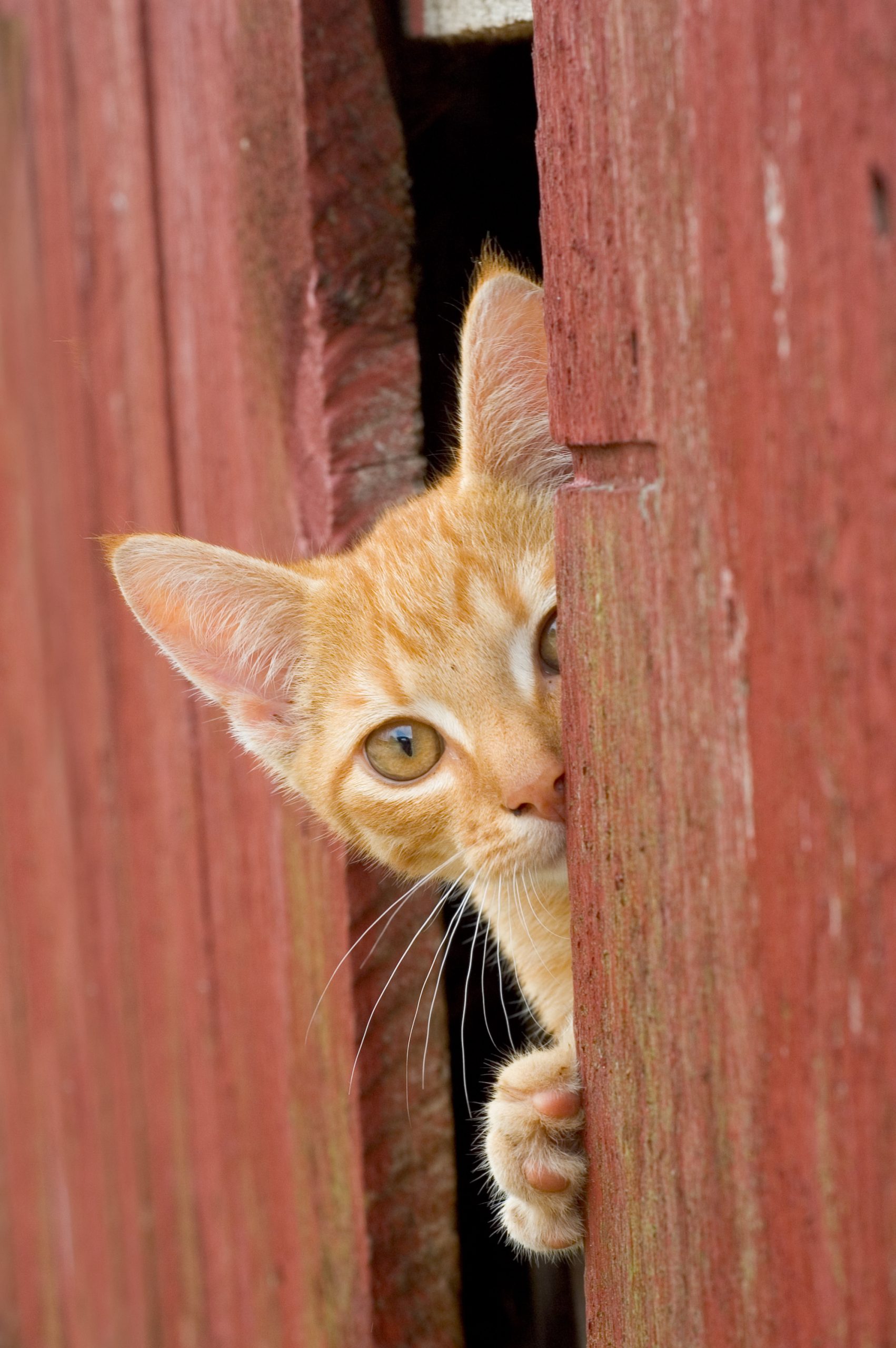
Anyone who’s interacted with cats knows that they are no angels; they act in ways that would be considered morally suspect in a human (considerably more so than dogs, which the Bible does mention). And cats (domestic ones, that is) are not mentioned once in the Bible. But the cultures who wrote the Bible – coming first as they did out of cat-worshipping Egypt, or so the story goes – clearly knew they existed. And more importantly, Christians throughout the centuries have kept cats as pets without thinking there is anything theologically suspect about them. Cats aren’t divine, but they aren’t satanic either; they just are, a neutral feature of the world God created.
And so it seems to me with the supernatural beings that one might encounter on psychedelics or among the peoples of Brazil. Perhaps those beings are more comparable to big cats – the leopards and jaguars and mountain lions that we would rightly keep at arm’s length, concerned that that they can be dangerous to us, not having gone through the domestication process. Christian or otherwise, once one grants that unfamiliar supernatural beings might exist, one has good reason to be cautious of them. (One does not want to end up the supernatural equivalent of the Grizzly Man!) But I see no reason for Christians to think them evil – any more than one thinks that with leopards or bears.
Amod,
This is an interesting observation. seem to be arguing that they could be neutral or could be benevolent or malevolent, but that nothing about them, all other things being equal, requires Christians to think them evil. I like the analogy with cats. If they are supernatural beings, however, they might well be as many and as diverse as natural beings, some of which are parasites, others of which are predators, and others of which, like cats, enjoy sadism for its own sake. And just as there are dangerous, humans, if there are supernatural beings, similar to humans, then the best and the worst of them might also exist. Just as they are as evolution in the natural world, and a food chain, the same may hold in the supernatural realm. If that’s the case, then offerings to supernatural beings could be like protection money to the mafia. This is particularly the case when it comes to the sacrifice of living animals, for whom supernatural predators might consider treats eating their souls just as they come out of being killed.
Absolutely agreed! Supernatural beings could be just as dangerous and sadistic as natural beings. The point I’m trying to make here is just that there’s no prior theological reason to treat trolls or nats or forest spirits with suspicion, any more than there is for cats.
As far as I know there has been little discussion on this point in recent times by Christians, either Catholics or Protestants. A Jesuit priest, Fr. Herbert Thurston published a book entitled Ghosts and Poltergeists, in 1953, with an imprimatur (declaration of doctrinal orthodoxy by the local bishop). He recounts episodes of preternatural occurrences apparently not attributable to demons (or good angels either) or souls in purgatory soliciting our prayers.
I believe that in the English poet, Gerard Manley Hopkins (also a Jesuit priest) there is some discussion of fairies in Wales.
In his book on the medieval worldview, The Discarded Image, C. S. Lewis has a chapter on fairies. He writes, “They are marginal, fugitive creatures. They are perhaps the only creatures to whom the [medieval] Model does not assign, as it were, official status.”
I myself am a Catholic. On the question of whether such beings exist or not, I am agnostic.
Welcome! Yeah, I’m intentionally putting aside the question of whether these beings exist. (I lean toward the view that they don’t, but aim to keep an open mind.) That said, thank you for the context: I’m no expert on Christian theology, especially in the modern context, so I don’t have a sense of what has actually been said on the topic. But I’m glad to hear you say it hasn’t been much, because that confirms my impression.
I think this rather culturally determined. If you read the hagiographies of medieval saints, such creatures don’t just merely exist, they can be converted to Christianity! For instance, St. Columba is said to have encountered such a being in the River Ness that was apparently curious enough about what its lunch had to say to listen and be convinced. Assuming that this is the same being as Nessie, it would explain why it now photobombs tourists rather than devouring them.
Your evangelical, on the other hand, comes from a faith community where the supernatural is generally tied to witchcraft, which is prohibited. (Evangelicals often prohibit their children from celebrating Halloween or restrict what costumes they can wear.) Hence the medieval hagiographer seeing the supernatural as not only being morally neutral, but actually having moral agency, but the modern seeing it as inherently evil. Their moral views of the supernatural landscape is shaped by their broader understanding of how that works, rather than necessarily a religious interpretation of scripture.
That is a good point! I suppose the Catholic/Protestant divide is generally relevant here. In the person of the saints, Catholics have a much larger number of supernatural beings classified as good and holy, so maybe it’s less of a stretch to accept the neutral ones as well.