
Tags
Alex Caring-Lobel, Aśvaghoṣa, David Gelles, George Grant, Karl Marx, Patton Oswalt, Richard Swinburne, Ross Coggins, theodicy, Zhuangzi
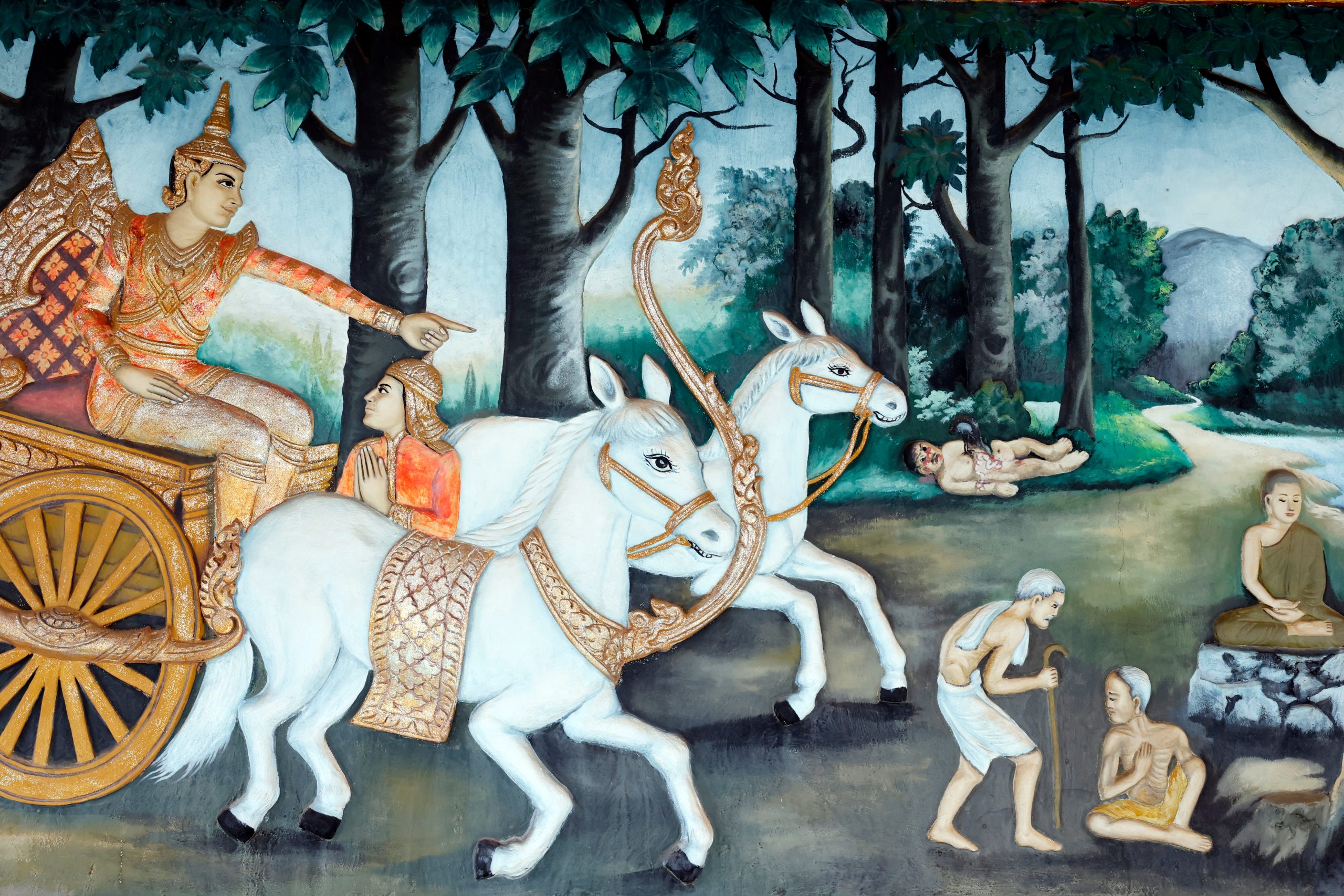
The great Buddhist poet Aśvaghoṣa famously tells the story of the Buddha’s father, the king, who tried to keep his son as an heir rather than a monk by isolating him from all the bad things in the world. Of course the king’s plan doesn’t work: the Buddha-to-be sneaks out and sees an old man, a sick man and a dead man, reminding him that these fates will come to a king as surely as anyone else, and so he renounces the world and becomes a monk. The story shows us that there always remains a gap between what is and what should be: we will always face sad facts like illness and death. That gap is bad, it is always with us, and that is unfortunate; it is just the way things are, whether we like it or not. It provides a need and an impetus for us to improve our minds, to escape the suffering that comes from craving in the face of those sad facts.
A very different take on that gap comes from Jacobin senior editor Alex Caring-Lobel in the Springer Handbook of Mindfulness, which collects over thirty essays objecting to the modern mindfulness movemennt. These essays take particular objection to David Gelles’s claim that “stress emanates from a mismatch between our expectation of how things should be and the way things are”. (p85) Caring-Lobel, in particular, objects to Gelles’s view because it
dismisses that glorious gap between “how things should be and the way there [sic] are” as a kind of impediment to flourishing. This is, after all, the space of the social imagination. It is also the space in which democracy operates. (Caring-Lobel p209)
Continue reading