
Tags
Chan/Zen 禪, Dōgen, existentialism, Japan, Kyoto School, natural environment, Nishitani Keiji, Rudolf Bultmann, Touzi Datong
Perhaps the most exciting thing I’ve read this year is “Science and Zen”, a wonderful article by the Kyoto School‘s leading thinker Nishitani Keiji – confirming my hunch that Nishitani is a philosopher I want to get to know much better. I am not sure that any other thinker in history has yet been able to think with Western and Asian traditions as profoundly as he has. (The article is most easily available in the excellent compilation The Buddha Eye; page references here are to it, in the 2004 edition.)
“Science and Zen” is deeply enmeshed in the world of kōans, those famously enigmatic exchanges at the heart of the tradition known as Chan in China and Zen in Nishitani’s Japan (and referred to by the character 禪 in both). Kōan practice is very far removed from any of the Buddhism I have known and learned from. And yet through kōans, Nishitani has nevertheless managed to express profoundly some of the insights that I have so far struggled to express myself.
At the heart of “Science and Zen” is the traditional Buddhist cosmological belief that every era (kalpa) will eventually come to an end by burning up in an all-consuming fire. On the kalpa fire, Nishitani takes an approach I’ve advocated for more Buddhists to take: demythologizing, the approach pioneered by the German Protestant existentialist theologian Rudolf Bultmann, where one reinterprets unscientific or mythological ideas in terms of their meaning for our own lifes. And Nishitani demythologizes the kalpa fire with the help of a kōan.
The kōan in question comes from the tenth-century Chan master Touzi Datong (the translation of Nishitani refers to him by the alternate Chinese spelling “T’ou-tzū”). Touzi was asked, “How is it at the time of the all-consuming kalpa fire?” and replied, “An unspeakably awesome cold!”
Nishitani explains this kōan with a powerful demythologizing move. He notes that Touzi is right to equate apocalyptic heat with extreme cold in a modern cosmological sense:
this answer points to the ordinary cosmic state of bottomless death. Terrible heat and terrible cold—either of which renders impossible the existence of any living being, including man himself (as animal rationale), who is exposed to it—are both equally ordinary phenomena of our universe. This being so, we may speak of an environment marked by conditions suitable for the subsistence of living beings as an altogether special place, somewhat like the greenhouse referred to earlier. In this sense, the unspeakably awesome cold, just like the all-consuming cosmic fire, may be interpreted as a demolition of the greenhouse of the teleological world view and an entry onto the field of the scientific world view. (Buddha Eye 119)
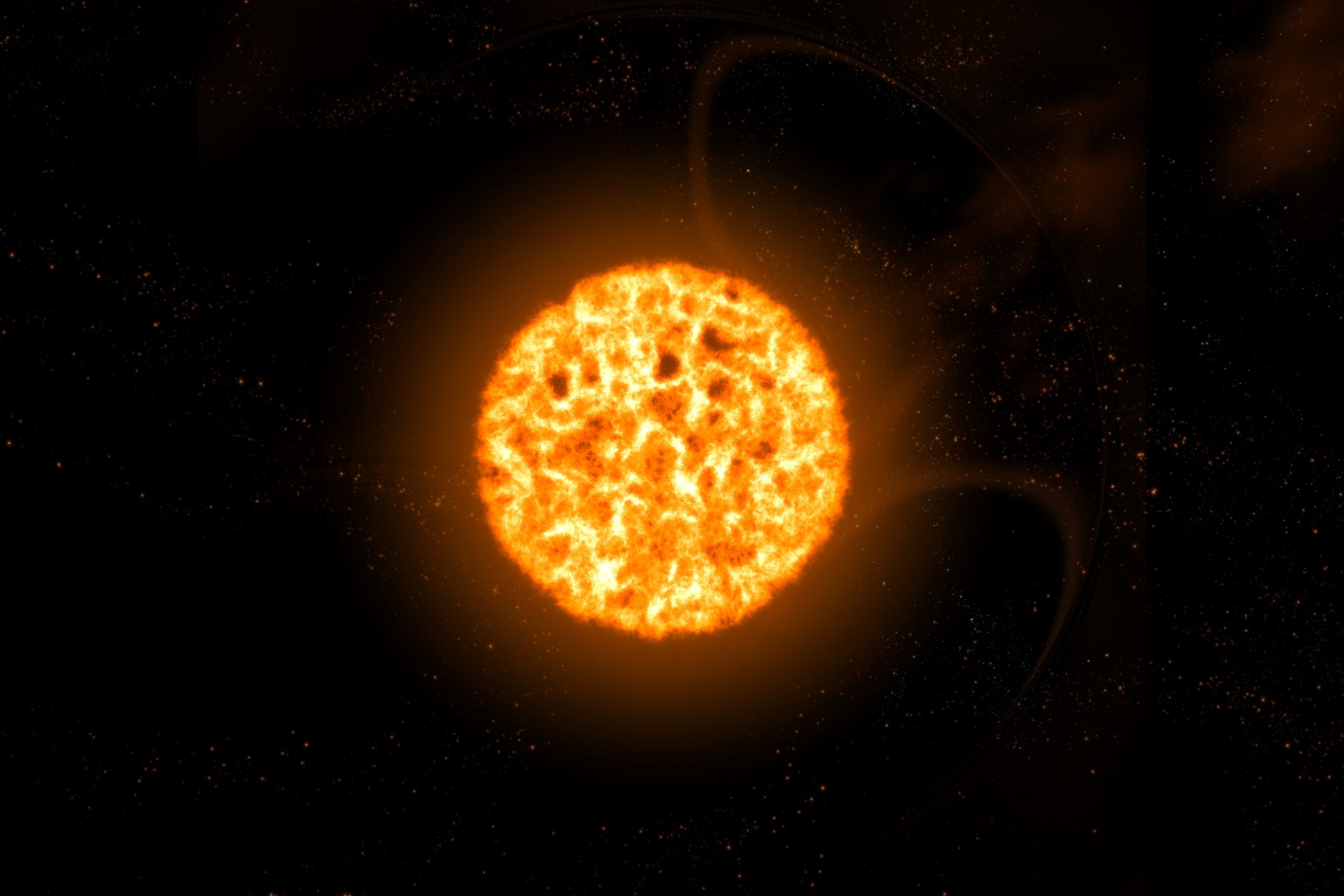
That is: the evidence of the past several centuries, starting with early astronomers like Kepler, has come to show us that the vast majority of the universe is terrible cold, much too cold to support any life – but of the parts that aren’t that terrible cold, the vast majority are a terrible heat, to hot to support life. Life is a bizarre exception, a random accident – one that will come, inevitably, to an end. And this gives the lie to most teleological worldviews, worldviews that see a purpose in the cosmos that has anything to do with human life – from the old theistic views that see the cosmos governed by purposive natural law, to the views of Hegel and Marx that see a purpose in the movement of history. (Nishitani refers to the “state of Hiroshima immediately after the fall of the atomic bomb” – that terrible and nearby event not long before he wrote this piece – as “a glimpse of that hidden scientific actuality openly manifesting itself as an actuality in the human realm.”) Thus Nishitani adds:
the answer—”An unspeakably awesome cold!”—was intended by the master to indicate a reality of religious existence on a dimension higher than that of science or common sense. It is an answer that destroys not only the teleological view of the natural world but also the whole world of soul, reason, and spirit based upon it, that is, the so-called intelligible world. That is, it represents a breakdown of the whole system of teleology. (119)
But if we are left without a global teleology, where are we left instead? With the cosmos almost entirely inhospitable to life, it is a place of “bottomless death”. Nishitani relates this point to the Zen concept of the “Great Death”: as I understand it, an idea coming from the famous Zen master Dōgen that liberation involves in some sense “dying to oneself” before one’s physical death. Thanks to the concept of the Great Death, “In the religiosity of Zen Buddhism, demythologization of the mythical and existentialization of the scientific belong to one and the same process.” For:
The answer “An unspeakably awesome cold!” was a presentation of the end of the world as the place for such a Great Death. To the questioning monk, it was like the thrust of a religious sword of death. The transposition of the cosmos beset by terrible cold to the level of religion was thus able to become like the brandishing of a religious sword of death and a demand to annihilate one’s own self. (120)
The cold of the kalpa fire – the heat and cold of the universe – shows us how small we are, how insignificant to the universe as a whole. In that way, for Nishitani, it helps us get over ourselves – a liberating insight that helps us get over our own egos.
I’m excited by all this because it expresses ideas I’ve been trying to put together myself, an existentialist Buddhism aware of human extinction and its significance – even though I know still little about Zen. Nishitani seems more and more like a thinker worth getting to know in detail.