• About me
  • About this blog
  • Comment rules
  • Other writings

Love of All Wisdom

~ Philosophy through multiple traditions

Love of All Wisdom

Category Archives: Western Thought

The paradox of free speech

08 Sunday Feb 2026

Posted by Amod Lele in Analytic Tradition, Politics, Truth

≈ 7 Comments

Tags

academia, Charlie Kirk, democracy, Harriet Taylor Mill, John Stuart Mill, pedagogy, Rebecca Tuvel, rights

Freedom of speech and expression is essential to a good society, to protect both the search for truth and self-expression. The problem is that protecting freedom of expression is harder than it looks – because some speech interferes with other speech.

John Stuart and Harriet Taylor Mill get this point clearly enough that they are worth quoting in full:

Continue reading →

Freedom of speech was never just about government

01 Sunday Feb 2026

Posted by Amod Lele in Economics, Politics, Work

≈ 1 Comment

Tags

Greg Lukianoff, Harriet Taylor Mill, John Stuart Mill, law, libertarianism, Randall Munroe, rights, Stephen Colbert, United States

We need free speech both to search for truth, and to express ourselves. When free speech is silenced, it interferes with both of those core human goals.

And it therefore needs to be said loud and clear: silencing speech is a problem no matter who is doing the silencing.

Continue reading →

Why freedom of speech matters

25 Sunday Jan 2026

Posted by Amod Lele in Analytic Tradition, Certainty and Doubt, Economics, Flourishing, Humility, Politics, Truth

≈ 5 Comments

Tags

academia, Alasdair MacIntyre, Elizabeth Barnes, expressive individualism, Harriet Taylor Mill, John Stuart Mill, Noah Feldman, utilitarianism

Freedom of thought, belief, speech, and expression is a principle long cherished in the West. In recent years it has come under the most sustained attack I have seen in my lifetime, from multiple quarters. I believe it is worth defending, and it’s time to say more about why.

On Liberty, generally attributed to the English philosopher John Stuart Mill, is the most famous and widely cited defence of this principle, and for good reason. I had a low opinion of Mill for a while, as his Utilitarianism did a bad job, overall, of defending the utilitarianism I broke from – and that was one of the key reasons I broke from it. But On Liberty is an entirely different story. It provides a powerful and, I think, largely correct defence of free thought and speech on two grounds – neither of which is particularly utilitarian!

Portrait of Harriet Taylor Mill by unknown artist, in the London National Portrait Gallery.

Perhaps the difference is because it now seems likely the book was co-written with Harriet Taylor Mill, John Stuart’s wife – probably published without the woman’s name on it to make a Victorian audience to take it more seriously. (For that reason I’ll refer to On Liberty as written by “the Mills”.) It might be that Harriet was less of a utilitarian than John. But the point here is the two big grounds that the Mills provide for why freedom of speech is important.

Continue reading →

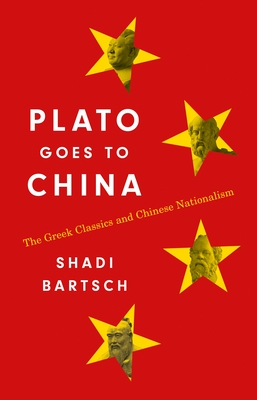
Legalize Plato

18 Sunday Jan 2026

Posted by Sandhya Lele in Greek and Roman Tradition, Hermeneutics, Politics, Reading and Recitation, Sex

≈ 3 Comments

Tags

academia, conservatism, gender, Martin Peterson, pedagogy, Plato, Republican Party, Roger Scruton, Saba Bazargan, Texas A&M University, Tommy Williams, United States, William F. Buckley

The Social Justice movement has been notorious for its intolerance to dissenting opinions, and has often reached high levels in university administrations. And of course such left-wing movements on race and gender have a long history of attacking “dead white males” – in contrast to those contemporary right-wingers who seek to “RETVRN” to a premodern West, stylizing it with a V to indicate their classical sympathies. So when a university orders a professor to remove Plato from his philosophy syllabus, surely that must be a woke thing. Right?

Nope!

Texas A&M University ordered the removal of Plato because he was too woke.

Continue reading →

The world of the women’s room

11 Sunday Jan 2026

Posted by Sandhya Lele in Epistemology, Food, Place, Prejudices and "Intuitions", Reading and Recitation, Social Science

≈ 4 Comments

Tags

Alfred Schutz, Canada, Disengaged Buddhism, gender, Hebrew Bible, Jerry Seinfeld, Thailand

When I first attended an academic conference en femme, it turned out to be relevant to the conference’s discussion of gender ethics. It also taught me something else – by accident.

When a break between panels began, a female colleague and I were having an enthusiastic discussion of topics coming out of the previous panel. We both needed to go to the washroom1, so we carried on our discussion on the way to the women’s room. Then we entered neighbouring toilet stalls and sat down to do our business – and continued our Buddhist-ethics conversation across the barrier between the stalls, while sitting down in them.

Continue reading →

Do you need anger for respect and accountability?

04 Sunday Jan 2026

Posted by Amod Lele in Action, Analytic Tradition, Anger, Free Will, Mahāyāna, Morality, Psychology

≈ 2 Comments

Tags

Antti Kauppinen, Benjamin Porter, Brock Turner, justice, Peter Strawson, Śāntideva

I am delighted to announce the publication of my first book, this coming fall, with Shambhala Publications. It is a book project I have been working on for many years, and the topic has veered considerably from the version I discussed five years ago, becoming much more specific than the ambitious project I had imagined then. The title will be After Anger: What Buddhism Can Teach Us about Our Culture of Rage. As the title suggests, it will constructively address the Buddhist critique of anger – and then, afterwards, will turn to the deeper mental roots of our anger in craving and resistance. I’ll be saying more about the book in this space as we get closer to publication time.

In the meantime, I have a number of thoughts that had to be left out of the final version of the book, but that I think are nevertheless worthy of publication on this blog. As you can imagine, anger has many defenders, who have a variety of different reasons. I tried to deal with most of those sorts of reasons in the book, but there are a couple that didn’t quite make it in.

Continue reading →

In praise of alcohol

28 Sunday Dec 2025

Posted by Amod Lele in Aesthetics, Early and Theravāda, Food, Friends, Health, Judaism, Place, Pleasure, Rites, Zest

≈ 6 Comments

Tags

drugs, Eric Bogle, gender, Moses Maimonides, music, Purim, Scotland, Stan Rogers, Talmud

Alcohol is further out of fashion these days than at any time in living memory. Even American Prohibition just made people try harder to get alcohol. Today, though, alcohol drinking in the US has fallen to record lows, with only 54% of Gallup survey respondents saying they consume it. Nearly every cocktail-serving restaurant or even bar I visit these days has non-alcoholic mocktail options, often with sophisticated bartending flair – something barely imaginable twenty years ago.

The reasons for this are not too hard to imagine. On the one hand, the medical studies about alcohol’s harms keep piling up, often indicating that even moderate drinking – the kind touted as beneficial to health a couple decades ago – may now have many negative health consequences. On the other, alternative mind-altering substances are now easily available – most obviously cannabis, legal in many American jurisdictions and across Canada, which is a clearly healthier alternative. All in all, all things considered, the downward trend in drinking is probably not a bad thing. And there’s plenty of traditional precedent for being suspicious of alcohol: the fifth of the Five Precepts, guiding lay people, enjoins refraining from alcohol on the grounds that it causes heedlessness.

That said, there are reasons why alcohol has remained so enduringly popular in human history. And we do ourselves a disservice by disregarding them. Alcohol is not for everybody – many people find it takes control of their lives in a harmful way. But even for those people, there’s usually a reason it got so powerfully appealing in the first place. In many human lives, ones where one can control its consumption well, alcohol plays a very positive and valuable role. And as we approach the one festival in the North American ritual calendar where the drinking of alcohol typically plays the largest role, it’s worth thinking a bit about alcohol’s positives.

Continue reading →

Who were the Magi?

21 Sunday Dec 2025

Posted by Amod Lele in Christianity, Greek and Roman Tradition, Judaism, Place, Supernatural

≈ 2 Comments

Tags

Christmas, Eric Vanden Eykel, Israel/Palestine, Jesus, New Testament, Zoroastrianism

Depiction of Jesus with his visitors, from St. Michael’s Cathedral in Toronto. Wikimedia Commons photo by Wojciech Dittwald, CC-BY-SA licence.

One of the most familiar and celebrated parts of the traditional Christmas story is the tale of the visitors who brought gifts to the baby Jesus at his birth. If you were raised anywhere in North America or Europe you surely at least know of this tale, even if you have no Christian background. More than any other part of the Christmas story, this tale may have served to create Christmas as we know it today – since few things are more central to modern Christmas than the giving of gifts, and that giving is usually held to commemorate the story of these visitors. The famous Christmas carol “We Three Kings” is entirely about them, and several other beloved carols refer to their story (“The First Noël”, “What Child Is This?”)

Yet there is something enigmatic about these visitors. Biblical scholar Eric Vanden Eykel wrote an interesting book on them (which also serves as an engaging introduction to the methods of biblical scholarship). Vanden Eykel doesn’t even try to ask the question of whether they historically existed, because we have so little evidence on which to base an answer. Within the Bible, they are not mentioned outside of one short passage in chapter 2 of the Gospel of Matthew, and there are no other texts from a similar time period that mention them either. There are apocryphal Christian texts – texts outside the Bible – that mention them, and I was hoping these might tell an alternate story, but Vanden Eykel points out that that these are significantly later and draw on the Matthew story themselves; they are not independent witnesses. That means that if they ever existed historically – Vanden Eykel never asks that question, and I wouldn’t be surprised if it was because he believes they didn’t – Matthew is by far the closest thing to a witness that we have.

So let’s take a look at what Matthew says about Jesus’s visitors. I’m taking this translation from the New Revised Standard Version, which I understand to be the most historically accurate – though leaving a couple words in the original Greek because we’ll talk about them later. I’m leaving out the part in the middle about their encounter with King Herod for space, but providing everything it says about them and their encounter with Jesus:

Continue reading →

Answering objections to transracialism

14 Sunday Dec 2025

Posted by Sandhya Lele in Biology, Politics

≈ 2 Comments

Tags

Caitlyn Jenner, gender, identity, Michael Jackson, Nell Irvin Painter, race, Rachel Dolezal, Rebecca Tuvel, Sally Haslanger, Tamara Winfrey Harris

There are some reasonable objections one can make to transracialism. The trick is that those objections usually also work as objections against transgender. I think that’s why the reaction against Rebecca Tuvel’s article was so vehement: it forces us in the trans movement to think about hard questions we’d rather not think about. But we need to think about them, if we’re going to have a chance of defending transgender identity in an era backlashing against it. I think a healthy defence of transgender should also be a defence of transracialism.

The first and perhaps most important such objection is that there are plenty of other categories in which few if any would reasonably accept self-identification as the criterion for identity. Identifying as otherkin doesn’t mean you’re actually a wolf. I don’t think anybody wants to say that someone who has lived for only thirty years should be able to access retirement benefits without a tax penalty, just by identifying as a 70-year-old. Why would we treat race, or gender, differently from age or species?

Continue reading →

For transracialism

07 Sunday Dec 2025

Posted by Sandhya Lele in Analytic Tradition, Logic, Politics

≈ 3 Comments

Tags

Caitlyn Jenner, expressive individualism, gender, Ibram X. Kendi, identity, John Stuart Mill, race, Rachel Dolezal, Rebecca Tuvel

The bullying campaign to cancel Rebecca Tuvel’s defence of transracialism was shoddy and shameful. There was no merit in it at all. Whether or not you think Tuvel’s argument for transracialism succeeds, that part seems to me pretty obvious. But it does raise the next question, to which the answers are less obvious: does Tuvel’s argument work? Does the logic of accepting transgender identity imply accepting transracial identity?

You could not have got me to answer that question (in public) back in 2017, while Tuvel was still being actively persecuted. For a while, that bullying campaign and others like it successfully achieved their goal of terror: they succeeded in getting me, and others like me, to silence our dissenting views out of fear of the consequences that were so regularly experienced by others.

But the climate has changed a lot since then, in ways that make it still harder to speak on some issues (like Israel and Palestine), but easier to speak on this one. So I am going to take a risk now, stick my head up, bite the bullet, and answer the question: yes!

Continue reading →
← Older posts
Newer posts →

Welcome to Love of All Wisdom.

I invite you to leave comments on my blog, even - or especially - if I have no idea who you are. Philosophy is a conversation, and I invite you to join it with me; I welcome all comers (provided they follow a few basic rules). I typically make a new post every Sunday. If you'd like to be notified when a new post is posted, you can get email notifications whenever I add something new via the link further down in this sidebar. You can also follow this blog on Facebook. Or if you use RSS, you can get updates through the RSS feed.

Recent Comments

  • Amod Lele on Hiding your ideas in plain sight
  • Pail D. Van Pelt on Hiding your ideas in plain sight
  • Pail D. Van Pelt on Hiding your ideas in plain sight
  • Paul D. Van Pelt on Should we be polite to AIs?
  • Dennis Fischman on Should we be polite to AIs?

Subscribe to receive Love of All Wisdom by email:

Post Tags

20th century academia Alasdair MacIntyre Aristotle ascent/descent Augustine autobiography Buddhaghosa Canada Confucius conservatism Disengaged Buddhism Engaged Buddhism Evan Thompson expressive individualism Four Noble Truths Friedrich Nietzsche G.W.F. Hegel gender Hebrew Bible identity Immanuel Kant intimacy/integrity justice Karl Marx Ken Wilber law Martha C. Nussbaum modernity music mystical experience nondualism Pali suttas pedagogy Plato race rebirth religion Siddhattha Gotama (Buddha) technology theodicy United States utilitarianism Śaṅkara Śāntideva

Categories

  • African Thought (15)
  • Applied Philosophy (380)
    • Death (44)
    • Family (53)
    • Food (22)
    • Friends (21)
    • Health (33)
    • Place (37)
    • Play (18)
    • Politics (239)
    • Sex (25)
    • Work (48)
  • Asian Thought (459)
    • Buddhism (331)
      • Early and Theravāda (140)
      • Mahāyāna (140)
      • Modernized Buddhism (101)
    • East Asia (101)
      • Confucianism (62)
      • Daoism (22)
      • Shinto (1)
    • South Asia (148)
      • Bhakti Poets (3)
      • Cārvāka-Lokāyata (5)
      • Epics (16)
      • Jainism (24)
      • Modern Hinduism (45)
      • Nyāya-Vaiśeṣika (6)
      • Sāṃkhya-Yoga (16)
      • Sikhism (1)
      • Vedānta (42)
      • Vedas and Mīmāṃsā (7)
  • Blog Admin (28)
  • Indigenous American Thought (8)
  • Method (278)
    • Metaphilosophy (180)
    • Method and Theory in the Study of Religion (155)
  • Practical Philosophy (431)
    • Action (17)
    • Aesthetics (52)
    • Emotion (195)
      • Anger (42)
      • Attachment and Craving (32)
      • Compassion (9)
      • Despair (7)
      • Disgust (5)
      • Faith (20)
      • Fear (15)
      • Grief (9)
      • Happiness (52)
      • Hope (19)
      • Pleasure (37)
      • Shame and Guilt (10)
    • External Goods (55)
    • Flourishing (103)
    • Foundations of Ethics (126)
    • Karma (44)
    • Morality (79)
    • Virtue (187)
      • Courage (7)
      • Generosity (14)
      • Gentleness (7)
      • Gratitude (13)
      • Honesty (15)
      • Humility (27)
      • Leadership (7)
      • Mindfulness (24)
      • Patient Endurance (31)
      • Self-Discipline (10)
      • Serenity (39)
      • Zest (8)
  • Practice (146)
    • Karmic Redirection (5)
    • Meditation (47)
    • Monasticism (47)
    • Physical Exercise (4)
    • Prayer (16)
    • Reading and Recitation (14)
    • Rites (23)
    • Therapy (11)
  • Theoretical Philosophy (403)
    • Consciousness (23)
    • Deity (76)
    • Epistemology (141)
      • Certainty and Doubt (19)
      • Dialectic (21)
      • Logic (15)
      • Prejudices and "Intuitions" (31)
    • Free Will (18)
    • Hermeneutics (66)
    • Human Nature (34)
    • Metaphysics (115)
    • Philosophy of Language (31)
    • Self (78)
    • Supernatural (54)
    • Truth (64)
    • Unconscious Mind (16)
  • Western Thought (525)
    • Analytic Tradition (107)
    • Christianity (162)
      • Early Factions (8)
      • Eastern Orthodoxy (3)
      • Protestantism (27)
      • Roman Catholicism (61)
    • French Tradition (50)
    • German Tradition (97)
    • Greek and Roman Tradition (126)
      • Epicureanism (25)
      • Neoplatonism (2)
      • Pre-Socratics (6)
      • Skepticism (2)
      • Sophists (8)
      • Stoicism (22)
    • Islam (44)
      • Mu'tazila (2)
      • Salafi (3)
      • Sufism (10)
    • Judaism (38)
    • Natural Science (101)
      • Biology (31)
      • Philosophy of Science (50)
      • Physics and Astronomy (11)
    • Social Science (196)
      • Economics (48)
      • Psychology (85)

Recent Posts

  • Should we be polite to AIs?
  • Why teach virtue to a robot
  • Being marginalized doesn’t make you smarter
  • “The future will belong to the mestiza”
  • Hiding your ideas in plain sight

Popular posts

  • One and a half noble truths?
  • Wishing George W. Bush well
  • Do Speculative Realists want us to be Chinese?
  • Why I am not a right-winger
  • On faith in tooth relics

Basic concepts

  • Ascent and Descent
  • Intimacy and integrity
  • Ascent-descent and intimacy-integrity together
  • Perennial questions?
  • Virtuous and vicious means
  • Dialectical and demonstrative argument
  • Chastened intellectualism and practice
  • Yavanayāna Buddhism: what it is
  • Why worry about contradictions?
  • The first philosophy blogger

Personal favourites

  • Can philosophy be a way of life? Pierre Hadot (1922-2010)
  • James Doull and the history of ethical motivation
  • Praying to something you don't believe in
  • What does postmodernism perform?
  • Why I'm getting married

Archives

Search this site

All posts, pages and metadata copyright 2009-2026 Amod Lele unless otherwise noted. Comments copyright 2009-2026 their comment authors. Creative Commons Attribution-NonCommercial-ShareAlike (BY-NC-SA) licence.

Proudly powered by WordPress Theme: Chateau by Ignacio Ricci.