• About me
  • About this blog
  • Comment rules
  • Other writings

Love of All Wisdom

~ Philosophy through multiple traditions

Love of All Wisdom

Tag Archives: Pali suttas

I am a Buddhist

10 Sunday May 2015

Posted by Amod Lele in Christianity, Death, Early and Theravāda, External Goods, Family, Flourishing, Grief, Health, Modernized Buddhism, Politics, Prayer, Therapy

≈ 8 Comments

Tags

autobiography, cancer, identity, justice, Mañjuśrī, Pali suttas, Ralph Waldo Emerson, religion, Siddhattha Gotama (Buddha), Treya Killam Wilber, Unitarian Universalism

Last fall in my house we had some serious bad news: my wife was diagnosed with breast cancer. (There have been a number of ways in which I have hoped to emulate Ken Wilber, but this sure wasn’t one of them.) The good news is it was not a particularly severe variety as cancers go; with proper treatment it would not be life-threatening. But those treatments have been rough, with an extended recovery period.

It has, as you may imagine, been a difficult time for both of us. I am happy to say that things are much better than they were, but the hard times are not yet over. My wife’s story is hers to tell, and she has told it magnificently. On my side, something major has happened that I did not expect: for the first time, I have come to consider myself a Buddhist. Continue reading →
On justice and activism in Pali Buddhism

28 Sunday Sep 2014

Posted by Amod Lele in Early and Theravāda, Monasticism, Politics

≈ 2 Comments

Tags

Abhidhamma, conventional/ultimate, Engaged Buddhism, justice, Justin Whitaker, Pali suttas

My discussion with Justin Whitaker continues after my last post, which was a response to his original post about trans* inclusiveness in Buddhism.

There followed a discussion back and forth between Justin and myself. The discussion has moved away from anything to do with trans* issues, which is fine with me because my point, and I think Justin’s too, was about something bigger: the role of justice and activism in Buddhist tradition. I won’t try to recap the discussion here because the link is available for those who haven’t seen it. I’ll just refresh your memory by quoting Justin’s most recent comment: Continue reading →

Trans* inclusiveness as an innovation to Buddhism

14 Sunday Sep 2014

Posted by Amod Lele in Early and Theravāda, Modernized Buddhism, Monasticism, Politics, Sex

≈ 4 Comments

Tags

conventional/ultimate, Engaged Buddhism, Five Precepts, gender, justice, Justin Whitaker, Pali suttas, Peter Harvey, transbuddhists.org, vinaya

On his American Buddhist Perspective blog, my friend Justin Whitaker recently posted an interesting interview on the experience of trans* people in American Buddhism. Justin uses “trans*” as a shorthand for “transgender”, “transsexual”, “transvestite” and similar terms – to denote people who have become or attempted to become, in some respect, a gender different from the one associated with their biology at birth. It is clear to me that trans* people in the US face various forms of unjust discrimination. Where the tricky questions get raised is when the struggle against that injustice intersects with Buddhism – as, for that matter, when the struggle against any injustice intersects with Buddhism. Justin and I began a conversation about this in the comments to that post, and I’d like to continue that conversation in more detail here. Continue reading →

Accounting for Hegel and the Pali

17 Sunday Nov 2013

Posted by Amod Lele in Compassion, Early and Theravāda, Emotion, Epistemology, German Tradition, Metaphilosophy, Metaphysics, Philosophy of Language, Self

≈ Comments Off on Accounting for Hegel and the Pali

Tags

G.W.F. Hegel, intimacy/integrity, Pali suttas, Thomas P. Kasulis

My previous two substantive posts, on Thomas Kasulis’s intimacy/integrity distinction, went in opposite directions from one another. Two weeks ago I noted how the intimacy/integrity distinction seems to divide into two separate distinctions – an ontological one of internal vs. external relation between things, and an epistemological one of affective somatic “dark” knowledge vs. public self-reflective knowledge. Kasulis writes as if internal relation and affective somatic knowledge are all part of the same complex and vice versa, but Hegel and the Pali Buddhist texts seem to cross these divides, such that the Pali literature places external relation with affective somatic knowledge and Hegel the opposite.

Last week, though, I aimed to show that the connection Kasulis assumes between these aspects is a real one. What I pointed out was that an internal relation between existent things implies an internal relation between knower and known, and that this implies an affective somatic kind of knowledge – as an external relation between things implies an external relation between knower and known, and therefore a public and self-reflective kind of knowledge.

But if this is so, what do we do with the exceptional cases of Hegel and the Pali literature, which seem to involve one but not the other? Continue reading →

The innovations of S.N. Goenka (1930-2013)

06 Sunday Oct 2013

Posted by Amod Lele in Early and Theravāda, Meditation, Modernized Buddhism, Monasticism

≈ 2 Comments

Tags

Burma/Myanmar, conservatism, obituary, Pali suttas, S.N. Goenka

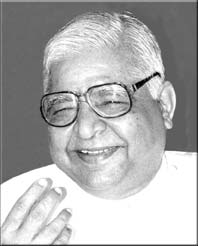
S.N. GoenkaI found out via Justin Whitaker the sad news that S.N. Goenka died this week. The name needs little introduction for Yavanayāna Buddhists, but others may wish some additional insight.

Goenka, born in Burma, was a pioneer – really the pioneer – of what is now known as vipassanā meditation. This term vipassanā (usually translated “insight”) is found in the classical Pali texts, and so is the Satipaṭṭhāna Sutta from which Goenka originally drew the meditation technique. Notably, though, the term vipassanā does not show up in the Satipaṭṭhāna Sutta itself. And that detail, I think, is telling about Goenka’s whole project.

I recall Goenka claiming, like many other contemporary Buddhist teachers, that what he was teaching was not new; it was just the teaching of the Buddha. That statement is not false exactly, but it’s not the whole truth. Continue reading →

A journey to Buddhism with Hegel

14 Sunday Jul 2013

Posted by Amod Lele in Early and Theravāda, Flourishing, Friends, German Tradition, Metaphilosophy, Modernized Buddhism, Social Science

≈ 4 Comments

Tags

autobiography, Four Noble Truths, G.W.F. Hegel, James Doull, Karl Marx, McGill University, Nicholas Thorne, Pali suttas, Thailand, utilitarianism

A few years ago I told what I thought of at the time as the story of my philosophy: how I left a utilitarian worldview and came to discover Buddhism in Thailand at age 21. I realize now that there’s something important missing from that story, and you can see it in the final paragraph of the second piece:

And yet, all the Western philosophy that I’d learned before didn’t just go away. I’d learned important, powerful, beautiful things that seemed true – and often seemed opposite to the Buddhism I’d found myself in. Is there a way to reconcile the two? One way or another, that question has been central to my life ever since.

That was the right ending: since then I have indeed been preoccupied with reconciling Buddhism and the Western philosophy I’d already learned. But if you only read those two pieces, you would come away with the impression that the Western philosophy I had learned, and would try to reconcile, consisted primarily of utilitarianism. And that would be completely wrong. Continue reading →

Buddhists and “Hindus” against traditional family values

16 Sunday Dec 2012

Posted by Amod Lele in Christianity, Early and Theravāda, East Asia, Family, Jainism, Mahāyāna, Monasticism, Social Science, South Asia

≈ 4 Comments

Tags

ascent/descent, dharmaśāstra, Dōgen, intimacy/integrity, Jan Nattier, Jātakas, Jesus, Joel Kotkin, New Testament, Pali suttas, Patrick Deneen, Patrick Olivelle, Śāntideva, Siddhattha Gotama (Buddha), Ugraparipṛcchā Sūtra, vinaya

A while ago I wrote about how Indian traditions upset conventional assumptions about family and community being essential to premodern tradition and culture. There, I was responding to a piece by Patrick Deneen, which drew only on Western traditions. As a result, Deneen’s piece had a narrowness of focus, but within that focus it was able to attain some accuracy. Not so for a recent report by urban geographer Joel Kotkin, entitled The Rise of Post-Familialism. Continue reading →

In praise of questions which tend not to edification

12 Sunday Aug 2012

Posted by Amod Lele in Early and Theravāda, German Tradition, Metaphilosophy, Method and Theory in the Study of Religion, Monasticism, Social Science

≈ 5 Comments

Tags

autobiography, Carl Sagan, Communism, Henry Clarke Warren, Karl Marx, Leo Panitch, Pali suttas, Siddhattha Gotama (Buddha)

The Shorter Māluṅkya Sutta, in the early Pali Buddhist sutta texts, opens with the Buddhist monk Māluṅkyaputta meditating and thinking as follows:

These positions that are undeclared, set aside, discarded by the Blessed One [the Buddha] — ‘The cosmos is eternal,’ ‘The cosmos is not eternal,’ ‘The cosmos is finite,’ ‘The cosmos is infinite,’ ‘The soul and the body are the same,’ ‘The soul is one thing and the body another,’ ‘After death a Tathagata exists,’ ‘After death a Tathagata does not exist,’ ‘After death a Tathagata both exists and does not exist,’ ‘After death a Tathagata neither exists nor does not exist’ — I don’t approve, I don’t accept that the Blessed One has not declared them to me. I’ll go ask the Blessed One about this matter. [Majjhima Nikāya i.426, Thanissaro Bhikkhu translation]

The absence of answers to these questions frustrates Māluṅkyaputta enough that he is ready to leave the monkhood and become a layman if the Buddha doesn’t answer him. Continue reading →

Monkhood as technique

26 Sunday Feb 2012

Posted by Amod Lele in Early and Theravāda, Happiness, Meditation, Method and Theory in the Study of Religion, Modernized Buddhism, Monasticism

≈ 33 Comments

Tags

academia, Justin McDaniel, Matthieu Ricard, Pali suttas, pedagogy, S.N. Goenka, Terry Mattingly

My former grad-school colleague Justin McDaniel recently ran into an interesting bout of media attention and controversy over a course he teaches at Penn, and an Associated Press article written about it. It is a comparative course on monasticism, entitled “Living Deliberately”. Nothing unusual so far; but what makes this course innovative is it contains a practicum. A practicum is relatively standard fare these days for many university courses on meditation, in which students are encouraged to meditate and thereby get a firsthand grasp on the course content. But McDaniel’s course is the first one I’ve heard of in which students attempt to get firsthand experience of being a monk.

What does that mean? As part of the class, students are required to live for various periods of time according to various restrictions, each one followed by an actual monastic order of some tradition or other. No technology beyond electric lights; no reading news from the outside world; no eating after dark; no caffeine or alcohol; no vegetables that grow underground (a nod to Jainism). Breaking the rules requires confession. Continue reading →

The story of Buddhism’s Descent

04 Sunday Sep 2011

Posted by Amod Lele in Early and Theravāda, East Asia, Jainism, Mahāyāna, Mindfulness, Modernized Buddhism, Monasticism

≈ 11 Comments

Tags

ascent/descent, Chan/Zen 禪, Charles Taylor, David McMahan, Dōgen, Fazang, Huayan, interview, James Joyce, Martha C. Nussbaum, modernity, Nāgārjuna, natural environment, Pali suttas, Pure Land, S.N. Goenka, Śāntideva, Siddhattha Gotama (Buddha)

This week I did a new podcast interview with David McMahan, about his book The Making of Buddhist Modernism. The “Buddhist modernism” of the title is what I have typically called Yavanayāna: the new forms of Buddhism that have emerged in the past two centuries, which sometimes portray themselves as if they’re what Buddhism always was. (In what follows I will use the terms “Yavanayāna” and “Buddhist modernism” interchangeably.)

McMahan’s chapters are topical rather than chronological, so that he can examine the various features of the transition to Buddhist modernism. Naturally, he rounds up the most common topics: the asserted compatibility between Buddhism and science, and the idea of meditation as the most central Buddhist practice. He takes a genuinely balanced perspective on these topics that’s a welcome antidote to others. But he also touches on a few less widely noticed topics: interdependence, nature, and ordinary life. During the interview, I began to think about how closely these topics are connected with each other – and how they share a history in Buddhism that goes back long before the rise of Yavanayāna. Continue reading →

← Older posts
Newer posts →

Welcome to Love of All Wisdom.

I invite you to leave comments on my blog, even - or especially - if I have no idea who you are. Philosophy is a conversation, and I invite you to join it with me; I welcome all comers (provided they follow a few basic rules). I typically make a new post every Sunday. If you'd like to be notified when a new post is posted, you can get email notifications whenever I add something new via the link further down in this sidebar. You can also follow this blog on Facebook. Or if you use RSS, you can get updates through the RSS feed.

Recent Comments

  • Amod Lele on “The future will belong to the mestiza”
  • Nathan on “The future will belong to the mestiza”
  • Amod Lele on Hiding your ideas in plain sight
  • Paul D. Van Pelt on Hiding your ideas in plain sight
  • Paul D. Van Pelt on Don’t be an Ugly Canadian

Subscribe to receive Love of All Wisdom by email:

Post Tags

20th century academia Alasdair MacIntyre Aristotle ascent/descent Augustine autobiography Buddhaghosa Canada Confucius conservatism Disengaged Buddhism Engaged Buddhism Evan Thompson expressive individualism Four Noble Truths Friedrich Nietzsche G.W.F. Hegel gender Hebrew Bible identity Immanuel Kant intimacy/integrity justice Karl Marx Ken Wilber law Martha C. Nussbaum modernity music mystical experience nondualism Pali suttas pedagogy Plato race rebirth religion Siddhattha Gotama (Buddha) technology theodicy United States utilitarianism Śaṅkara Śāntideva

Categories

  • African Thought (15)
  • Applied Phil (378)
    • Death (44)
    • Family (53)
    • Food (22)
    • Friends (21)
    • Health (33)
    • Place (37)
    • Play (17)
    • Politics (238)
    • Sex (25)
    • Work (48)
  • Asian Thought (459)
    • Buddhism (331)
      • Early and Theravāda (140)
      • Mahāyāna (140)
      • Modernized Buddhism (101)
    • East Asia (101)
      • Confucianism (62)
      • Daoism (22)
      • Shinto (1)
    • South Asia (148)
      • Bhakti Poets (3)
      • Cārvāka-Lokāyata (5)
      • Epics (16)
      • Jainism (24)
      • Modern Hinduism (45)
      • Nyāya-Vaiśeṣika (6)
      • Sāṃkhya-Yoga (16)
      • Sikhism (1)
      • Vedānta (42)
      • Vedas and Mīmāṃsā (7)
  • Blog Admin (28)
  • Indigenous American Thought (8)
  • Method (278)
    • Metaphilosophy (180)
    • Method and Theory in the Study of Religion (155)
  • Practical Philosophy (429)
    • Action (16)
    • Aesthetics (52)
    • Emotion (193)
      • Anger (41)
      • Attachment and Craving (32)
      • Compassion (9)
      • Despair (7)
      • Disgust (5)
      • Faith (20)
      • Fear (15)
      • Grief (9)
      • Happiness (51)
      • Hope (19)
      • Pleasure (37)
      • Shame and Guilt (10)
    • External Goods (55)
    • Flourishing (102)
    • Foundations of Ethics (124)
    • Karma (44)
    • Morality (78)
    • Virtue (185)
      • Courage (7)
      • Generosity (14)
      • Gentleness (6)
      • Gratitude (13)
      • Honesty (15)
      • Humility (27)
      • Leadership (7)
      • Mindfulness (24)
      • Patient Endurance (30)
      • Self-Discipline (10)
      • Serenity (38)
      • Zest (8)
  • Practice (146)
    • Karmic Redirection (5)
    • Meditation (47)
    • Monasticism (47)
    • Physical Exercise (4)
    • Prayer (16)
    • Reading and Recitation (14)
    • Rites (23)
    • Therapy (11)
  • Theoretical Philosophy (401)
    • Consciousness (22)
    • Deity (76)
    • Epistemology (140)
      • Certainty and Doubt (19)
      • Dialectic (19)
      • Logic (15)
      • Prejudices and "Intuitions" (31)
    • Free Will (18)
    • Hermeneutics (66)
    • Human Nature (34)
    • Metaphysics (115)
    • Philosophy of Language (31)
    • Self (78)
    • Supernatural (54)
    • Truth (64)
    • Unconscious Mind (16)
  • Western Thought (522)
    • Analytic Tradition (106)
    • Christianity (162)
      • Early Factions (8)
      • Eastern Orthodoxy (3)
      • Protestantism (27)
      • Roman Catholicism (61)
    • French Tradition (50)
    • German Tradition (96)
    • Greek and Roman Tradition (126)
      • Epicureanism (25)
      • Neoplatonism (2)
      • Pre-Socratics (6)
      • Skepticism (2)
      • Sophists (8)
      • Stoicism (22)
    • Islam (44)
      • Mu'tazila (2)
      • Salafi (3)
      • Sufism (10)
    • Judaism (38)
    • Natural Science (101)
      • Biology (31)
      • Philosophy of Science (50)
      • Physics and Astronomy (11)
    • Social Science (194)
      • Economics (47)
      • Psychology (84)

Recent Posts

  • “The future will belong to the mestiza”
  • Hiding your ideas in plain sight
  • Don’t be an Ugly Canadian
  • How to actually decentre whiteness
  • Habermas and a road not taken

Popular posts

  • One and a half noble truths?
  • Wishing George W. Bush well
  • Do Speculative Realists want us to be Chinese?
  • Why I am not a right-winger
  • On faith in tooth relics

Basic concepts

  • Ascent and Descent
  • Intimacy and integrity
  • Ascent-descent and intimacy-integrity together
  • Perennial questions?
  • Virtuous and vicious means
  • Dialectical and demonstrative argument
  • Chastened intellectualism and practice
  • Yavanayāna Buddhism: what it is
  • Why worry about contradictions?
  • The first philosophy blogger

Personal favourites

  • Can philosophy be a way of life? Pierre Hadot (1922-2010)
  • James Doull and the history of ethical motivation
  • Praying to something you don't believe in
  • What does postmodernism perform?
  • Why I'm getting married

Archives

Search this site

All posts, pages and metadata copyright 2009-2026 Amod Lele unless otherwise noted. Comments copyright 2009-2026 their comment authors. Creative Commons Attribution-NonCommercial-ShareAlike (BY-NC-SA) licence.

Proudly powered by WordPress Theme: Chateau by Ignacio Ricci.