• About me
  • About this blog
  • Comment rules
  • Other writings

Love of All Wisdom

~ Philosophy through multiple traditions

Love of All Wisdom

Category Archives: Foundations of Ethics

Belonging rationally to a tradition

14 Sunday Feb 2016

Posted by Amod Lele in Epistemology, Foundations of Ethics, Metaphilosophy, Method and Theory in the Study of Religion, Rites, Roman Catholicism

≈ 1 Comment

Tags

Alasdair MacIntyre, identity, Stonehill College, Thomas Kuhn

I ended last year pointing out that while one can love all wisdom, it is almost certainly too hard to be able to sift through all the wisdom out there and put it together in the space of a single lifetime. What one can do is get to know a small number of traditions in great detail and attempt to bring them together.

But which? While I think the previous post gave a good account of the process, I have already come to regret its title, “Choosing a few traditions”. The term “choosing” suggests that the process can happen arbitrarily, or at least on the simplest sort of aesthetic grounds – the traditions you happen to like. (“Hmm, I think Ayn Rand, Zhuangzi and Gnosticism are kinda cool. Let me put those together.”) I didn’t mean it that way when I wrote it, but even so, as I’ve been thinking through the issues since then, I find myself noticing that even just thinking of the process in terms of “choice” makes it seem less rational than it is. Continue reading →
On the very idea of Buddhist ethics

17 Sunday Jan 2016

Posted by Amod Lele in Action, Analytic Tradition, Early and Theravāda, Foundations of Ethics, Free Will, Greek and Roman Tradition, Hermeneutics, Metaphilosophy, Method and Theory in the Study of Religion, Modernized Buddhism, Morality, Self

≈ 27 Comments

Tags

Aristotle, Buddhaghosa, Christopher Gowans, Damien Keown, David Chapman, John Rawls, Maria Heim, Peter Harvey, virtue ethics

I’ve recently been reading Christopher Gowans’s Buddhist Moral Philosophy: An Introduction. It is an introductory textbook of a sort that has not previously been attempted, and one that becomes particularly interesting in the light of David Chapman’s critiques of Buddhist ethics. While Gowans and Chapman would surely disagree about the value and usefulness of Buddhist ethics, they actually show remarkable agreement on a proposition that could still be quite controversial: namely, that the term “Buddhist ethics” or “Buddhist moral philosophy” names above all a Yavanayāna phenomenon. That is: the way that Gowans and Chapman use the terms “Buddhist ethics” and “Buddhist moral philosophy”, what they name is a contemporary Western (and primarily academic) activity, even if it is one conducted primarily by professed Buddhists. Continue reading →

Choosing a few traditions

06 Sunday Dec 2015

Posted by Amod Lele in Dialectic, Early and Theravāda, Epistemology, Foundations of Ethics, German Tradition, Greek and Roman Tradition, Hermeneutics, Mahāyāna, Metaphilosophy, Method and Theory in the Study of Religion

≈ 5 Comments

Tags

Alasdair MacIntyre, Aristotle, Augustine, autobiography, David Hume, G.W.F. Hegel, Immanuel Kant, James Doull, Ken Wilber, Madhyamaka, perennialism, Śāntideva, Scott Meikle, Siddhattha Gotama (Buddha)

I have long had an ambition which, I am slowly realizing, is unlikely to be fulfilled. It is an ambition suggested in this blog’s title: the idea of putting together all the major philosophical traditions of the world into a full synthesis. Ken Wilber’s work has to date been the most valiant attempt anyone has made to fulfill that ambition. But I have argued in many ways that this attempt has failed. It must fail, in the perennialist form Wilber’s work takes: to claim that all the world’s wisdom (or “religious”) traditions are basically saying the same thing. That claim makes the attempt at putting the traditions together much easier. It is also false. Continue reading →

The need for substantive standards of rationality

22 Sunday Nov 2015

Posted by Amod Lele in Analytic Tradition, Epistemology, Foundations of Ethics, Logic, Metaphilosophy, Metaphysics, Method and Theory in the Study of Religion

≈ 3 Comments

Tags

Alasdair MacIntyre, Martha C. Nussbaum, Śāntideva

I ended the last post with the question of how to put together the insights I have found from Western philosophies like Hegel’s, on one hand, and Buddhism on the other. That question is the twenty-year project that animated my dissertation, though it could not be the dissertation. There it was Martha Nussbaum rather than Hegel whom I juxtaposed with Buddhist thought, because she had engaged with key Buddhist ethical questions and taken opposed answers. (Engaging with Hegel at any length, on the other hand, would have required a whole ‘nother dissertation.)

But the dissertation, as noted before, ends on a “cliffhanger”: Continue reading →

My first encounters with Alasdair MacIntyre

08 Sunday Nov 2015

Posted by Amod Lele in Analytic Tradition, Buddhism, Foundations of Ethics, Metaphilosophy, Method and Theory in the Study of Religion, Protestantism, Roman Catholicism

≈ 9 Comments

Tags

Alasdair MacIntyre, autobiography, Canada, conservatism, G.W.F. Hegel, Ken Wilber, Susan Dwyer

In philosophy as in any other field, one sees further by standing on the shoulders of giants. I have tried to engage in detail with contemporary thinkers whose work seems like it might be helpful in advancing the inquiries that most interest me. The first such was Ken Wilber. I’ve said before that I think he asks the right questions but gets the wrong answers, and I think a key reason for that is that he has an unsustainable method, a perennialist method that refuses to acknowledge genuine diversity. I have learned a lot from my engagement with him, but I cannot take up his approach.

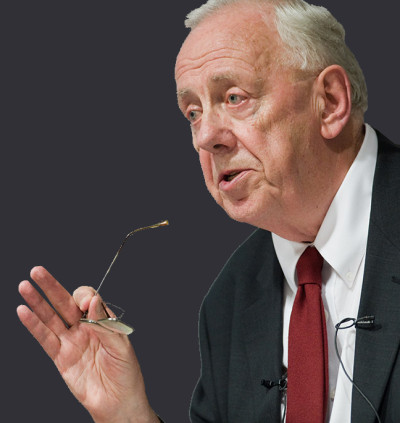
Alasdair MacIntyre More recently I have turned in detail to the works of Alasdair MacIntyre, whose thought I’ve already juxtaposed against Wilber’s a number of times (often in MacIntyre’s favour). I had expected that I would engage MacIntyre much as I had engaged Wilber: seeing him as a source of important and productive ideas, but ultimately wrong. Now I am not so sure. Continue reading →

Is “Buddhist ethics” Buddhist?

11 Sunday Oct 2015

Posted by Amod Lele in Early and Theravāda, Foundations of Ethics, Metaphilosophy, Method and Theory in the Study of Religion, Modernized Buddhism, Morality, Politics

≈ 23 Comments

Tags

abortion, David Chapman, Disengaged Buddhism, gender, modernity, Peter Harvey, Seth Zuihō Segall, United States

David Chapman has on his blog a provocative new series of posts about Buddhist ethics. You can get a strong sense of the tenor of these posts from their titles: “Buddhist ethics” is a fraud, “Buddhist ethics” is not Buddhist ethics, Traditional Buddhism has no ethical system, Buddhist morality is Medieval, and How Asian Buddhism imported Western ethics. Continue reading →

The superogatory acts are the ones that matter

30 Sunday Aug 2015

Posted by Amod Lele in Analytic Tradition, Flourishing, Foundations of Ethics, Human Nature, Morality, Roman Catholicism, Shame and Guilt, Virtue

≈ 1 Comment

Tags

Aristotle, Betsy Barre, David Heyd, Eric Schwitzgebel, Immanuel Kant, justice, Mencius, New Testament, obligation, Peter Singer, Śāntideva, Stephen Harris, utilitarianism

Last time I introduced the idea of supererogatory acts, those that are good beyond what duty and obligation require. The nature of supererogatory acts is sometimes referred to with the noun form supererogation. David Heyd’s Stanford Encyclopedia article makes a good introduction to the idea of supererogation. It also, I think, tells us what analytical moral philosophy gets wrong about the idea – specifically, when it claims that “the class of actions beyond duty is relatively small…”

Says who? Say contemporary ethicists, according to Heyd. But to my mind this does a lot to illustrate what is wrong with their way of thinking. The claim that relatively few actions go beyond the requirements of duty would certainly be true for Peter Singer and most utilitarians and consequentialists, who subject us to an effectively never-ending stream of demands in which little could be supererogatory short of altruistic suicide. Likewise, while I think it would not be hard to allow great room for supererogatory acts in a neo-Kantian position, as Heyd notes this was not Kant’s own view: there were perfect and imperfect duties, but the latter were duties all the same.

But this, I would argue, is one of the many things both utilitarians and Kantians get wrong – and therefore the majority of analytical ethicists, since most major analytical ethics descends from one or both of these sources. Continue reading →

Of demands and obligations

16 Sunday Aug 2015

Posted by Amod Lele in Analytic Tradition, Foundations of Ethics, Generosity, Mahāyāna, Morality, Shame and Guilt

≈ 7 Comments

Tags

Betsy Barre, Eric Schwitzgebel, New Testament, obligation, Peter Singer, Śāntideva, utilitarianism

Aeon magazine recently published an excellent popularized version of Eric Schwitzgebel’s reflections on his research indicating that professional ethicists are no more ethical than anybody else. I’ve already blogged here both about the research and about the reflections. Betsy (Elizabeth) Barre shared the Aeon piece on her Facebook feed, leading to a lively conversation on Facebook which provoked me to think further about deeper issues around it.

In that conversation I shared my earlier reflection on the topic. In response, among other thoughts, Barre noted she was surprised that Schwitzgebel hadn’t presented the reflection in terms of the standard distinction between “what is moral?” and “why be moral?” And she asked me: “I take it that you think the latter question is not as problematic as some philosophers and ethicists do?”

That question came as a surprise. Continue reading →

New article on Śāntideva’s metaphysics and ethics

16 Thursday Jul 2015

Posted by Amod Lele in Foundations of Ethics, Mahāyāna, Metaphilosophy, Metaphysics

≈ 3 Comments

Tags

SACP, Śāntideva

I have just published a new article published in volume 22 of the excellent free and open-access Journal of Buddhist Ethics.

The article is entitled “The Metaphysical Basis of Śāntideva’s Ethics“. Buddhists do a lot of theoretical philosophy that sometimes seems irrelevant to the project of freeing ourselves from suffering, and this article aims to show why it isn’t. I’ve been wanting to probe the theoretical foundations of ethics more, and this article is one exploration into that. I presented it at the SACP a few years ago and have now finally made it available. Have a look!

Does Śāntideva’s theory make demands?

05 Sunday Jul 2015

Posted by Amod Lele in Analytic Tradition, Flourishing, Foundations of Ethics, Karma, Mahāyāna, Morality

≈ 2 Comments

Tags

Christine Korsgaard, consequentialism, Friedrich Nietzsche, obligation, Peter Singer, Śāntideva, Stephen Harris

My friend Stephen Harris recently posted an interesting article on the question of whether Śāntideva’s ethics is “overdemanding”. I appreciate the article’s methodological approach. It engages Śāntideva’s ethics with the categories of analytical moral philosophy while moving beyond the relatively fruitless attempt to classify it: not “is Śāntideva’s ethics consequentialist?” but “is Śāntideva’s ethics vulnerable to the charges made against consequentialism?” The latter approach is more important because it allows engagement with Śāntideva’s ideas: asking the question “to what extent is Śāntideva right?” Continue reading →

← Older posts
Newer posts →

Welcome to Love of All Wisdom.

I invite you to leave comments on my blog, even - or especially - if I have no idea who you are. Philosophy is a conversation, and I invite you to join it with me; I welcome all comers (provided they follow a few basic rules). I typically make a new post every Sunday. If you'd like to be notified when a new post is posted, you can get email notifications whenever I add something new via the link further down in this sidebar. You can also follow this blog on Facebook. Or if you use RSS, you can get updates through the RSS feed.

Recent Comments

  • Nathan on You still have to naturalize karma
  • Amod Lele on You still have to naturalize karma
  • Nathan on You still have to naturalize karma
  • Amod Lele on You still have to naturalize karma
  • Nathan on You still have to naturalize karma

Subscribe to receive Love of All Wisdom by email:

Post Tags

20th century academia Alasdair MacIntyre Aristotle ascent/descent Augustine autobiography Buddhaghosa Canada Confucius conservatism Disengaged Buddhism Engaged Buddhism Evan Thompson expressive individualism Four Noble Truths Friedrich Nietzsche G.W.F. Hegel gender Hebrew Bible identity Immanuel Kant intimacy/integrity justice Karl Marx Ken Wilber law Martha C. Nussbaum modernity music mystical experience nondualism Pali suttas pedagogy Plato race rebirth religion Siddhattha Gotama (Buddha) technology theodicy United States utilitarianism Śaṅkara Śāntideva

Categories

  • African Thought (15)
  • Applied Philosophy (384)
    • Death (47)
    • Family (54)
    • Food (22)
    • Friends (21)
    • Health (33)
    • Place (37)
    • Play (18)
    • Politics (240)
    • Sex (25)
    • Work (48)
  • Asian Thought (463)
    • Buddhism (334)
      • Early and Theravāda (140)
      • Mahāyāna (143)
      • Modernized Buddhism (103)
    • East Asia (102)
      • Confucianism (62)
      • Daoism (23)
      • Shinto (1)
    • South Asia (149)
      • Bhakti Poets (4)
      • Cārvāka-Lokāyata (5)
      • Epics (16)
      • Jainism (24)
      • Modern Hinduism (45)
      • Nyāya-Vaiśeṣika (6)
      • Sāṃkhya-Yoga (16)
      • Sikhism (1)
      • Vedānta (42)
      • Vedas and Mīmāṃsā (7)
  • Blog Admin (29)
  • Indigenous American Thought (8)
  • Method (279)
    • Metaphilosophy (180)
    • Method and Theory in the Study of Religion (156)
  • Practical Philosophy (434)
    • Action (17)
    • Aesthetics (53)
    • Emotion (196)
      • Anger (42)
      • Attachment and Craving (32)
      • Compassion (9)
      • Despair (7)
      • Disgust (5)
      • Faith (20)
      • Fear (15)
      • Grief (9)
      • Happiness (52)
      • Hope (20)
      • Pleasure (37)
      • Shame and Guilt (10)
    • External Goods (55)
    • Flourishing (104)
    • Foundations of Ethics (126)
    • Karma (45)
    • Morality (79)
    • Virtue (187)
      • Courage (7)
      • Generosity (14)
      • Gentleness (7)
      • Gratitude (13)
      • Honesty (15)
      • Humility (27)
      • Leadership (7)
      • Mindfulness (24)
      • Patient Endurance (31)
      • Self-Discipline (10)
      • Serenity (39)
      • Zest (8)
  • Practice (147)
    • Karmic Redirection (5)
    • Meditation (47)
    • Monasticism (47)
    • Physical Exercise (4)
    • Prayer (16)
    • Reading and Recitation (14)
    • Rites (24)
    • Therapy (11)
  • Theoretical Philosophy (407)
    • Consciousness (24)
    • Deity (77)
    • Epistemology (141)
      • Certainty and Doubt (19)
      • Dialectic (21)
      • Logic (15)
      • Prejudices and "Intuitions" (31)
    • Free Will (18)
    • Hermeneutics (66)
    • Human Nature (36)
    • Metaphysics (117)
    • Philosophy of Language (31)
    • Self (78)
    • Supernatural (56)
    • Truth (64)
    • Unconscious Mind (16)
  • Western Thought (528)
    • Analytic Tradition (107)
    • Christianity (162)
      • Early Factions (8)
      • Eastern Orthodoxy (3)
      • Protestantism (27)
      • Roman Catholicism (61)
    • French Tradition (50)
    • German Tradition (97)
    • Greek and Roman Tradition (126)
      • Epicureanism (25)
      • Neoplatonism (2)
      • Pre-Socratics (6)
      • Skepticism (2)
      • Sophists (8)
      • Stoicism (22)
    • Islam (44)
      • Mu'tazila (2)
      • Salafi (3)
      • Sufism (10)
    • Judaism (38)
    • Natural Science (104)
      • Biology (33)
      • Philosophy of Science (51)
      • Physics and Astronomy (11)
    • Social Science (198)
      • Economics (48)
      • Psychology (86)

Recent Posts

  • You still have to naturalize karma
  • On the damned topics of Buddhist philosophy
  • There’s no such thing as racial purity
  • The Gnostic aesthetics of leg waxing
  • Missed posts for Love of All Wisdom subscribers

Popular posts

  • One and a half noble truths?
  • Wishing George W. Bush well
  • Do Speculative Realists want us to be Chinese?
  • Why I am not a right-winger
  • On faith in tooth relics

Basic concepts

  • Ascent and Descent
  • Intimacy and integrity
  • Ascent-descent and intimacy-integrity together
  • Perennial questions?
  • Virtuous and vicious means
  • Dialectical and demonstrative argument
  • Chastened intellectualism and practice
  • Yavanayāna Buddhism: what it is
  • Why worry about contradictions?
  • The first philosophy blogger

Personal favourites

  • Can philosophy be a way of life? Pierre Hadot (1922-2010)
  • James Doull and the history of ethical motivation
  • Praying to something you don't believe in
  • What does postmodernism perform?
  • Why I'm getting married

Archives

Search this site

All posts, pages and metadata copyright 2009-2026 Amod Lele unless otherwise noted. Comments copyright 2009-2026 their comment authors. Creative Commons Attribution-NonCommercial-ShareAlike (BY-NC-SA) licence.

Proudly powered by WordPress Theme: Chateau by Ignacio Ricci.