• About me
  • About this blog
  • Comment rules
  • Other writings

Love of All Wisdom

~ Philosophy through multiple traditions

Love of All Wisdom

Category Archives: Modernized Buddhism

Monkhood as technique

26 Sunday Feb 2012

Posted by Amod Lele in Early and Theravāda, Happiness, Meditation, Method and Theory in the Study of Religion, Modernized Buddhism, Monasticism

≈ 33 Comments

Tags

academia, Justin McDaniel, Matthieu Ricard, Pali suttas, pedagogy, S.N. Goenka, Terry Mattingly

My former grad-school colleague Justin McDaniel recently ran into an interesting bout of media attention and controversy over a course he teaches at Penn, and an Associated Press article written about it. It is a comparative course on monasticism, entitled “Living Deliberately”. Nothing unusual so far; but what makes this course innovative is it contains a practicum. A practicum is relatively standard fare these days for many university courses on meditation, in which students are encouraged to meditate and thereby get a firsthand grasp on the course content. But McDaniel’s course is the first one I’ve heard of in which students attempt to get firsthand experience of being a monk.

What does that mean? As part of the class, students are required to live for various periods of time according to various restrictions, each one followed by an actual monastic order of some tradition or other. No technology beyond electric lights; no reading news from the outside world; no eating after dark; no caffeine or alcohol; no vegetables that grow underground (a nod to Jainism). Breaking the rules requires confession. Continue reading →

Overthrowing Indo-European tradition

19 Sunday Feb 2012

Posted by Amod Lele in Analytic Tradition, Daoism, East Asia, German Tradition, Metaphilosophy, Modernized Buddhism, Self

≈ 8 Comments

Tags

20th century, Bryan Van Norden, Chad Hansen, Chan/Zen 禪, D.T. Suzuki, G.W.F. Hegel, Japan, Ludwig Wittgenstein, Martin Heidegger, Speculative Realism, Taylor Carman, Wilhelm Halbfass

I have often found myself somewhat bewildered by the philosophy of the early- to mid-20th century, associated above all with the names of Martin Heidegger and Ludwig Wittgenstein. These two thinkers cast their shadow widely over the traditions of philosophy that followed – Heidegger over “continental” philosophy, Wittgenstein over analytic. (The split between the two traditions was not nearly as pronounced in their day; in many respects they helped create it.) They are far apart in many respects, but they do share at least two tendencies I have strongly disliked – an indifference to ethics and concerns about the good life, on one hand, and a rejection of the bulk of philosophy that came before them on the other. I have tended to view these two tendencies as going hand in hand – but do they?

I’ve been thinking anew about Heidegger and Wittgenstein from perhaps an unusual angle: Chad Hansen’s fascinating A Daoist Theory of Chinese Thought. I don’t yet know early Chinese thought well enough to assess whether Hansen’s account of it is accurate. But I can at least say that Hansen, like Nietzsche, is more interesting and thought-provoking even when he’s wrong than most people are when they’re right. Continue reading →

Chinese intimacy and Indian ascent

11 Sunday Dec 2011

Posted by Amod Lele in East Asia, Metaphilosophy, Modernized Buddhism, Social Science, South Asia

≈ 4 Comments

Tags

Alasdair MacIntyre, ascent/descent, intimacy/integrity, Ken Wilber, Max Weber, modernity, Parimal Patil, skholiast (blogger), Thomas P. Kasulis

I have repeatedly returned to the categories of ascent and descent, and intimacy and integrity, to classify philosophies; and I have found that the two intersect in important ways. When I discussed that intersection the first time, skholiast asked the important question: “What is the itch in us to make such schematisms?” What is the purpose of trying to classify philosophies in this way?

My first response was that these two are perennial questions, questions that recur throughout the history of philosophy around the world. While I continue to think more or less that that’s the case, I don’t think it did enough to say what’s important about these particular two categories. As I noted later, there are plenty of perennial questions beyond these two. But at the same time, I do see something special about these two classification schemes that merits particular attention to them. Continue reading →

Philosophical single-mindedness (1)

20 Sunday Nov 2011

Posted by Amod Lele in Aesthetics, Modernized Buddhism, Place, Prayer, Protestantism, Rites, Roman Catholicism, Salafi

≈ 15 Comments

Tags

architecture, Augustine, autobiography, Jesus, Martin Luther, modernism, music, Stonehill College

One of the most common slams made against modernist (Yavanayāna) Buddhism is that it is “Protestant.” I’ve previously written about how there’s more to Buddhist modernism than this, and about the curious quasi-theological assumption that having Protestant influence is seen as a bad thing. At the same time, I’ve been realizing that there are close links between Protestantism and modernism. Not too surprising, perhaps, since the two emerge out of the same historical context, the Europe of the past 500 years – but I think their similarities may go deeper than that. Continue reading →

The story of Buddhism’s Descent

04 Sunday Sep 2011

Posted by Amod Lele in Early and Theravāda, East Asia, Jainism, Mahāyāna, Mindfulness, Modernized Buddhism, Monasticism

≈ 11 Comments

Tags

ascent/descent, Chan/Zen 禪, Charles Taylor, David McMahan, Dōgen, Fazang, Huayan, interview, James Joyce, Martha C. Nussbaum, modernity, Nāgārjuna, natural environment, Pali suttas, Pure Land, S.N. Goenka, Śāntideva, Siddhattha Gotama (Buddha)

This week I did a new podcast interview with David McMahan, about his book The Making of Buddhist Modernism. The “Buddhist modernism” of the title is what I have typically called Yavanayāna: the new forms of Buddhism that have emerged in the past two centuries, which sometimes portray themselves as if they’re what Buddhism always was. (In what follows I will use the terms “Yavanayāna” and “Buddhist modernism” interchangeably.)

McMahan’s chapters are topical rather than chronological, so that he can examine the various features of the transition to Buddhist modernism. Naturally, he rounds up the most common topics: the asserted compatibility between Buddhism and science, and the idea of meditation as the most central Buddhist practice. He takes a genuinely balanced perspective on these topics that’s a welcome antidote to others. But he also touches on a few less widely noticed topics: interdependence, nature, and ordinary life. During the interview, I began to think about how closely these topics are connected with each other – and how they share a history in Buddhism that goes back long before the rise of Yavanayāna. Continue reading →

On the genealogy of “Buddhism and science”

29 Sunday May 2011

Posted by Amod Lele in Buddhism, East Asia, French Tradition, German Tradition, Method and Theory in the Study of Religion, Modernized Buddhism, Natural Science

≈ 28 Comments

Tags

Donald S. Lopez Jr., Edward Said, Friedrich Nietzsche, Michel Foucault, Robert M. Gimello, Tiantai 天台

The most recent book from Donald S. Lopez, Jr., one of the most widely read contemporary American scholars of Buddhism, is entitled Buddhism and Science. Unlike most books with this title, it does not explore similarities or complementarities between Buddhist tradition and the natural sciences. It is instead best described by Lopez’s original intended subtitle: A Historical Critique. Alas, Lopez’s publishers apparently thought this subtitle boring, and therefore required him to replace it; his chosen replacement, A Guide for the Perplexed, is not particularly exciting either, and more importantly makes it impossible for the casual reader to find out the ways that this book is drastically different from all the other books out there with the same title.

I am not here to write about dreadful editorial decisions, however, but rather the content of the book. Lopez undertakes what has become one of the most standard methodologies in the contemporary academic humanities: following Foucault and ultimately Nietzsche, it is typically known as genealogy. One starts with a widely used contemporary concept and goes on to show the history of its usage, in order to create doubts among those who might otherwise use it. This has already been done plenty of times both for the concepts of “Buddhism” and of “science”; Lopez’s project here is instead a genealogy of the joint concept of “Buddhism and science,” the frequent form of inquiry that tries to link the two conceptually or analytically. As is typical for contemporary genealogies ever since Edward Said (though not for Foucault’s own and certainly not Nietzsche’s), Lopez finds the origins of “Buddhism and science” in the colonial nineteenth century. He shows us that claims about Buddhism’s compatibility with science remain remarkably consistent from the late 19th century to the early 21st, even though the science itself has changed drastically.

Now what is the purpose of showing us this point? From Nietzsche onward, the genealogical method has never been neutral. The point has always been to undermine. Lopez doesn’t like “Buddhism and science” any more than Nietzsche liked morality. Continue reading →

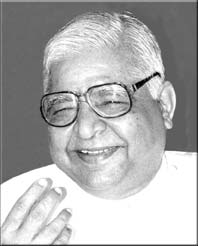
On celebrating the death of an enemy

08 Sunday May 2011

Posted by Amod Lele in Anger, Compassion, Death, Friends, Gentleness, Happiness, Karmic Redirection, Meditation, Modern Hinduism, Modernized Buddhism, Morality, Politics

≈ 62 Comments

Tags

George W. Bush, Harvard University, Jim Wilton, Linton Weeks, Martin Luther King Jr., Mohandas K. Gandhi, Nazism, Osama bin Laden, Pamela Gerloff, S.N. Goenka, T.R. (Thill) Raghunath, United States, war

The momentous yet mixed results of this week’s Canadian election were overshadowed on the global scene by the killing of Osama bin Laden. Though the first event riveted me more, the second has more philosophical significance – or rather, not the event itself, but the reaction to it.

Americans have typically greeted bin Laden’s death with jubilation and celebration, often waving American flags and chanting “U.S.A.” But some minority voices, such as Linton Weeks at NPR radio and Pamela Gerloff of the Huffington Post, have raised questions about this celebration. Is it really a good idea to celebrate a human death, even the death of one’s enemy? Continue reading →

Beyond agreeing to disagree

12 Sunday Dec 2010

Posted by Amod Lele in French Tradition, Metaphilosophy, Method and Theory in the Study of Religion, Modernized Buddhism, Politics, Roman Catholicism, Truth

≈ 32 Comments

Tags

AAR, David Loy, Engaged Buddhism, Grace Kao, Jacques Maritain, natural environment, rights, Rosemary Radford Ruether, Universal Declaration of Human Rights

The online Journal of Buddhist Ethics has recently begun an online conference on an interesting pair of articles dealing with Buddhism and the natural environment, by David Loy and my former grad-school colleague Grace Kao. (Both articles were originally presented at the 2010 AAR conference in Atlanta.) While the conference is oriented toward comments on the JBE website, I’m posting my response here because my thoughts are long enough to be a full blog post of their own.

The different backgrounds of the two writers are evident from their pieces – but that itself makes the dialogue between them more interesting and fruitful. Loy is writing as a Buddhist. In a sense Loy’s arguments come in two pieces: first a dialectical argument to a certain conception of Buddhist first principles, especially based on the idea of non-self, and then a demonstrative argument from those principles to a sense of environmental concern. The first section makes the article more than a piece of “Buddhist theology”; unlike Glenn Wallis’s manifesto, Loy’s article is written as if it is intended to persuade non-Buddhists to a Buddhist point of view.

The substance of Loy’s demonstrative argument is similar to one that I have criticized in the past: that Buddhism is environment-friendly because it tells us to acknowledge our interdependence with other life on the planet. Loy’s argument is a bit more sophisticated than the view I criticized, and might arguably stand up to some of those criticisms. But I’m not going to focus on that point here. Rather, I’m more interested in the dialogue between Loy and Kao, and its implications.

Kao is not a Buddhist nor a Buddhologist, but a scholar of cultural diversity and the issues it poses for global politics. Partially for that reason, Kao’s article does relatively little to engage Loy’s Buddhist claims directly. Instead, she raises interesting and important questions about the proper connection between cross-cultural philosophy and global politics. Continue reading →

Glenn Wallis’s Buddhist Manifesto

01 Wednesday Dec 2010

Posted by Amod Lele in Early and Theravāda, Meditation, Method and Theory in the Study of Religion, Modernized Buddhism, Protestantism, Rites

≈ 24 Comments

Tags

academia, Anne Monius, Glenn Wallis, Karl Barth, Mañjuśrīmūlakalpa, Melford Spiro, religion, Siddhattha Gotama (Buddha), Walpola Rahula

Glenn Wallis has recently produced a fascinating new piece of “Buddhist theology” called the Buddhist Manifesto. The document first strikes me for what it tells us about the process of writing about Buddhism today. Wallis, like me, was once a Buddhist-studies academic in a fairly standard mold: PhD from Harvard, assistant professor at the University of Georgia. (I was offered his old job at Georgia, and turned it down because the offer given would have required me to teach twice as many courses as he did, for less total pay and no chance of tenure.) I had read the major work he produced in that capacity: Mediating the Power of Buddhas, a study of a seventh-century Buddhist Sanskrit ritual text called the Mañjuśrīmūlakalpa. Mediating the Power of Buddhas offers a close and careful reading of this particular text. But one is left wondering at the end: why was this written? It avoids historical context, attempting instead to “enter into the world” within the text, which makes it difficult to learn much from the study about the text’s historical period and its contemporaries (say, Śāntideva). But it also avoids constructive philosophical engagement with the text – asking how it might challenge our current ideas about the world and how to live in it. If one can get neither history nor constructive application from this study, what can one get from it?

My critique of Wallis’s older work is hardly limited to Wallis; one could make it about a great number of works produced in contemporary religious studies. Anne Monius encouraged her students to ask of the texts and rituals they study: “Why bother?” and “So what?” Why do people bother doing this, and what is its significance for their culture? What she never asked students was to turn those same questions on ourselves: ask of our own work, “Why bother?” and “So what?” But it seems to me like these are the most pressing questions to ask of a work like Mediating the Power of Buddhas.

No such problem exists in the Buddhist Manifesto! Continue reading →

The Catholic Pauls against nondualism

04 Wednesday Aug 2010

Posted by Amod Lele in Bhakti Poets, Foundations of Ethics, French Tradition, Judaism, Mahāyāna, Method and Theory in the Study of Religion, Modern Hinduism, Modernized Buddhism, Morality, Roman Catholicism, Self, Sufism, Vedānta

≈ 62 Comments

Tags

Advaita Vedānta, al-Hallāj, Eknath, Emmanuel Lévinas, Hugh van Skyhawk, Maharashtra, nondualism, Paul Hacker, Paul J. Griffiths, Paul Williams, Ramprasad Sen, Śāntideva, Swami Vivekānanda, T.R. (Thill) Raghunath, Upaniṣads, Wilhelm Halbfass

A curious phenomenon in the study of South Asian and especially Buddhist traditions is the number of Catholic scholars named Paul who have approached these traditions – and especially what Skholiast has called their ātmanism – with a critical eye. The two thinkers I have primarily in mind are the late Paul Hacker (whom I discussed last time, and the living Paul Williams. (The thought of Paul J. Griffiths, who moved in his writings from Buddhology to Catholic theology, bears a strong resemblances to these other Pauls, though I have less to say about him today.) That these men are all named Paul can only be a coincidence. That they are all Catholic is less so; for there are striking affinities in the ways that they (in many respects independently of one another) approach South Asian and Buddhist tradition, affinities that are far less coincidental.
Continue reading →

← Older posts
Newer posts →

Welcome to Love of All Wisdom.

I invite you to leave comments on my blog, even - or especially - if I have no idea who you are. Philosophy is a conversation, and I invite you to join it with me; I welcome all comers (provided they follow a few basic rules). I typically make a new post every Sunday. If you'd like to be notified when a new post is posted, you can get email notifications whenever I add something new via the link further down in this sidebar. You can also follow this blog on Facebook. Or if you use RSS, you can get updates through the RSS feed.

Recent Comments

  • Nathan on You still have to naturalize karma
  • Amod Lele on You still have to naturalize karma
  • Nathan on You still have to naturalize karma
  • Amod Lele on You still have to naturalize karma
  • Nathan on You still have to naturalize karma

Subscribe to receive Love of All Wisdom by email:

Post Tags

20th century academia Alasdair MacIntyre Aristotle ascent/descent Augustine autobiography Buddhaghosa Canada Confucius conservatism Disengaged Buddhism Engaged Buddhism Evan Thompson expressive individualism Four Noble Truths Friedrich Nietzsche G.W.F. Hegel gender Hebrew Bible identity Immanuel Kant intimacy/integrity justice Karl Marx Ken Wilber law Martha C. Nussbaum modernity music mystical experience nondualism Pali suttas pedagogy Plato race rebirth religion Siddhattha Gotama (Buddha) technology theodicy United States utilitarianism Śaṅkara Śāntideva

Categories

  • African Thought (15)
  • Applied Philosophy (385)
    • Death (47)
    • Family (54)
    • Food (22)
    • Friends (21)
    • Health (33)
    • Place (37)
    • Play (18)
    • Politics (241)
    • Sex (25)
    • Work (48)
  • Asian Thought (463)
    • Buddhism (334)
      • Early and Theravāda (140)
      • Mahāyāna (143)
      • Modernized Buddhism (103)
    • East Asia (102)
      • Confucianism (62)
      • Daoism (23)
      • Shinto (1)
    • South Asia (149)
      • Bhakti Poets (4)
      • Cārvāka-Lokāyata (5)
      • Epics (16)
      • Jainism (24)
      • Modern Hinduism (45)
      • Nyāya-Vaiśeṣika (6)
      • Sāṃkhya-Yoga (16)
      • Sikhism (1)
      • Vedānta (42)
      • Vedas and Mīmāṃsā (7)
  • Blog Admin (29)
  • Indigenous American Thought (8)
  • Method (279)
    • Metaphilosophy (180)
    • Method and Theory in the Study of Religion (156)
  • Practical Philosophy (435)
    • Action (17)
    • Aesthetics (53)
    • Emotion (196)
      • Anger (42)
      • Attachment and Craving (32)
      • Compassion (9)
      • Despair (7)
      • Disgust (5)
      • Faith (20)
      • Fear (15)
      • Grief (9)
      • Happiness (52)
      • Hope (20)
      • Pleasure (37)
      • Shame and Guilt (10)
    • External Goods (55)
    • Flourishing (104)
    • Foundations of Ethics (126)
    • Karma (45)
    • Morality (79)
    • Virtue (188)
      • Courage (7)
      • Generosity (14)
      • Gentleness (7)
      • Gratitude (13)
      • Honesty (15)
      • Humility (27)
      • Leadership (7)
      • Mindfulness (24)
      • Patient Endurance (31)
      • Self-Discipline (10)
      • Serenity (40)
      • Zest (8)
  • Practice (147)
    • Karmic Redirection (5)
    • Meditation (47)
    • Monasticism (47)
    • Physical Exercise (4)
    • Prayer (16)
    • Reading and Recitation (14)
    • Rites (24)
    • Therapy (11)
  • Theoretical Philosophy (407)
    • Consciousness (24)
    • Deity (77)
    • Epistemology (141)
      • Certainty and Doubt (19)
      • Dialectic (21)
      • Logic (15)
      • Prejudices and "Intuitions" (31)
    • Free Will (18)
    • Hermeneutics (66)
    • Human Nature (36)
    • Metaphysics (117)
    • Philosophy of Language (31)
    • Self (78)
    • Supernatural (56)
    • Truth (64)
    • Unconscious Mind (16)
  • Western Thought (529)
    • Analytic Tradition (107)
    • Christianity (162)
      • Early Factions (8)
      • Eastern Orthodoxy (3)
      • Protestantism (27)
      • Roman Catholicism (61)
    • French Tradition (50)
    • German Tradition (97)
    • Greek and Roman Tradition (126)
      • Epicureanism (25)
      • Neoplatonism (2)
      • Pre-Socratics (6)
      • Skepticism (2)
      • Sophists (8)
      • Stoicism (22)
    • Islam (44)
      • Mu'tazila (2)
      • Salafi (3)
      • Sufism (10)
    • Judaism (38)
    • Natural Science (105)
      • Biology (34)
      • Philosophy of Science (51)
      • Physics and Astronomy (11)
    • Social Science (198)
      • Economics (48)
      • Psychology (86)

Recent Posts

  • Against nostalgic ecology
  • You still have to naturalize karma
  • On the damned topics of Buddhist philosophy
  • There’s no such thing as racial purity
  • The Gnostic aesthetics of leg waxing

Popular posts

  • One and a half noble truths?
  • Wishing George W. Bush well
  • Do Speculative Realists want us to be Chinese?
  • Why I am not a right-winger
  • On faith in tooth relics

Basic concepts

  • Ascent and Descent
  • Intimacy and integrity
  • Ascent-descent and intimacy-integrity together
  • Perennial questions?
  • Virtuous and vicious means
  • Dialectical and demonstrative argument
  • Chastened intellectualism and practice
  • Yavanayāna Buddhism: what it is
  • Why worry about contradictions?
  • The first philosophy blogger

Personal favourites

  • Can philosophy be a way of life? Pierre Hadot (1922-2010)
  • James Doull and the history of ethical motivation
  • Praying to something you don't believe in
  • What does postmodernism perform?
  • Why I'm getting married

Archives

Search this site

All posts, pages and metadata copyright 2009-2026 Amod Lele unless otherwise noted. Comments copyright 2009-2026 their comment authors. Creative Commons Attribution-NonCommercial-ShareAlike (BY-NC-SA) licence.

Proudly powered by WordPress Theme: Chateau by Ignacio Ricci.