• About me
  • About this blog
  • Comment rules
  • Other writings

Love of All Wisdom

~ Philosophy through multiple traditions

Love of All Wisdom

Category Archives: Meditation

Reading the deconstruction of the body

13 Sunday Sep 2015

Posted by Amod Lele in Disgust, Family, Hermeneutics, Mahāyāna, Meditation, Metaphysics, Method and Theory in the Study of Religion, Monasticism, Sex

≈ 3 Comments

Tags

Elisa Freschi, gender, Śāntideva, Stephen Harris

I was honoured to see Elisa Freschi’s post reviewing my recent article on Śāntideva’s metaphysics and ethics. I have a lot to say about both the post itself and the comment threads that followed it. I’ve said some of it in those threads already, but I’d like to pull them together and express a way they relate to more general ideas. Continue reading →

My Buddhist practices

21 Sunday Jun 2015

Posted by Amod Lele in Anger, Hermeneutics, Karma, Karmic Redirection, Mahāyāna, Meditation, Mindfulness, Modernized Buddhism, Prayer, Reading and Recitation, Unconscious Mind

≈ 4 Comments

Tags

academia, autobiography, Confucius, Dalai Lama XIV, Mañjuśrī, Pema Chödrön, S.N. Goenka, Śāntideva, Tibet

Buddhist practice of various sorts has helped me greatly in trying to deal with the frustrations of cancer care. I wrote already of the role of prayer to Mañjuśrī and Buddhist reading. Now I’d like to say more about what I learned from that reading – and how these practices all fit together. Continue reading →

The practice of reading

07 Sunday Jun 2015

Posted by Amod Lele in Confucianism, Health, Hermeneutics, Mahāyāna, Meditation, Reading and Recitation, Self, Serenity, Therapy

≈ 8 Comments

Tags

academia, autobiography, cancer, Confucius, Paul J. Griffiths, religion, Śāntideva, Zhu Xi

Calling myself a Buddhist, it turns out, was only the beginning. Buddhism was there for me in this dark time, not only as a way of focusing prayer, and certainly not merely as the resource for a hypothetical chaplain. The Buddhist ideas that taught me so much before were still there and a great comfort. And there was more still: I have now begun to practise Buddhism as I see it, on a far deeper level than I ever had before. Continue reading →

The innovations of S.N. Goenka (1930-2013)

06 Sunday Oct 2013

Posted by Amod Lele in Early and Theravāda, Meditation, Modernized Buddhism, Monasticism

≈ 2 Comments

Tags

Burma/Myanmar, conservatism, obituary, Pali suttas, S.N. Goenka

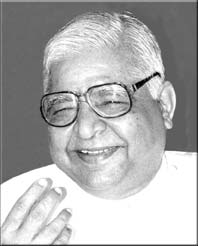
S.N. GoenkaI found out via Justin Whitaker the sad news that S.N. Goenka died this week. The name needs little introduction for Yavanayāna Buddhists, but others may wish some additional insight.

Goenka, born in Burma, was a pioneer – really the pioneer – of what is now known as vipassanā meditation. This term vipassanā (usually translated “insight”) is found in the classical Pali texts, and so is the Satipaṭṭhāna Sutta from which Goenka originally drew the meditation technique. Notably, though, the term vipassanā does not show up in the Satipaṭṭhāna Sutta itself. And that detail, I think, is telling about Goenka’s whole project.

I recall Goenka claiming, like many other contemporary Buddhist teachers, that what he was teaching was not new; it was just the teaching of the Buddha. That statement is not false exactly, but it’s not the whole truth. Continue reading →

Précis of “Beyond enacted experiences”

30 Sunday Sep 2012

Posted by Amod Lele in Buddhism, Christianity, Consciousness, Dialectic, Judaism, Meditation, Metaphilosophy, Method and Theory in the Study of Religion, Natural Science, Vedānta

≈ 15 Comments

Tags

Candrakīrti, Jesus, Ken Wilber, mystical experience, New Testament, perennialism, religion, Robert Sharf, Wilhelm Halbfass

I’ve been wanting to refer on the blog to the article I recently wrote for the Journal of Integral Theory and Practice. Out of respect for the journal’s hardworking editors (and the law!), I will not post the article or its text on the site. But I’d like to give a summary of what I said there, so that blog readers without access to JITP will know what I’m talking about. The argument here is not as precise or careful as that in the article, and readers will need to find a copy of JITP 7(2) to get those details.

The article is above all a critique of Ken Wilber’s method in cross-cultural philosophy, a method that Wilber himself describes as a form of empiricism. Continue reading →

The trouble with phenomenological similarities

23 Sunday Sep 2012

Posted by Amod Lele in Early and Theravāda, Meditation, Method and Theory in the Study of Religion, Philosophy of Language, Roman Catholicism

≈ 6 Comments

Tags

Buddhaghosa, Cloud of Unknowing, early writings, mystical experience, Ninian Smart, perennialism, phenomenology, Robert M. Gimello, Robert Sharf

This week’s post is a slightly abridged version of a paper I wrote eleven years ago for Robert Gimello’s class on Buddhist meditation traditions. I’m posting it now for a couple of reasons: because I still enjoy its punchy rhetoric, because it’s a useful corrective to Wilberian and similar perspectives that assume “religion” is fundamentally about mystical experience, and because I think it’s likely to be relevant to posts I want to make in the months ahead. I also still agree with it to at least some extent, but I am not entirely sure what that extent is, and that is something I hope to be sorting through.


In his chapter “What would Buddhaghosa have made of the Cloud of Unknowing?”1, Ninian Smart argues that “there are phenomenological similarities between the differing practices despite the contrast in language and style between Buddhaghosa and the author of the anonymous 14th-century Christian text The Cloud of Unknowing.” Although Smart never defines “phenomenological”, I believe from the context of the article that he uses the term to refer to similarities of experience, and specifically mystical experience.

To what extent does Smart’s chapter succeed in its project? Continue reading →

My mother’s meditations

09 Sunday Sep 2012

Posted by Amod Lele in Confucianism, Family, Gratitude, Meditation, Modernized Buddhism, Serenity

≈ 5 Comments

Tags

autobiography, Dorothy Lele, S.N. Goenka

Over the past little while I have been reading more Confucianism, and becoming more sympathetic to it for a variety of reasons. I’ve hardly converted to Confucianism, which is probably just as well; I sometimes think I’d be the world’s worst Confucian – not having children, living far from my parents, and having grown up regularly challenging their authority. To be fair, my parents – a Marxist and a child of the sixties – effectively encouraged me to challenge their authority. Still, in recent years and months I have come to sympathize with Confucianism a lot more. And it feels like the very least I can do is honour my parents in this forum.

I chose this week to do so because my mother, Dorothy Lele, just celebrated her birthday, and I will start by speaking of her. Continue reading →

Monkhood as technique

26 Sunday Feb 2012

Posted by Amod Lele in Early and Theravāda, Happiness, Meditation, Method and Theory in the Study of Religion, Modernized Buddhism, Monasticism

≈ 33 Comments

Tags

academia, Justin McDaniel, Matthieu Ricard, Pali suttas, pedagogy, S.N. Goenka, Terry Mattingly

My former grad-school colleague Justin McDaniel recently ran into an interesting bout of media attention and controversy over a course he teaches at Penn, and an Associated Press article written about it. It is a comparative course on monasticism, entitled “Living Deliberately”. Nothing unusual so far; but what makes this course innovative is it contains a practicum. A practicum is relatively standard fare these days for many university courses on meditation, in which students are encouraged to meditate and thereby get a firsthand grasp on the course content. But McDaniel’s course is the first one I’ve heard of in which students attempt to get firsthand experience of being a monk.

What does that mean? As part of the class, students are required to live for various periods of time according to various restrictions, each one followed by an actual monastic order of some tradition or other. No technology beyond electric lights; no reading news from the outside world; no eating after dark; no caffeine or alcohol; no vegetables that grow underground (a nod to Jainism). Breaking the rules requires confession. Continue reading →

On celebrating the death of an enemy

08 Sunday May 2011

Posted by Amod Lele in Anger, Compassion, Death, Friends, Gentleness, Happiness, Karmic Redirection, Meditation, Modern Hinduism, Modernized Buddhism, Morality, Politics

≈ 62 Comments

Tags

George W. Bush, Harvard University, Jim Wilton, Linton Weeks, Martin Luther King Jr., Mohandas K. Gandhi, Nazism, Osama bin Laden, Pamela Gerloff, S.N. Goenka, T.R. (Thill) Raghunath, United States, war

The momentous yet mixed results of this week’s Canadian election were overshadowed on the global scene by the killing of Osama bin Laden. Though the first event riveted me more, the second has more philosophical significance – or rather, not the event itself, but the reaction to it.

Americans have typically greeted bin Laden’s death with jubilation and celebration, often waving American flags and chanting “U.S.A.” But some minority voices, such as Linton Weeks at NPR radio and Pamela Gerloff of the Huffington Post, have raised questions about this celebration. Is it really a good idea to celebrate a human death, even the death of one’s enemy? Continue reading →

Of anātman and altruism

06 Sunday Mar 2011

Posted by Amod Lele in Foundations of Ethics, Mahāyāna, Meditation, Metaphilosophy, Self

≈ 45 Comments

Tags

Damien Keown, David Cooper, Ethan Mills, Paul Williams, Śāntideva, Stephen Harris

The new Journal of Buddhist Ethics has an interesting article up on Śāntideva, by Stephen Harris, a grad student at U of New Mexico. Harris is a colleague of Ethan Mills, who gave the APA talk about skepticism that I discussed in late December (and who has since made thoughtful contributions to this blog’s comments); Harris also gave a talk about Śāntideva on Mills’s panel.

Harris’s article returns us to the most famous passage in Śāntideva’s work: the meditation on the equalization of self and other in Bodhicaryāvatāra chapter VIII, in which Śāntideva takes metaphysical arguments for the nonexistence of self (Buddhist anātman) and uses them as a premise to argue for altruism, ethical selflessness. He asks: “Since both others and myself dislike fear and suffering, what is special about my self that I protect it and not another?” The self that I was three minutes ago is a different entity from the self I will be three minutes from now; the present self has as much reason to protect others as it does its future self. He adds: if you object that suffering should be prevented only by the one it belongs to, well, your foot’s suffering does not belong to your hand, so why should the hand do anything to protect the foot?

The Catholic Buddhologist Paul Williams has criticized this passage in depth, arguing that altruism makes no sense without selves. I’ve discussed Williams’s criticisms twice before, though I haven’t taken a position on the debate yet. I will note that several Buddhologists have already come to Śāntideva’s defence on these arguments – with varying degrees of success.

Harris is the first writer I’m aware of to defend Williams’s position (other than Williams himself). Continue reading →

← Older posts
Newer posts →

Welcome to Love of All Wisdom.

I invite you to leave comments on my blog, even - or especially - if I have no idea who you are. Philosophy is a conversation, and I invite you to join it with me; I welcome all comers (provided they follow a few basic rules). I typically make a new post every Sunday. If you'd like to be notified when a new post is posted, you can get email notifications whenever I add something new via the link further down in this sidebar. You can also follow this blog on Facebook. Or if you use RSS, you can get updates through the RSS feed.

Recent Comments

  • David Meskill on There’s no such thing as racial purity
  • Sandhya Lele on There’s no such thing as racial purity
  • Sandhya Lele on There’s no such thing as racial purity
  • Nathan on There’s no such thing as racial purity
  • Paul D. Van Pelt on There’s no such thing as racial purity

Subscribe to receive Love of All Wisdom by email:

Post Tags

20th century academia Alasdair MacIntyre Aristotle ascent/descent Augustine autobiography Buddhaghosa Canada Confucius conservatism Disengaged Buddhism Engaged Buddhism Evan Thompson expressive individualism Four Noble Truths Friedrich Nietzsche G.W.F. Hegel gender Hebrew Bible identity Immanuel Kant intimacy/integrity justice Karl Marx Ken Wilber law Martha C. Nussbaum modernity music mystical experience nondualism Pali suttas pedagogy Plato race rebirth religion Siddhattha Gotama (Buddha) technology theodicy United States utilitarianism Śaṅkara Śāntideva

Categories

  • African Thought (15)
  • Applied Philosophy (382)
    • Death (45)
    • Family (54)
    • Food (22)
    • Friends (21)
    • Health (33)
    • Place (37)
    • Play (18)
    • Politics (240)
    • Sex (25)
    • Work (48)
  • Asian Thought (461)
    • Buddhism (332)
      • Early and Theravāda (140)
      • Mahāyāna (141)
      • Modernized Buddhism (101)
    • East Asia (102)
      • Confucianism (62)
      • Daoism (23)
      • Shinto (1)
    • South Asia (149)
      • Bhakti Poets (4)
      • Cārvāka-Lokāyata (5)
      • Epics (16)
      • Jainism (24)
      • Modern Hinduism (45)
      • Nyāya-Vaiśeṣika (6)
      • Sāṃkhya-Yoga (16)
      • Sikhism (1)
      • Vedānta (42)
      • Vedas and Mīmāṃsā (7)
  • Blog Admin (29)
  • Indigenous American Thought (8)
  • Method (278)
    • Metaphilosophy (180)
    • Method and Theory in the Study of Religion (155)
  • Practical Philosophy (433)
    • Action (17)
    • Aesthetics (53)
    • Emotion (196)
      • Anger (42)
      • Attachment and Craving (32)
      • Compassion (9)
      • Despair (7)
      • Disgust (5)
      • Faith (20)
      • Fear (15)
      • Grief (9)
      • Happiness (52)
      • Hope (20)
      • Pleasure (37)
      • Shame and Guilt (10)
    • External Goods (55)
    • Flourishing (103)
    • Foundations of Ethics (126)
    • Karma (44)
    • Morality (79)
    • Virtue (187)
      • Courage (7)
      • Generosity (14)
      • Gentleness (7)
      • Gratitude (13)
      • Honesty (15)
      • Humility (27)
      • Leadership (7)
      • Mindfulness (24)
      • Patient Endurance (31)
      • Self-Discipline (10)
      • Serenity (39)
      • Zest (8)
  • Practice (147)
    • Karmic Redirection (5)
    • Meditation (47)
    • Monasticism (47)
    • Physical Exercise (4)
    • Prayer (16)
    • Reading and Recitation (14)
    • Rites (24)
    • Therapy (11)
  • Theoretical Philosophy (405)
    • Consciousness (23)
    • Deity (77)
    • Epistemology (141)
      • Certainty and Doubt (19)
      • Dialectic (21)
      • Logic (15)
      • Prejudices and "Intuitions" (31)
    • Free Will (18)
    • Hermeneutics (66)
    • Human Nature (36)
    • Metaphysics (116)
    • Philosophy of Language (31)
    • Self (78)
    • Supernatural (54)
    • Truth (64)
    • Unconscious Mind (16)
  • Western Thought (527)
    • Analytic Tradition (107)
    • Christianity (162)
      • Early Factions (8)
      • Eastern Orthodoxy (3)
      • Protestantism (27)
      • Roman Catholicism (61)
    • French Tradition (50)
    • German Tradition (97)
    • Greek and Roman Tradition (126)
      • Epicureanism (25)
      • Neoplatonism (2)
      • Pre-Socratics (6)
      • Skepticism (2)
      • Sophists (8)
      • Stoicism (22)
    • Islam (44)
      • Mu'tazila (2)
      • Salafi (3)
      • Sufism (10)
    • Judaism (38)
    • Natural Science (103)
      • Biology (33)
      • Philosophy of Science (50)
      • Physics and Astronomy (11)
    • Social Science (197)
      • Economics (48)
      • Psychology (85)

Recent Posts

  • There’s no such thing as racial purity
  • The Gnostic aesthetics of leg waxing
  • Missed posts for Love of All Wisdom subscribers
  • Passages of death and hope
  • Should we be polite to AIs?

Popular posts

  • One and a half noble truths?
  • Wishing George W. Bush well
  • Do Speculative Realists want us to be Chinese?
  • Why I am not a right-winger
  • On faith in tooth relics

Basic concepts

  • Ascent and Descent
  • Intimacy and integrity
  • Ascent-descent and intimacy-integrity together
  • Perennial questions?
  • Virtuous and vicious means
  • Dialectical and demonstrative argument
  • Chastened intellectualism and practice
  • Yavanayāna Buddhism: what it is
  • Why worry about contradictions?
  • The first philosophy blogger

Personal favourites

  • Can philosophy be a way of life? Pierre Hadot (1922-2010)
  • James Doull and the history of ethical motivation
  • Praying to something you don't believe in
  • What does postmodernism perform?
  • Why I'm getting married

Archives

Search this site

All posts, pages and metadata copyright 2009-2026 Amod Lele unless otherwise noted. Comments copyright 2009-2026 their comment authors. Creative Commons Attribution-NonCommercial-ShareAlike (BY-NC-SA) licence.

Proudly powered by WordPress Theme: Chateau by Ignacio Ricci.