• About me
  • About this blog
  • Comment rules
  • Other writings

Love of All Wisdom

~ Philosophy through multiple traditions

Love of All Wisdom

Tag Archives: conservatism

On making America great again

10 Sunday Apr 2016

Posted by Amod Lele in Economics, Politics, Work

≈ 13 Comments

Tags

20th century, 21st century, academia, autobiography, Canada, conservatism, Donald Trump, Eric Hobsbawm, gender, generations, identity, Jayant Lele, Karl Marx, Martin Luther King Jr., race, United States

In the early 1960s, my father finished his PhD in political science from Cornell. Under the restrictive and racialized American immigration rules of the day, he needed to work in a neighbouring country for two years before he could come to the US. So he applied for six tenure-track faculty jobs in Canada. He was offered five of them. The sixth, at the relatively low-prestige Memorial University of Newfoundland, turned him down with a curt letter that said “In our competition, you failed to qualify.” He found it amusing that such a lower-tier school would say such a dismissive thing when he had offers from so many places higher in the hierarchy.

This story ceased to amuse me when I received my PhD from Harvard in the late 2000s and began applying for faculty teaching jobs myself. I sent out nearly two hundred job applications, most of them for tenure-track jobs, across Canada and the United States, and a few off the continent. I received not one tenure-track offer anywhere. If Memorial University of Newfoundland had offered me a position, I would have taken it without hesitation and been grateful to have the opportunity. The same applies to most of my generation in academia. To those coming of age in the 21st-century university, my father’s story sounds as implausible as if he had wandered into the White House, said “I’d like a job as President of the United States”, and been offered it on the spot. But it was and is true. His experience was in Canada, but as far as I know, those faculty of his generation with a similarly prestigious degree who could apply for jobs in the United States had a comparably wide range of opportunities.

This intergenerational experience should highlight how the story in the academic humanities and social sciences from the 1960s to the 2010s has been above all a story of decline. Many North American leftists look at the real accomplishments made in areas of race, gender and sexuality and see this period as a time of unalloyed progress. I cannot. Continue reading →

My first encounters with Alasdair MacIntyre

08 Sunday Nov 2015

Posted by Amod Lele in Analytic Tradition, Buddhism, Foundations of Ethics, Metaphilosophy, Method and Theory in the Study of Religion, Protestantism, Roman Catholicism

≈ 9 Comments

Tags

Alasdair MacIntyre, autobiography, Canada, conservatism, G.W.F. Hegel, Ken Wilber, Susan Dwyer

In philosophy as in any other field, one sees further by standing on the shoulders of giants. I have tried to engage in detail with contemporary thinkers whose work seems like it might be helpful in advancing the inquiries that most interest me. The first such was Ken Wilber. I’ve said before that I think he asks the right questions but gets the wrong answers, and I think a key reason for that is that he has an unsustainable method, a perennialist method that refuses to acknowledge genuine diversity. I have learned a lot from my engagement with him, but I cannot take up his approach.

Alasdair MacIntyre More recently I have turned in detail to the works of Alasdair MacIntyre, whose thought I’ve already juxtaposed against Wilber’s a number of times (often in MacIntyre’s favour). I had expected that I would engage MacIntyre much as I had engaged Wilber: seeing him as a source of important and productive ideas, but ultimately wrong. Now I am not so sure. Continue reading →

Strange bedfellows to save the humanities

19 Sunday Jul 2015

Posted by Amod Lele in Politics

≈ 7 Comments

Tags

academia, Andrew Hartman, conservatism, Patrick McCrory, Randall Collins, Republican Party, Scott Walker, United States

The assault on the academic humanities in the United States continues apace, and not only the humanities. North Carolina governor Pat McCrory is putting into practice his previous assertion that the government should only subsidize those fields useful to capitalism: the North Carolina government is eliminating 46 degree programs in the state, including even human biology at its flagship institution.

McCrory is far from isolated in this. Continue reading →

In which I am interviewed

09 Saturday May 2015

Posted by Amod Lele in Buddhism, Christianity, Dialectic, Early and Theravāda, Mahāyāna, Metaphilosophy, Modernized Buddhism, Politics, Sex

≈ 1 Comment

Tags

Alasdair MacIntyre, ascent/descent, Augustine, Ayn Rand, Canada, conservatism, Damon Linker, Disengaged Buddhism, G.W.F. Hegel, George Grant, Heinrich Zimmer, interview, James Doull, Ken Wilber, Martha C. Nussbaum, Nicholas Thorne, Randall Collins, skholiast (blogger)

The always interesting skholiast, whose ideas have figured strongly in quite a few of my posts here over the years, took what I consider the enormously flattering step of interviewing me about my philosophy, in both oral and written form. He is posting the interview on his blog in two parts; the first of these is up now. I think the dialogue form is helpful for philosophical thought, and if you’re interested in my ideas I would highly encourage you to read it.

Acknowledging newness

02 Sunday Mar 2014

Posted by Amod Lele in Early and Theravāda, Method and Theory in the Study of Religion, Modernized Buddhism, Natural Science

≈ 16 Comments

Tags

authenticity, Communism, conservatism, gender, Karl Marx, Siddhattha Gotama (Buddha), Tiantai 天台

Readers may have noticed my expressing a certain ambiguity with respect to the new Buddhist movements I call Yavanayāna. I have often defended their value as legitimate traditions in their own right, but I have also repeatedly criticized them for their political activism, their embrace of “interdependence”, their reluctance to admit the significance of sectarian differences. Moreover, my ground for criticism in these cases is that they misrepresent traditional and especially early Buddhism. Some readers might well wonder whether there is a problem here: whether I am criticizing their innovation only when it is convenient to do so, which is to say only when I agree with it.

In response I would stress that I am not against innovation as such. Continue reading →

Of disruptive innovation

16 Sunday Feb 2014

Posted by Amod Lele in Economics, Politics, Work

≈ 6 Comments

Tags

academia, Clayton Christensen, conservatism, pedagogy, technology, William F. Buckley

If one follows current conversations about technological changes in higher education — which it is a major part of my job to do — one quickly encounters a great deal of praise given to “disruption” and “disruptive innovation”. Massive online open courses and various other online innovations, we’re told, will overthrow the tired old models of education and usher in a marvelous new world far better for students than the sclerotic old habits of the deadwood professorial class.

So far, none of these technological trends has yet made big changes in the way higher education is done. Over the course of my lifetime, there have been only two trends in higher education that were genuinely disruptive innovations in a literal sense – that is, innovations that have genuinely disrupted the lives of the people who make up higher education. The first of these is adjunctification; the second is tuition increase. Continue reading →

The innovations of S.N. Goenka (1930-2013)

06 Sunday Oct 2013

Posted by Amod Lele in Early and Theravāda, Meditation, Modernized Buddhism, Monasticism

≈ 2 Comments

Tags

Burma/Myanmar, conservatism, obituary, Pali suttas, S.N. Goenka

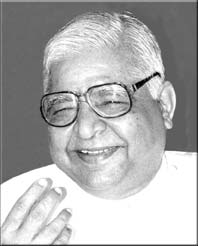
S.N. GoenkaI found out via Justin Whitaker the sad news that S.N. Goenka died this week. The name needs little introduction for Yavanayāna Buddhists, but others may wish some additional insight.

Goenka, born in Burma, was a pioneer – really the pioneer – of what is now known as vipassanā meditation. This term vipassanā (usually translated “insight”) is found in the classical Pali texts, and so is the Satipaṭṭhāna Sutta from which Goenka originally drew the meditation technique. Notably, though, the term vipassanā does not show up in the Satipaṭṭhāna Sutta itself. And that detail, I think, is telling about Goenka’s whole project.

I recall Goenka claiming, like many other contemporary Buddhist teachers, that what he was teaching was not new; it was just the teaching of the Buddha. That statement is not false exactly, but it’s not the whole truth. Continue reading →

The justifiable conservatism of the humanities

23 Sunday Jun 2013

Posted by Amod Lele in Economics, Work

≈ 4 Comments

Tags

academia, conservatism

For those of us who think at length about universities and the changes they may undergo, it’s a commonplace to refer to the medieval origins of the modern university system. These origins are typically taken to be a bad thing. For example, lecture-based pedagogy is said to date to a time before printing, when that was the only way students would have access to a text. So, the argument goes, it’s an obsolete atavism; there is no reason to keep it around.

I have become increasingly nervous around this line of argument. For it seems to me that a fully modernized university will be one that has no place for the humanities. Continue reading →

Modernity and modernism

31 Sunday Mar 2013

Posted by Amod Lele in Metaphilosophy, Politics, Social Science

≈ 7 Comments

Tags

conservatism, fundamentalism, Ken Wilber, modernism, modernity

It can feel pedantic to insist on the distinction between modernity and modernism (as I do in my tag cloud). I’ve seen eyes roll when I do it, and understandably so. Two nouns both deriving from the word modern: surely between them is the ultimate example of a trivial distinction, a hair-splitting, a difference that does not make a difference?

In fact the difference between modernity and modernism can make all the difference in the world. The importance of the distinction may become a little bit clearer when we move from the nouns to their corresponding adjectives. Modernity is simply the noun form of “modern”, as we might expect. But modernism is not. Modernity is merely the state of being modern. Modernism is the state of being modernist. And that is a difference that makes a huge difference. Continue reading →

Of transcendence

11 Sunday Nov 2012

Posted by Amod Lele in Christianity, Deity, Flourishing, Politics

≈ 2 Comments

Tags

ascent/descent, Augustine, conservatism, Eric Voegelin, Front Porch Republic, Gnosticism, Karl Marx, Mark T. Mitchell, Martha C. Nussbaum, modernism, Simone Weil, Thomas Aquinas

Last time I discussed the relationship between the concepts of Ascent and of transcendence. I think there’s more to say about the latter. Last time I had noted two forms of transcendence: an Ascent beyond the physical world, and the “transcendence by descent” endorsed by Martha Nussbaum in which one transcends one’s own limits. But I think there’s also a third type found between them, one which I’ve spoken of before in other terms.

A key feature of any kind of transcendence, it seems to me, is dissatisfaction: something appears wrong with that which one is trying to transcend. In Nussbaum’s transcendence-by-descent, one is dissatisfied with one’s own weaknesses and flaws. In an Ascent, one is in some sense dissatisfied with the whole world. But what if one is dissatisfied with the whole world in a way that motivates one not to step outside the world, but to change it? Continue reading →

← Older posts
Newer posts →

Welcome to Love of All Wisdom.

I invite you to leave comments on my blog, even - or especially - if I have no idea who you are. Philosophy is a conversation, and I invite you to join it with me; I welcome all comers (provided they follow a few basic rules). I typically make a new post every Sunday. If you'd like to be notified when a new post is posted, you can get email notifications whenever I add something new via the link further down in this sidebar. You can also follow this blog on Facebook. Or if you use RSS, you can get updates through the RSS feed.

Recent Comments

  • Nathan on You still have to naturalize karma
  • Amod Lele on You still have to naturalize karma
  • Nathan on You still have to naturalize karma
  • Amod Lele on You still have to naturalize karma
  • Nathan on You still have to naturalize karma

Subscribe to receive Love of All Wisdom by email:

Post Tags

20th century academia Alasdair MacIntyre Aristotle ascent/descent Augustine autobiography Buddhaghosa Canada Confucius conservatism Disengaged Buddhism Engaged Buddhism Evan Thompson expressive individualism Four Noble Truths Friedrich Nietzsche G.W.F. Hegel gender Hebrew Bible identity Immanuel Kant intimacy/integrity justice Karl Marx Ken Wilber law Martha C. Nussbaum modernity music mystical experience nondualism Pali suttas pedagogy Plato race rebirth religion Siddhattha Gotama (Buddha) technology theodicy United States utilitarianism Śaṅkara Śāntideva

Categories

  • African Thought (15)
  • Applied Philosophy (384)
    • Death (47)
    • Family (54)
    • Food (22)
    • Friends (21)
    • Health (33)
    • Place (37)
    • Play (18)
    • Politics (240)
    • Sex (25)
    • Work (48)
  • Asian Thought (463)
    • Buddhism (334)
      • Early and Theravāda (140)
      • Mahāyāna (143)
      • Modernized Buddhism (103)
    • East Asia (102)
      • Confucianism (62)
      • Daoism (23)
      • Shinto (1)
    • South Asia (149)
      • Bhakti Poets (4)
      • Cārvāka-Lokāyata (5)
      • Epics (16)
      • Jainism (24)
      • Modern Hinduism (45)
      • Nyāya-Vaiśeṣika (6)
      • Sāṃkhya-Yoga (16)
      • Sikhism (1)
      • Vedānta (42)
      • Vedas and Mīmāṃsā (7)
  • Blog Admin (29)
  • Indigenous American Thought (8)
  • Method (279)
    • Metaphilosophy (180)
    • Method and Theory in the Study of Religion (156)
  • Practical Philosophy (434)
    • Action (17)
    • Aesthetics (53)
    • Emotion (196)
      • Anger (42)
      • Attachment and Craving (32)
      • Compassion (9)
      • Despair (7)
      • Disgust (5)
      • Faith (20)
      • Fear (15)
      • Grief (9)
      • Happiness (52)
      • Hope (20)
      • Pleasure (37)
      • Shame and Guilt (10)
    • External Goods (55)
    • Flourishing (104)
    • Foundations of Ethics (126)
    • Karma (45)
    • Morality (79)
    • Virtue (187)
      • Courage (7)
      • Generosity (14)
      • Gentleness (7)
      • Gratitude (13)
      • Honesty (15)
      • Humility (27)
      • Leadership (7)
      • Mindfulness (24)
      • Patient Endurance (31)
      • Self-Discipline (10)
      • Serenity (39)
      • Zest (8)
  • Practice (147)
    • Karmic Redirection (5)
    • Meditation (47)
    • Monasticism (47)
    • Physical Exercise (4)
    • Prayer (16)
    • Reading and Recitation (14)
    • Rites (24)
    • Therapy (11)
  • Theoretical Philosophy (407)
    • Consciousness (24)
    • Deity (77)
    • Epistemology (141)
      • Certainty and Doubt (19)
      • Dialectic (21)
      • Logic (15)
      • Prejudices and "Intuitions" (31)
    • Free Will (18)
    • Hermeneutics (66)
    • Human Nature (36)
    • Metaphysics (117)
    • Philosophy of Language (31)
    • Self (78)
    • Supernatural (56)
    • Truth (64)
    • Unconscious Mind (16)
  • Western Thought (528)
    • Analytic Tradition (107)
    • Christianity (162)
      • Early Factions (8)
      • Eastern Orthodoxy (3)
      • Protestantism (27)
      • Roman Catholicism (61)
    • French Tradition (50)
    • German Tradition (97)
    • Greek and Roman Tradition (126)
      • Epicureanism (25)
      • Neoplatonism (2)
      • Pre-Socratics (6)
      • Skepticism (2)
      • Sophists (8)
      • Stoicism (22)
    • Islam (44)
      • Mu'tazila (2)
      • Salafi (3)
      • Sufism (10)
    • Judaism (38)
    • Natural Science (104)
      • Biology (33)
      • Philosophy of Science (51)
      • Physics and Astronomy (11)
    • Social Science (198)
      • Economics (48)
      • Psychology (86)

Recent Posts

  • You still have to naturalize karma
  • On the damned topics of Buddhist philosophy
  • There’s no such thing as racial purity
  • The Gnostic aesthetics of leg waxing
  • Missed posts for Love of All Wisdom subscribers

Popular posts

  • One and a half noble truths?
  • Wishing George W. Bush well
  • Do Speculative Realists want us to be Chinese?
  • Why I am not a right-winger
  • On faith in tooth relics

Basic concepts

  • Ascent and Descent
  • Intimacy and integrity
  • Ascent-descent and intimacy-integrity together
  • Perennial questions?
  • Virtuous and vicious means
  • Dialectical and demonstrative argument
  • Chastened intellectualism and practice
  • Yavanayāna Buddhism: what it is
  • Why worry about contradictions?
  • The first philosophy blogger

Personal favourites

  • Can philosophy be a way of life? Pierre Hadot (1922-2010)
  • James Doull and the history of ethical motivation
  • Praying to something you don't believe in
  • What does postmodernism perform?
  • Why I'm getting married

Archives

Search this site

All posts, pages and metadata copyright 2009-2026 Amod Lele unless otherwise noted. Comments copyright 2009-2026 their comment authors. Creative Commons Attribution-NonCommercial-ShareAlike (BY-NC-SA) licence.

Proudly powered by WordPress Theme: Chateau by Ignacio Ricci.