• About me
  • About this blog
  • After Anger
  • Comment rules
  • Other writings

Love of All Wisdom

~ Philosophy through multiple traditions

Love of All Wisdom

Category Archives: Applied Philosophy

For transracialism

07 Sunday Dec 2025

Posted by Sandhya Lele in Analytic Tradition, Logic, Politics

≈ 3 Comments

Tags

Caitlyn Jenner, expressive individualism, gender, Ibram X. Kendi, identity, John Stuart Mill, race, Rachel Dolezal, Rebecca Tuvel

The bullying campaign to cancel Rebecca Tuvel’s defence of transracialism was shoddy and shameful. There was no merit in it at all. Whether or not you think Tuvel’s argument for transracialism succeeds, that part seems to me pretty obvious. But it does raise the next question, to which the answers are less obvious: does Tuvel’s argument work? Does the logic of accepting transgender identity imply accepting transracial identity?

You could not have got me to answer that question (in public) back in 2017, while Tuvel was still being actively persecuted. For a while, that bullying campaign and others like it successfully achieved their goal of terror: they succeeded in getting me, and others like me, to silence our dissenting views out of fear of the consequences that were so regularly experienced by others.

But the climate has changed a lot since then, in ways that make it still harder to speak on some issues (like Israel and Palestine), but easier to speak on this one. So I am going to take a risk now, stick my head up, bite the bullet, and answer the question: yes!

Continue reading →

Self-proclaimed philosophers should have known better

30 Sunday Nov 2025

Posted by Sandhya Lele in Analytic Tradition, Fear, Judaism, Metaphilosophy, Politics

≈ 4 Comments

Tags

academia, Charles Mills, gender, identity, race, Rebecca Tuvel, Socrates

A couple years ago I wrote a post arguing that we should not be defined by biological categories. I stand by that post today. It focused on transgender (and did so before I came out as gender-fluid myself), but it also mentioned race: “I view the struggle for racial equality in the light of this ideal as well, as Prince Ea does: skin colour or related phenotypical characteristics should not define who we really are.”

Anyone who read that post could have come up with the reasonable question: well then, must you not also believe that we should allow transracialism alongside transgender? That people should be allowed to define their own race just as they define their own gender?

Rebecca Tuvel, from her faculty page at Rhodes College.

At the time I wrote the first post I would have refused to answer that question – for reasons that came down, in a word, to fear. I saw what happened to Rebecca Tuvel, who defended the idea of transracialism in a philosophy journal (Hypatia, the leading journal of feminist philosophy). After a smear campaign on Facebook and Twitter where Tuvel was accused of doing “violence”, more than 800 people signed an open letter demanding that the journal retract the article and publicly proclaim that publishing it was a “failure of judgement”. An associate editor immediately published an apology for publishing the article, followed by a spate of resignations that ultimately took the journal’s entire editorial staff.

Continue reading →

Mindform Podcast interview

12 Wednesday Nov 2025

Posted by Amod Lele in Anger, Attachment and Craving, Confucianism, Early and Theravāda, Emotion, External Goods, Flourishing, Foundations of Ethics, Human Nature, Mahāyāna, Meditation, Metaphysics, Mindfulness, Morality, Natural Science, Pleasure, Politics, Psychology, Self

≈ Comments Off on Mindform Podcast interview

Tags

Alex O'Connor, Aristotle, authenticity, autobiography, Charles Goodman, conventional/ultimate, expressive individualism, Frank Lawton, Friedrich Nietzsche, interview, Jeremy Bentham, Kāma Sūtra, Madhyamaka, phenomenology, Śāntideva, Thailand, utilitarianism, virtue ethics

I was interviewed by Frank Lawton on a recent episode of the Mindform Podcast on self-development and wisdom, associated with Ryan A. Bush’s Designing the Mind. We begin with my formative story in Thailand and the anti-politics associated with it, proceeding to a critique of utilitarianism, a discussion of my gradual movement from Theravāda to Mahāyāna Buddhism, and finally to an exploration of expressive individualism. All told, I think it’s a very nicely rounded introduction to my philosophical thinking – even if my growing hair is in its awkward phase and I stammer a little too much!

Ambedkar and the Nation of Islam as skillful means

09 Sunday Nov 2025

Posted by Amod Lele in Hermeneutics, Islam, Method and Theory in the Study of Religion, Modernized Buddhism, Politics, Rites

≈ 5 Comments

Tags

20th century, B.R. Ambedkar, caste, Elijah Muhammad, Four Noble Truths, identity, Maharashtra, Malcolm X, Nation of Islam, race, United States, upāyakauśalya, W.D. Fard Muhammad

It’s hard for me to view B.R. Ambedkar as a real Buddhist, when he threw out the Four Noble Truths after getting to Buddhism by a mere process of elimination. But then, to a real Buddhist, it shouldn’t matter – at least it shouldn’t matter much – whether you are a “real Buddhist”! Buddhism has no more essence, no more svabhāva, than anything else does. What really matters is relieving suffering. What’s more important than his status as a Buddhist is that Ambedkar’s rejection of the Four Noble Truths deeply inhibits the relief of suffering – or rather, it has the potential to. Yet things might be a bit more complicated than that.

Continue reading →

My complicated relationship with B.R. Ambedkar

02 Sunday Nov 2025

Posted by Amod Lele in Hermeneutics, Method and Theory in the Study of Religion, Modern Hinduism, Modernized Buddhism, Politics, Sikhism

≈ 7 Comments

Tags

autobiography, B.R. Ambedkar, caste, Four Noble Truths, identity, Maharashtra, Narendra Modi, race

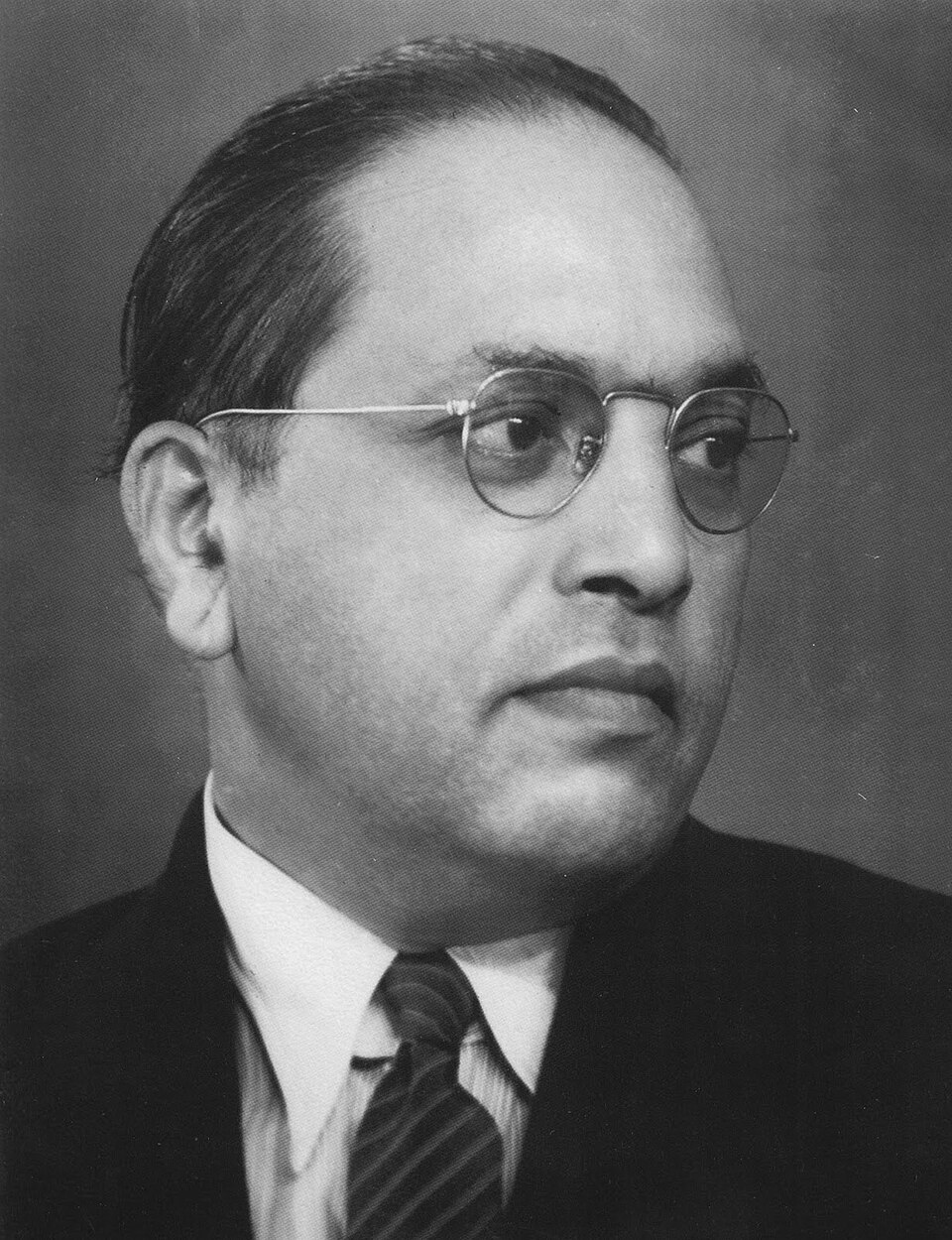
Public-domain image of Ambedkar.

Dr. Ambedkar, the 20th-century leader of the lowest (“Dalit”, formerly “untouchable”) Indian caste groups, might be having a moment. In my Indian philosophy class in 2019, I wanted to have a segment on modern Indian philosophy, so I introduced the students to Gandhi and to Ambedkar as a critic of Gandhi – and was interested to see how the students absolutely loved Ambedkar. This year, I attended a fascinating workshop at Princeton on black Buddhist perspectives, where Ambedkar probably played a larger role than any other figure, even the Buddha himself. I’m glad to see black Americans discovering Ambedkar, since there are such close analogies between American race and Indian caste – already observed by Martin Luther King. A recent Economist article now mentions that even Narendra Modi is trying to proclaim Ambedkar as an ally for his militant Hindu agenda – a claim that should be laughable, given Ambedkar’s clearly expressed hostility to Hinduism, but an understandable attempt given Ambedkar’s huge popularity in India: there are now more statues of Ambedkar than any other Indian political figure, including Nehru, Gandhi and Aśoka.

I find Ambedkar overall a very admirable figure – both his personal story of rising through the ranks intellectually and becoming a leader, and his accomplishments. I also find his approach to caste more sensible than the American approach to race, one that Americans could learn a lot from. My late father admired him greatly. He is also a figure who makes me personally uncomfortable – perhaps in a good way.

Continue reading →

What is a woman?

05 Sunday Oct 2025

Posted by Sandhya Lele in Biology, Philosophy of Language, Politics

≈ 1 Comment

Tags

Amos Wollen, Beans Velocci, David Klion, gender, H.L. Mencken, identity, Kellie-Jay Keen-Minshull, Madeleine Pape, Marcus Arvan, Matt Walsh, Root Gorelick

A common paraphrase of H.L. Mencken says: “For every complex question there is an answer that is clear, simple – and wrong.” These days we see how helpful that quote is, when it is applied to the question “What is a woman?”

The OED’s first definition of “woman” is “an adult female human being”. Webster says “an adult female person”. It has become a commonplace on the right, of late, to feel so very clever by defining “woman” as “adult human female” – roughly but not exactly following the dictionary definitions – and then watch others struggle to provide their own definition. UK activist Kellie-Jay Keen-Minshull put up billboards proclaiming as much; director Matt Walsh even made a whole movie with this definition as its thesis. The intended point of this exercise, of course, is to say that transgender women are not really women and that presumably this should be obvious. And while I do think it can reasonably be debated whether trans women are women, this particular piece of rhetoric does far more to illustrate foolishness on the anti-trans side than the pro-trans side.

Continue reading →

If only Bentham had read the Kāma Sūtra

21 Sunday Sep 2025

Posted by Amod Lele in Aesthetics, Analytic Tradition, Food, Play, Pleasure, Psychology, Sex, South Asia, Zest

≈ 6 Comments

Tags

Daniel Pallies, Jeremy Bentham, Kāma Sūtra, phenomenology

Daniel Pallies, a philosophy postdoc at Lingnan University in Hong Kong, recently wrote a blog post entitled “The inexplicable appeal of spicy food”. Pallies, from his bio, indicates that one of his key interests is the question: “What makes a feeling pleasant, or unpleasant?” And so he is puzzled by a phenomenon that he and I share: we enjoy eating food high in capsaicin, even though the sensation of eating these foods is painful. He adds: “And like most people, I think that pain makes your life worse. All else being equal, your life goes worse for you to the extent that it is painful. So why do I, and lots of other people, eat spicy food?”

Continue reading →

Kali’s Child at 30

14 Sunday Sep 2025

Posted by Sandhya Lele in Method and Theory in the Study of Religion, Modern Hinduism, Politics, Psychology, Sāṃkhya-Yoga, Sex

≈ 2 Comments

Tags

autobiography, gender, Harvard University, identity, Jeffrey Kripal, race, Ramakrishna, Sigmund Freud

It was thirty years ago, in 1995, that a then-unknown junior academic named Jeffrey Kripal published Kālī’s Child: The Mystical and the Erotic in the Life and Teachings of Ramakrishna. The book took a new look at the stories written about the revered 19th-century Bengali mystic Ramakrishna, from the then-current Freudian lens: it explored passages that it described as homoerotic, and argued that there was a connection between the homoeroticism and the mysticism. Kripal, who was raised Catholic and once attempted to enter the priesthood, always saw an erotic dimension in mysticism, and found that goddess traditions like Ramakrishna’s felt a more natural fit than Christianity with his own heterosexuality – so was surprised to find homoerotic elements in Ramakrishna, and realized that was something worth writing about.

Few, least of all Kripal, expected what happened next. Ramakrishna devotees in India found out about the book and became furious that anyone would dare treat Ramakrishna’s mysticism as having a sexual element. Hindu nationalists burned copies of the book, there were multiple attempts to ban it, and Kripal was no longer able to travel to India out of fear for his safety. It was the first in a series of attacks that Hindu nationalists came to make against Western scholars in the decades to come, outraged that scholars would point to aspects of their traditions that they didn’t like.

I had read a little about this story before I arrived at Harvard as a new PhD student in 2000. There were three scholars of South Asian religions – John Carman, Edwin Bryant, and especially Charles Hallisey – who I’d expected to study under when I got there… and all three of them had just left, for various reasons, without (yet) being replaced. So I felt a little adrift. But as I had a first walk through the hallway of a Harvard Divinity School building, there outside an open office door was the name plate of a visiting professor in South Asian religions whose name I did recognize: Jeffrey Kripal.

Continue reading →

Don’t think about Trump more than you have to

07 Sunday Sep 2025

Posted by Amod Lele in Courage, Fear, Friends, Politics, Psychology, Serenity

≈ 3 Comments

Tags

21st century, Donald Trump, IABS, Reinhold Niebuhr, United States

Last month I had the good fortune to attend a weeklong conference of Buddhism scholars in Leipzig, Germany – a wonderful opportunity in many ways, not least that one gets to be in a world far removed from the current craziness of American politics. So not long afterwards, I set myself the goal of not saying the T-word to anyone during my week there.

I succeeded at that goal, barely. But it was really hard.

Continue reading →

Grief’s complex timing

31 Sunday Aug 2025

Posted by Amod Lele in Death, Family, Friends, Grief

≈ 7 Comments

Tags

Alison Vipond, autobiography, Canada, Claude Vipond, Dave Harkness, Facebook, Jayant Lele, mystical experience

Grief can be more complicated than we often make it out to be. In the wake of my father’s death, several people have reminded me of this point, and they’ve been right – in a way that I know a little too well, because of other experiences with grieving over the past decade.

Continue reading →
← Older posts
Newer posts →

Welcome to Love of All Wisdom.

I invite you to leave comments on my blog, even - or especially - if I have no idea who you are. Philosophy is a conversation, and I invite you to join it with me; I welcome all comers (provided they follow a few basic rules). I typically make a new post every Sunday. If you'd like to be notified when a new post is posted, you can get email notifications whenever I add something new via the link further down in this sidebar. You can also follow this blog on Facebook. Or if you use RSS, you can get updates through the RSS feed.

Recent Comments

  • Amod Lele on Christians can have neutral supernatural beings
  • Amod Lele on Christians can have neutral supernatural beings
  • Thomas Storck on Christians can have neutral supernatural beings
  • Rick Repetti on Christians can have neutral supernatural beings
  • Amod Lele on Marx and Mill: similar makers of the modern left

Subscribe to receive Love of All Wisdom by email:

Post Tags

20th century academia Alasdair MacIntyre Aristotle ascent/descent Augustine autobiography Buddhaghosa Canada Confucius conservatism Disengaged Buddhism Engaged Buddhism Evan Thompson expressive individualism Four Noble Truths Friedrich Nietzsche G.W.F. Hegel gender Hebrew Bible identity Immanuel Kant intimacy/integrity justice Karl Marx Ken Wilber law Martha C. Nussbaum modernity music mystical experience nondualism Pali suttas pedagogy Plato race rebirth religion Siddhattha Gotama (Buddha) technology theodicy United States utilitarianism Śaṅkara Śāntideva

Categories

  • African Thought (15)
  • Applied Philosophy (391)
    • Death (48)
    • Family (54)
    • Food (23)
    • Friends (21)
    • Health (33)
    • Place (40)
    • Play (18)
    • Politics (245)
    • Sex (25)
    • Work (48)
  • Asian Thought (468)
    • Buddhism (338)
      • Early and Theravāda (141)
      • Mahāyāna (145)
      • Modernized Buddhism (105)
    • East Asia (103)
      • Confucianism (62)
      • Daoism (24)
      • Shinto (1)
    • South Asia (150)
      • Bhakti Poets (4)
      • Cārvāka-Lokāyata (5)
      • Epics (16)
      • Jainism (24)
      • Modern Hinduism (46)
      • Nyāya-Vaiśeṣika (6)
      • Sāṃkhya-Yoga (16)
      • Sikhism (1)
      • Vedānta (42)
      • Vedas and Mīmāṃsā (7)
  • Blog Admin (29)
  • Indigenous American Thought (9)
  • Method (279)
    • Metaphilosophy (180)
    • Method and Theory in the Study of Religion (156)
  • Practical Philosophy (440)
    • Action (18)
    • Aesthetics (53)
    • Emotion (198)
      • Anger (43)
      • Attachment and Craving (33)
      • Compassion (9)
      • Despair (7)
      • Disgust (5)
      • Faith (20)
      • Fear (15)
      • Grief (9)
      • Happiness (52)
      • Hope (20)
      • Pleasure (38)
      • Shame and Guilt (10)
    • External Goods (55)
    • Flourishing (107)
    • Foundations of Ethics (126)
    • Karma (45)
    • Morality (80)
    • Virtue (191)
      • Courage (7)
      • Generosity (14)
      • Gentleness (7)
      • Gratitude (13)
      • Honesty (15)
      • Humility (27)
      • Leadership (7)
      • Mindfulness (27)
      • Patient Endurance (32)
      • Self-Discipline (11)
      • Serenity (41)
      • Zest (8)
  • Practice (147)
    • Karmic Redirection (5)
    • Meditation (47)
    • Monasticism (47)
    • Physical Exercise (4)
    • Prayer (16)
    • Reading and Recitation (14)
    • Rites (24)
    • Therapy (11)
  • Theoretical Philosophy (410)
    • Consciousness (24)
    • Deity (79)
    • Epistemology (141)
      • Certainty and Doubt (19)
      • Dialectic (21)
      • Logic (15)
      • Prejudices and "Intuitions" (31)
    • Free Will (18)
    • Hermeneutics (66)
    • Human Nature (36)
    • Metaphysics (118)
    • Philosophy of Language (31)
    • Self (79)
    • Supernatural (57)
    • Truth (64)
    • Unconscious Mind (16)
  • Western Thought (533)
    • Analytic Tradition (108)
    • Christianity (163)
      • Early Factions (8)
      • Eastern Orthodoxy (3)
      • Protestantism (28)
      • Roman Catholicism (62)
    • French Tradition (50)
    • German Tradition (98)
    • Greek and Roman Tradition (126)
      • Epicureanism (25)
      • Neoplatonism (2)
      • Pre-Socratics (6)
      • Skepticism (2)
      • Sophists (8)
      • Stoicism (22)
    • Islam (44)
      • Mu'tazila (2)
      • Salafi (3)
      • Sufism (10)
    • Judaism (38)
    • Natural Science (105)
      • Biology (34)
      • Philosophy of Science (51)
      • Physics and Astronomy (11)
    • Social Science (201)
      • Economics (50)
      • Psychology (87)

Recent Posts

  • Christians can have neutral supernatural beings
  • Marx and Mill: similar makers of the modern left
  • The Radical Buddhism Project
  • The present moment has no marshmallow
  • The gap is not glorious

Popular posts

  • One and a half noble truths?
  • Wishing George W. Bush well
  • Do Speculative Realists want us to be Chinese?
  • Why I am not a right-winger
  • On faith in tooth relics

Basic concepts

  • Ascent and Descent
  • Intimacy and integrity
  • Ascent-descent and intimacy-integrity together
  • Perennial questions?
  • Virtuous and vicious means
  • Dialectical and demonstrative argument
  • Chastened intellectualism and practice
  • Yavanayāna Buddhism: what it is
  • Why worry about contradictions?
  • The first philosophy blogger

Personal favourites

  • Can philosophy be a way of life? Pierre Hadot (1922-2010)
  • James Doull and the history of ethical motivation
  • Praying to something you don't believe in
  • What does postmodernism perform?
  • Why I'm getting married

Archives

Search this site

All posts, pages and metadata copyright 2009-2026 Amod Lele unless otherwise noted. Comments copyright 2009-2026 their comment authors. Creative Commons Attribution-NonCommercial-ShareAlike (BY-NC-SA) licence.

Proudly powered by WordPress Theme: Chateau by Ignacio Ricci.