• About me
  • About this blog
  • Comment rules
  • Other writings

Love of All Wisdom

~ Philosophy through multiple traditions

Love of All Wisdom

Category Archives: Buddhism

The atomized Buddhist individual

07 Sunday Jul 2013

Posted by Amod Lele in Early and Theravāda, East Asia, Jainism, Mahāyāna, Metaphysics, Self, South Asia

≈ 14 Comments

Tags

Chan/Zen 禪, conventional/ultimate, intimacy/integrity, Ken Wilber, Milindapañhā, Thomas P. Kasulis

I have frequently discussed how early Indian Buddhism, like Jainism, takes an integrity perspective in an ethical or practical sense. I’ve said less about the theoretical side of its integrity approach. But I think that side is very much there. And it’s that link between theoretical and practical philosophy that makes the concepts of intimacy and integrity so appealing: they go “all the way down”.

I find it particularly important to discuss the theoretical integrity of early Buddhism because I think this is a place where Thomas P. Kasulis – from whom I take the very concepts of intimacy and integrity – has misapplied his own theory. Continue reading →

The coherence of composite texts

12 Sunday May 2013

Posted by Amod Lele in East Asia, Hermeneutics, Mahāyāna, Metaphilosophy, Method and Theory in the Study of Religion

≈ Comments Off on The coherence of composite texts

Tags

Alexander Nehamas, Janet Gyatso, Śāntideva, Thomas Kuhn

A while ago I discussed how Janet Gyatso had objected to my approach of assuming authorial coherence and single authorship in my dissertation on Śāntideva (and in other works). I said there that “there’s an issue here much bigger than the interpretation of any one thinker: should one even try to find the coherent views of an individual author?” I answered yes and I stand by that. I remain firmly in agreement with Thomas Kuhn’s dictum that [w]hen reading the works of an important thinker” one should look for the apparent absurdities and ask how it could make sense that “a sensible person could have written them”. But I didn’t go back to what I implied was the “smaller” issue – which may not in fact be so small.

In the case of Śāntideva, the historical evidence suggests that his most famous work, the Bodhicaryāvatāra, is composite: there is a version of it discovered relatively recently at Dunhuang which seems to be significantly earlier than, and substantially different from, the version known to Indian and Tibetan Buddhist tradition. It would seem that the text as we know it is the work of at least two composers. And that, in turn, poses a problem for someone wanting to use Kuhn’s approach as he states it: what if this text is not the work of an important thinker or a sensible person, but multiple ones? Are we not then entitled to treat the text as incoherent because of all the different minds that went into it? Continue reading →

The twenty-year project

24 Sunday Mar 2013

Posted by Amod Lele in External Goods, Mahāyāna, Method and Theory in the Study of Religion, Stoicism

≈ Comments Off on The twenty-year project

Tags

ascent/descent, autobiography, intimacy/integrity, Martha C. Nussbaum, Plato, Robert M. Gimello, Śāntideva

I mentioned two weeks ago that there were two reasons I didn’t think my dissertation would become a book. The previous week I focused on the practical and political reason: I believe in free open access, and now that I’m not on the faculty track I can put my money where my mouth is.

The other reason, which is far more interesting to me, has to do with the dissertation’s content. I think back to when I was proposing a first inchoate version of the project, perhaps ten years ago or so now, knowing I wanted it to involve some amount of constructive dialogue between the ideas of Śāntideva and of Martha Nussbaum. Robert Gimello, on my committee at the time, said to me that he didn’t think that this would be an appropriate project for a dissertation. Not because those questions were inappropriate for a scholar to ask; indeed, he approved of them. Rather, he thought, that project seemed like a twenty-year project, much larger than a dissertation. For the dissertation I should buckle down and just try to understand Śāntideva himself.

I didn’t follow Gimello’s advice, and I’m glad I didn’t. Continue reading →

Indian intimacy

27 Sunday Jan 2013

Posted by Amod Lele in Confucianism, Early and Theravāda, Family, Jainism, Modern Hinduism, Monasticism, Rites, Social Science

≈ Comments Off on Indian intimacy

Tags

ascent/descent, autobiography, Chad Hansen, intimacy/integrity, Joel Kotkin, Maharashtra, Max Weber, Mozi, puruṣārthas, Thomas P. Kasulis

I’m back from a trip to see my family in India, and have an Indian wedding ceremony. It was wonderful to see everyone there, and it also got me thinking.

When I wrote recently about my Indian background, I put some emphasis on how having an Indian background could be misleading in trying to understand Indian philosophy. It had taken me longer to see that Indian philosophy has an integrity orientation because after living in modern India, I’d spent a long time thinking of India as having an intimacy orientation.

But in my excitement over that realization, I think I’d forgotten that I’d held an intimacy view of India for a reason. Continue reading →

Buddhists and “Hindus” against traditional family values

16 Sunday Dec 2012

Posted by Amod Lele in Christianity, Early and Theravāda, East Asia, Family, Jainism, Mahāyāna, Monasticism, Social Science, South Asia

≈ 4 Comments

Tags

ascent/descent, dharmaśāstra, Dōgen, intimacy/integrity, Jan Nattier, Jātakas, Jesus, Joel Kotkin, New Testament, Pali suttas, Patrick Deneen, Patrick Olivelle, Śāntideva, Siddhattha Gotama (Buddha), Ugraparipṛcchā Sūtra, vinaya

A while ago I wrote about how Indian traditions upset conventional assumptions about family and community being essential to premodern tradition and culture. There, I was responding to a piece by Patrick Deneen, which drew only on Western traditions. As a result, Deneen’s piece had a narrowness of focus, but within that focus it was able to attain some accuracy. Not so for a recent report by urban geographer Joel Kotkin, entitled The Rise of Post-Familialism. Continue reading →

Indian heritage?

02 Sunday Dec 2012

Posted by Amod Lele in Early and Theravāda, Metaphilosophy, Method and Theory in the Study of Religion, South Asia

≈ 6 Comments

Tags

autobiography, caste, dharmaśāstra, identity, intimacy/integrity, Jeffery Long, Laws of Manu, Louis Dumont, race, Stephanie W. Jamison

As my doctoral studies were in Indian philosophy and my ethnic background is part Indian, I was often asked whether my studies had to do with exploring my own heritage. The answer is basically no.

As I noted in telling my story, I came to the study of Asian philosophy through Thai Buddhism, which is not at all part of my ethnic background. I learned Sanskrit and Pali because it seemed to me that most of what was philosophically interesting in Thai Buddhism had come from its Indian heritage – even though Buddhism in India had all but died out.

If I ever thought my heritage would play a major role in the process, such thoughts stopped in my first-year Sanskrit class. My teacher, Stephanie Jamison, was explaining the rules of caste in traditional dharmaśāstra (ethical-legal texts), and how the brahmins were the ones expected to do all the thinking. I wondered whether I counted as a brahmin by this standard, so I asked: how would they count the offspring of a brahmin and an outsider, a yavana?

She answered: caste mixing is always viewed as an evil, so the offspring of any mix would be counted as the lower of the two – at the very best. In other words, according to the Laws of Manu, I’m a white boy. (If not an outright abomination.) Continue reading →

The supernatural without Ascent

04 Sunday Nov 2012

Posted by Amod Lele in Deity, Early and Theravāda, Flourishing, Social Science, Supernatural, Vedas and Mīmāṃsā

≈ 21 Comments

Tags

ascent/descent, Ken Wilber, Martha C. Nussbaum, Martin Southwold, Robin Horton, Sigmund Freud, Sri Lanka, Tattvārtha Sūtra

I’ve repeatedly returned on this blog to the concepts of Ascent and Descent, derived above all from Ken Wilber’s work and to a lesser extent from Martha Nussbaum’s. I have found that these concepts do a lot to help us understand the differences between philosophical traditions. I have not yet been precise about defining them, however, and I would like to think them through in some more detail.

The concept of Ascent has above all to do with transcendence; “transcendence” and “immanence” are close cousins to Ascent and Descent as I understand them. However, Ascent is not transcendence as such. Continue reading →

Précis of “Beyond enacted experiences”

30 Sunday Sep 2012

Posted by Amod Lele in Buddhism, Christianity, Consciousness, Dialectic, Judaism, Meditation, Metaphilosophy, Method and Theory in the Study of Religion, Natural Science, Vedānta

≈ 15 Comments

Tags

Candrakīrti, Jesus, Ken Wilber, mystical experience, New Testament, perennialism, religion, Robert Sharf, Wilhelm Halbfass

I’ve been wanting to refer on the blog to the article I recently wrote for the Journal of Integral Theory and Practice. Out of respect for the journal’s hardworking editors (and the law!), I will not post the article or its text on the site. But I’d like to give a summary of what I said there, so that blog readers without access to JITP will know what I’m talking about. The argument here is not as precise or careful as that in the article, and readers will need to find a copy of JITP 7(2) to get those details.

The article is above all a critique of Ken Wilber’s method in cross-cultural philosophy, a method that Wilber himself describes as a form of empiricism. Continue reading →

The trouble with phenomenological similarities

23 Sunday Sep 2012

Posted by Amod Lele in Early and Theravāda, Meditation, Method and Theory in the Study of Religion, Philosophy of Language, Roman Catholicism

≈ 6 Comments

Tags

Buddhaghosa, Cloud of Unknowing, early writings, mystical experience, Ninian Smart, perennialism, phenomenology, Robert M. Gimello, Robert Sharf

This week’s post is a slightly abridged version of a paper I wrote eleven years ago for Robert Gimello’s class on Buddhist meditation traditions. I’m posting it now for a couple of reasons: because I still enjoy its punchy rhetoric, because it’s a useful corrective to Wilberian and similar perspectives that assume “religion” is fundamentally about mystical experience, and because I think it’s likely to be relevant to posts I want to make in the months ahead. I also still agree with it to at least some extent, but I am not entirely sure what that extent is, and that is something I hope to be sorting through.


In his chapter “What would Buddhaghosa have made of the Cloud of Unknowing?”1, Ninian Smart argues that “there are phenomenological similarities between the differing practices despite the contrast in language and style between Buddhaghosa and the author of the anonymous 14th-century Christian text The Cloud of Unknowing.” Although Smart never defines “phenomenological”, I believe from the context of the article that he uses the term to refer to similarities of experience, and specifically mystical experience.

To what extent does Smart’s chapter succeed in its project? Continue reading →

My mother’s meditations

09 Sunday Sep 2012

Posted by Amod Lele in Confucianism, Family, Gratitude, Meditation, Modernized Buddhism, Serenity

≈ 5 Comments

Tags

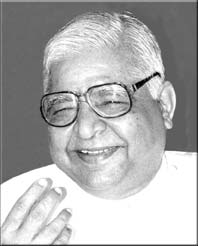
autobiography, Dorothy Lele, S.N. Goenka

Over the past little while I have been reading more Confucianism, and becoming more sympathetic to it for a variety of reasons. I’ve hardly converted to Confucianism, which is probably just as well; I sometimes think I’d be the world’s worst Confucian – not having children, living far from my parents, and having grown up regularly challenging their authority. To be fair, my parents – a Marxist and a child of the sixties – effectively encouraged me to challenge their authority. Still, in recent years and months I have come to sympathize with Confucianism a lot more. And it feels like the very least I can do is honour my parents in this forum.

I chose this week to do so because my mother, Dorothy Lele, just celebrated her birthday, and I will start by speaking of her. Continue reading →

← Older posts
Newer posts →

Welcome to Love of All Wisdom.

I invite you to leave comments on my blog, even - or especially - if I have no idea who you are. Philosophy is a conversation, and I invite you to join it with me; I welcome all comers (provided they follow a few basic rules). I typically make a new post every Sunday. If you'd like to be notified when a new post is posted, you can get email notifications whenever I add something new via the link further down in this sidebar. You can also follow this blog on Facebook. Or if you use RSS, you can get updates through the RSS feed.

Recent Comments

  • Pail D. Van Pelt on Hiding your ideas in plain sight
  • Pail D. Van Pelt on Hiding your ideas in plain sight
  • Paul D. Van Pelt on Should we be polite to AIs?
  • Dennis Fischman on Should we be polite to AIs?
  • Dion Smith on Should we be polite to AIs?

Subscribe to receive Love of All Wisdom by email:

Post Tags

20th century academia Alasdair MacIntyre Aristotle ascent/descent Augustine autobiography Buddhaghosa Canada Confucius conservatism Disengaged Buddhism Engaged Buddhism Evan Thompson expressive individualism Four Noble Truths Friedrich Nietzsche G.W.F. Hegel gender Hebrew Bible identity Immanuel Kant intimacy/integrity justice Karl Marx Ken Wilber law Martha C. Nussbaum modernity music mystical experience nondualism Pali suttas pedagogy Plato race rebirth religion Siddhattha Gotama (Buddha) technology theodicy United States utilitarianism Śaṅkara Śāntideva

Categories

  • African Thought (15)
  • Applied Philosophy (380)
    • Death (44)
    • Family (53)
    • Food (22)
    • Friends (21)
    • Health (33)
    • Place (37)
    • Play (18)
    • Politics (239)
    • Sex (25)
    • Work (48)
  • Asian Thought (459)
    • Buddhism (331)
      • Early and Theravāda (140)
      • Mahāyāna (140)
      • Modernized Buddhism (101)
    • East Asia (101)
      • Confucianism (62)
      • Daoism (22)
      • Shinto (1)
    • South Asia (148)
      • Bhakti Poets (3)
      • Cārvāka-Lokāyata (5)
      • Epics (16)
      • Jainism (24)
      • Modern Hinduism (45)
      • Nyāya-Vaiśeṣika (6)
      • Sāṃkhya-Yoga (16)
      • Sikhism (1)
      • Vedānta (42)
      • Vedas and Mīmāṃsā (7)
  • Blog Admin (28)
  • Indigenous American Thought (8)
  • Method (278)
    • Metaphilosophy (180)
    • Method and Theory in the Study of Religion (155)
  • Practical Philosophy (431)
    • Action (17)
    • Aesthetics (52)
    • Emotion (195)
      • Anger (42)
      • Attachment and Craving (32)
      • Compassion (9)
      • Despair (7)
      • Disgust (5)
      • Faith (20)
      • Fear (15)
      • Grief (9)
      • Happiness (52)
      • Hope (19)
      • Pleasure (37)
      • Shame and Guilt (10)
    • External Goods (55)
    • Flourishing (103)
    • Foundations of Ethics (126)
    • Karma (44)
    • Morality (79)
    • Virtue (187)
      • Courage (7)
      • Generosity (14)
      • Gentleness (7)
      • Gratitude (13)
      • Honesty (15)
      • Humility (27)
      • Leadership (7)
      • Mindfulness (24)
      • Patient Endurance (31)
      • Self-Discipline (10)
      • Serenity (39)
      • Zest (8)
  • Practice (146)
    • Karmic Redirection (5)
    • Meditation (47)
    • Monasticism (47)
    • Physical Exercise (4)
    • Prayer (16)
    • Reading and Recitation (14)
    • Rites (23)
    • Therapy (11)
  • Theoretical Philosophy (403)
    • Consciousness (23)
    • Deity (76)
    • Epistemology (141)
      • Certainty and Doubt (19)
      • Dialectic (21)
      • Logic (15)
      • Prejudices and "Intuitions" (31)
    • Free Will (18)
    • Hermeneutics (66)
    • Human Nature (34)
    • Metaphysics (115)
    • Philosophy of Language (31)
    • Self (78)
    • Supernatural (54)
    • Truth (64)
    • Unconscious Mind (16)
  • Western Thought (525)
    • Analytic Tradition (107)
    • Christianity (162)
      • Early Factions (8)
      • Eastern Orthodoxy (3)
      • Protestantism (27)
      • Roman Catholicism (61)
    • French Tradition (50)
    • German Tradition (97)
    • Greek and Roman Tradition (126)
      • Epicureanism (25)
      • Neoplatonism (2)
      • Pre-Socratics (6)
      • Skepticism (2)
      • Sophists (8)
      • Stoicism (22)
    • Islam (44)
      • Mu'tazila (2)
      • Salafi (3)
      • Sufism (10)
    • Judaism (38)
    • Natural Science (101)
      • Biology (31)
      • Philosophy of Science (50)
      • Physics and Astronomy (11)
    • Social Science (196)
      • Economics (48)
      • Psychology (85)

Recent Posts

  • Should we be polite to AIs?
  • Why teach virtue to a robot
  • Being marginalized doesn’t make you smarter
  • “The future will belong to the mestiza”
  • Hiding your ideas in plain sight

Popular posts

  • One and a half noble truths?
  • Wishing George W. Bush well
  • Do Speculative Realists want us to be Chinese?
  • Why I am not a right-winger
  • On faith in tooth relics

Basic concepts

  • Ascent and Descent
  • Intimacy and integrity
  • Ascent-descent and intimacy-integrity together
  • Perennial questions?
  • Virtuous and vicious means
  • Dialectical and demonstrative argument
  • Chastened intellectualism and practice
  • Yavanayāna Buddhism: what it is
  • Why worry about contradictions?
  • The first philosophy blogger

Personal favourites

  • Can philosophy be a way of life? Pierre Hadot (1922-2010)
  • James Doull and the history of ethical motivation
  • Praying to something you don't believe in
  • What does postmodernism perform?
  • Why I'm getting married

Archives

Search this site

All posts, pages and metadata copyright 2009-2026 Amod Lele unless otherwise noted. Comments copyright 2009-2026 their comment authors. Creative Commons Attribution-NonCommercial-ShareAlike (BY-NC-SA) licence.

Proudly powered by WordPress Theme: Chateau by Ignacio Ricci.