• About me
  • About this blog
  • Comment rules
  • Other writings

Love of All Wisdom

~ Philosophy through multiple traditions

Love of All Wisdom

Category Archives: Monasticism

Intermediate ascents

23 Sunday Nov 2014

Posted by Amod Lele in Deity, Jainism, Monasticism

≈ Comments Off on Intermediate ascents

Tags

Alasdair MacIntyre, ascent/descent, atheism, chastened intellectualism, Gnosticism, ibn Sīnā, intimacy/integrity, Thomas Aquinas, Thomas P. Kasulis, Yoga Sūtras

It seems to me that the concepts of ascent and descent allow relatively easily for intermediate positions between them, compromises that attempt at a synthesis. I suspect that in this respect they are different from the related binary of intimacy and integrity. Thomas Kasulis tries to argue that intimacy and integrity are incommensurable – one may experience elements of each at once, but it is difficult to take a moderate position between them, let alone to establish a synthesis. I am not convinced that Kasulis is right about this, but I do think that at least middle grounds on intimacy and integrity are harder to establish than on ascent and descent.

For relatively few seek the pure transcendence of the Yoga Sūtras, abiding in a pure universality outside the changing world. It is an uncompromising and drastic ascent that demands we act and be with a higher universal, leaving the particulars of the world behind us. Jain monks, following a similar path, deliberately renounce dependence to all particulars up to and including food – they often end their lives through sallekhanā or santhara, intentional slow starvation. Continue reading →
On justice and activism in Pali Buddhism

28 Sunday Sep 2014

Posted by Amod Lele in Early and Theravāda, Monasticism, Politics

≈ 2 Comments

Tags

Abhidhamma, conventional/ultimate, Engaged Buddhism, justice, Justin Whitaker, Pali suttas

My discussion with Justin Whitaker continues after my last post, which was a response to his original post about trans* inclusiveness in Buddhism.

There followed a discussion back and forth between Justin and myself. The discussion has moved away from anything to do with trans* issues, which is fine with me because my point, and I think Justin’s too, was about something bigger: the role of justice and activism in Buddhist tradition. I won’t try to recap the discussion here because the link is available for those who haven’t seen it. I’ll just refresh your memory by quoting Justin’s most recent comment: Continue reading →

Trans* inclusiveness as an innovation to Buddhism

14 Sunday Sep 2014

Posted by Amod Lele in Early and Theravāda, Modernized Buddhism, Monasticism, Politics, Sex

≈ 4 Comments

Tags

conventional/ultimate, Engaged Buddhism, Five Precepts, gender, justice, Justin Whitaker, Pali suttas, Peter Harvey, transbuddhists.org, vinaya

On his American Buddhist Perspective blog, my friend Justin Whitaker recently posted an interesting interview on the experience of trans* people in American Buddhism. Justin uses “trans*” as a shorthand for “transgender”, “transsexual”, “transvestite” and similar terms – to denote people who have become or attempted to become, in some respect, a gender different from the one associated with their biology at birth. It is clear to me that trans* people in the US face various forms of unjust discrimination. Where the tricky questions get raised is when the struggle against that injustice intersects with Buddhism – as, for that matter, when the struggle against any injustice intersects with Buddhism. Justin and I began a conversation about this in the comments to that post, and I’d like to continue that conversation in more detail here. Continue reading →

The innovations of S.N. Goenka (1930-2013)

06 Sunday Oct 2013

Posted by Amod Lele in Early and Theravāda, Meditation, Modernized Buddhism, Monasticism

≈ 2 Comments

Tags

Burma/Myanmar, conservatism, obituary, Pali suttas, S.N. Goenka

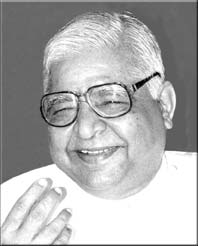
S.N. GoenkaI found out via Justin Whitaker the sad news that S.N. Goenka died this week. The name needs little introduction for Yavanayāna Buddhists, but others may wish some additional insight.

Goenka, born in Burma, was a pioneer – really the pioneer – of what is now known as vipassanā meditation. This term vipassanā (usually translated “insight”) is found in the classical Pali texts, and so is the Satipaṭṭhāna Sutta from which Goenka originally drew the meditation technique. Notably, though, the term vipassanā does not show up in the Satipaṭṭhāna Sutta itself. And that detail, I think, is telling about Goenka’s whole project.

I recall Goenka claiming, like many other contemporary Buddhist teachers, that what he was teaching was not new; it was just the teaching of the Buddha. That statement is not false exactly, but it’s not the whole truth. Continue reading →

Indian intimacy

27 Sunday Jan 2013

Posted by Amod Lele in Confucianism, Early and Theravāda, Family, Jainism, Modern Hinduism, Monasticism, Rites, Social Science

≈ Comments Off on Indian intimacy

Tags

ascent/descent, autobiography, Chad Hansen, intimacy/integrity, Joel Kotkin, Maharashtra, Max Weber, Mozi, puruṣārthas, Thomas P. Kasulis

I’m back from a trip to see my family in India, and have an Indian wedding ceremony. It was wonderful to see everyone there, and it also got me thinking.

When I wrote recently about my Indian background, I put some emphasis on how having an Indian background could be misleading in trying to understand Indian philosophy. It had taken me longer to see that Indian philosophy has an integrity orientation because after living in modern India, I’d spent a long time thinking of India as having an intimacy orientation.

But in my excitement over that realization, I think I’d forgotten that I’d held an intimacy view of India for a reason. Continue reading →

Buddhists and “Hindus” against traditional family values

16 Sunday Dec 2012

Posted by Amod Lele in Christianity, Early and Theravāda, East Asia, Family, Jainism, Mahāyāna, Monasticism, Social Science, South Asia

≈ 4 Comments

Tags

ascent/descent, dharmaśāstra, Dōgen, intimacy/integrity, Jan Nattier, Jātakas, Jesus, Joel Kotkin, New Testament, Pali suttas, Patrick Deneen, Patrick Olivelle, Śāntideva, Siddhattha Gotama (Buddha), Ugraparipṛcchā Sūtra, vinaya

A while ago I wrote about how Indian traditions upset conventional assumptions about family and community being essential to premodern tradition and culture. There, I was responding to a piece by Patrick Deneen, which drew only on Western traditions. As a result, Deneen’s piece had a narrowness of focus, but within that focus it was able to attain some accuracy. Not so for a recent report by urban geographer Joel Kotkin, entitled The Rise of Post-Familialism. Continue reading →

In praise of questions which tend not to edification

12 Sunday Aug 2012

Posted by Amod Lele in Early and Theravāda, German Tradition, Metaphilosophy, Method and Theory in the Study of Religion, Monasticism, Social Science

≈ 5 Comments

Tags

autobiography, Carl Sagan, Communism, Henry Clarke Warren, Karl Marx, Leo Panitch, Pali suttas, Siddhattha Gotama (Buddha)

The Shorter Māluṅkya Sutta, in the early Pali Buddhist sutta texts, opens with the Buddhist monk Māluṅkyaputta meditating and thinking as follows:

These positions that are undeclared, set aside, discarded by the Blessed One [the Buddha] — ‘The cosmos is eternal,’ ‘The cosmos is not eternal,’ ‘The cosmos is finite,’ ‘The cosmos is infinite,’ ‘The soul and the body are the same,’ ‘The soul is one thing and the body another,’ ‘After death a Tathagata exists,’ ‘After death a Tathagata does not exist,’ ‘After death a Tathagata both exists and does not exist,’ ‘After death a Tathagata neither exists nor does not exist’ — I don’t approve, I don’t accept that the Blessed One has not declared them to me. I’ll go ask the Blessed One about this matter. [Majjhima Nikāya i.426, Thanissaro Bhikkhu translation]

The absence of answers to these questions frustrates Māluṅkyaputta enough that he is ready to leave the monkhood and become a layman if the Buddha doesn’t answer him. Continue reading →

The monk’s independence

22 Sunday Apr 2012

Posted by Amod Lele in Attachment and Craving, Death, Early and Theravāda, External Goods, Generosity, Jainism, Method and Theory in the Study of Religion, Monasticism, Sāṃkhya-Yoga, Self, Serenity, Social Science

≈ 20 Comments

Tags

intimacy/integrity, Jātakas, Louis Dumont, Maria Heim, modernity, Stanley Tambiah, Tattvārtha Sūtra, Yoga Sūtras

It’s often said that “individualism” is an invention of the modern West – meaning the approach that defines human beings as independent and autonomous from their social context. The French sociologist Louis Dumont made this claim directly in contrast to India, seeing India as a highly communitarian place where an individual’s community and social status much more. Dumont applied this communitarian view not only to Indian society at large but to its theoretical thought.

Many students of other cultures soon come to see individualism as a Western conceit – a bizarre peculiarity of an eccentric society that went wrong with Descartes. If indeed the modern West is a complete solitary exception to the rule, then there would seem to be something to this view.

I wrestled with it for a while myself. I used to believe Dumont’s classification of India was correct. It certainly resonated with my personal experiences, seeing how much more my Indian family cared about family and community ties. But those experiences, combined with the communitarian stereotype of India found in the likes of Dumont and Max Weber, blinded me to things I read every day in graduate school for years without actually noticing. Continue reading →

Poisonous Buddhist gifts

15 Sunday Apr 2012

Posted by Amod Lele in Attachment and Craving, External Goods, Generosity, Jainism, Karma, Mahāyāna, Modern Hinduism, Monasticism, Social Science

≈ 13 Comments

Tags

Gloria Raheja, Jonathan Parry, Maria Heim, Śāntideva

I admire Maria Heim‘s research on gift-giving in classical India. There’s one point that I think her work misses, however – a topic I had intended to cover in my dissertation on Śāntideva but never had room for. It’s not a constructive philosophical point – I’m not taking any ideas of my own from the ideas I discuss here – but it’s helpful to think about in order to understand philosophies like Śāntideva’s that I do draw significantly from. (And it will be relevant to next week’s post.) Continue reading →

Monkhood as technique

26 Sunday Feb 2012

Posted by Amod Lele in Early and Theravāda, Happiness, Meditation, Method and Theory in the Study of Religion, Modernized Buddhism, Monasticism

≈ 33 Comments

Tags

academia, Justin McDaniel, Matthieu Ricard, Pali suttas, pedagogy, S.N. Goenka, Terry Mattingly

My former grad-school colleague Justin McDaniel recently ran into an interesting bout of media attention and controversy over a course he teaches at Penn, and an Associated Press article written about it. It is a comparative course on monasticism, entitled “Living Deliberately”. Nothing unusual so far; but what makes this course innovative is it contains a practicum. A practicum is relatively standard fare these days for many university courses on meditation, in which students are encouraged to meditate and thereby get a firsthand grasp on the course content. But McDaniel’s course is the first one I’ve heard of in which students attempt to get firsthand experience of being a monk.

What does that mean? As part of the class, students are required to live for various periods of time according to various restrictions, each one followed by an actual monastic order of some tradition or other. No technology beyond electric lights; no reading news from the outside world; no eating after dark; no caffeine or alcohol; no vegetables that grow underground (a nod to Jainism). Breaking the rules requires confession. Continue reading →

← Older posts
Newer posts →

Welcome to Love of All Wisdom.

I invite you to leave comments on my blog, even - or especially - if I have no idea who you are. Philosophy is a conversation, and I invite you to join it with me; I welcome all comers (provided they follow a few basic rules). I typically make a new post every Sunday. If you'd like to be notified when a new post is posted, you can get email notifications whenever I add something new via the link further down in this sidebar. You can also follow this blog on Facebook. Or if you use RSS, you can get updates through the RSS feed.

Recent Comments

  • Sandhya Lele on Hiding your ideas in plain sight
  • Sandhya Lele on Hiding your ideas in plain sight
  • Nathan on Hiding your ideas in plain sight
  • Paul D. Van Pelt on Hiding your ideas in plain sight
  • Seth Zuihō Segall on Hiding your ideas in plain sight

Subscribe to receive Love of All Wisdom by email:

Post Tags

20th century academia Alasdair MacIntyre Aristotle ascent/descent Augustine autobiography Buddhaghosa Canada Confucius conservatism Disengaged Buddhism Engaged Buddhism Evan Thompson expressive individualism Four Noble Truths Friedrich Nietzsche G.W.F. Hegel gender Hebrew Bible identity Immanuel Kant intimacy/integrity justice Karl Marx Ken Wilber law Martha C. Nussbaum modernity music mystical experience nondualism Pali suttas pedagogy Plato race rebirth religion Siddhattha Gotama (Buddha) technology theodicy United States utilitarianism Śaṅkara Śāntideva

Categories

  • African Thought (15)
  • Applied Phil (377)
    • Death (44)
    • Family (53)
    • Food (22)
    • Friends (21)
    • Health (33)
    • Place (37)
    • Play (17)
    • Politics (237)
    • Sex (25)
    • Work (48)
  • Asian Thought (459)
    • Buddhism (331)
      • Early and Theravāda (140)
      • Mahāyāna (140)
      • Modernized Buddhism (101)
    • East Asia (101)
      • Confucianism (62)
      • Daoism (22)
      • Shinto (1)
    • South Asia (148)
      • Bhakti Poets (3)
      • Cārvāka-Lokāyata (5)
      • Epics (16)
      • Jainism (24)
      • Modern Hinduism (45)
      • Nyāya-Vaiśeṣika (6)
      • Sāṃkhya-Yoga (16)
      • Sikhism (1)
      • Vedānta (42)
      • Vedas and Mīmāṃsā (7)
  • Blog Admin (28)
  • Indigenous American Thought (8)
  • Method (278)
    • Metaphilosophy (180)
    • Method and Theory in the Study of Religion (155)
  • Practical Philosophy (429)
    • Action (16)
    • Aesthetics (52)
    • Emotion (193)
      • Anger (41)
      • Attachment and Craving (32)
      • Compassion (9)
      • Despair (7)
      • Disgust (5)
      • Faith (20)
      • Fear (15)
      • Grief (9)
      • Happiness (51)
      • Hope (19)
      • Pleasure (37)
      • Shame and Guilt (10)
    • External Goods (55)
    • Flourishing (102)
    • Foundations of Ethics (124)
    • Karma (44)
    • Morality (78)
    • Virtue (185)
      • Courage (7)
      • Generosity (14)
      • Gentleness (6)
      • Gratitude (13)
      • Honesty (15)
      • Humility (27)
      • Leadership (7)
      • Mindfulness (24)
      • Patient Endurance (30)
      • Self-Discipline (10)
      • Serenity (38)
      • Zest (8)
  • Practice (146)
    • Karmic Redirection (5)
    • Meditation (47)
    • Monasticism (47)
    • Physical Exercise (4)
    • Prayer (16)
    • Reading and Recitation (14)
    • Rites (23)
    • Therapy (11)
  • Theoretical Philosophy (401)
    • Consciousness (22)
    • Deity (76)
    • Epistemology (140)
      • Certainty and Doubt (19)
      • Dialectic (19)
      • Logic (15)
      • Prejudices and "Intuitions" (31)
    • Free Will (18)
    • Hermeneutics (66)
    • Human Nature (34)
    • Metaphysics (115)
    • Philosophy of Language (31)
    • Self (78)
    • Supernatural (54)
    • Truth (64)
    • Unconscious Mind (16)
  • Western Thought (522)
    • Analytic Tradition (106)
    • Christianity (162)
      • Early Factions (8)
      • Eastern Orthodoxy (3)
      • Protestantism (27)
      • Roman Catholicism (61)
    • French Tradition (50)
    • German Tradition (96)
    • Greek and Roman Tradition (126)
      • Epicureanism (25)
      • Neoplatonism (2)
      • Pre-Socratics (6)
      • Skepticism (2)
      • Sophists (8)
      • Stoicism (22)
    • Islam (44)
      • Mu'tazila (2)
      • Salafi (3)
      • Sufism (10)
    • Judaism (38)
    • Natural Science (101)
      • Biology (31)
      • Philosophy of Science (50)
      • Physics and Astronomy (11)
    • Social Science (194)
      • Economics (47)
      • Psychology (84)

Recent Posts

  • Hiding your ideas in plain sight
  • Don’t be an Ugly Canadian
  • How to actually decentre whiteness
  • Habermas and a road not taken
  • Canada’s anti-American anger is no small matter

Popular posts

  • One and a half noble truths?
  • Wishing George W. Bush well
  • Do Speculative Realists want us to be Chinese?
  • Why I am not a right-winger
  • On faith in tooth relics

Basic concepts

  • Ascent and Descent
  • Intimacy and integrity
  • Ascent-descent and intimacy-integrity together
  • Perennial questions?
  • Virtuous and vicious means
  • Dialectical and demonstrative argument
  • Chastened intellectualism and practice
  • Yavanayāna Buddhism: what it is
  • Why worry about contradictions?
  • The first philosophy blogger

Personal favourites

  • Can philosophy be a way of life? Pierre Hadot (1922-2010)
  • James Doull and the history of ethical motivation
  • Praying to something you don't believe in
  • What does postmodernism perform?
  • Why I'm getting married

Archives

Search this site

All posts, pages and metadata copyright 2009-2026 Amod Lele unless otherwise noted. Comments copyright 2009-2026 their comment authors. Creative Commons Attribution-NonCommercial-ShareAlike (BY-NC-SA) licence.

Proudly powered by WordPress Theme: Chateau by Ignacio Ricci.