Modern mindfulness tends to urge us to stay in the present moment, learn to avoid getting distracted by wandering thoughts. A friend recently raised a thoughtful critique of this approach: aren’t there times when we want, even need, our thoughts to wander?
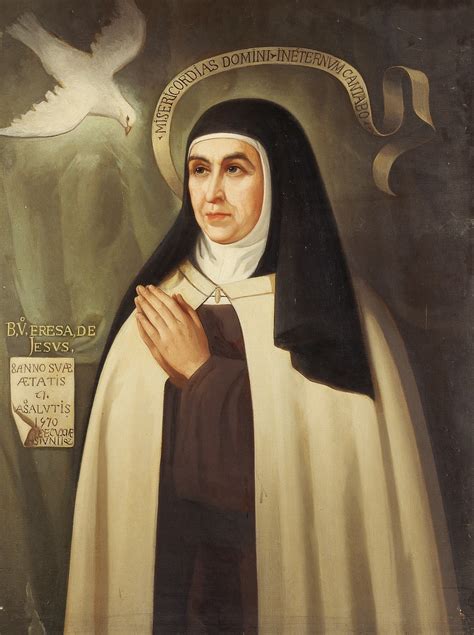
Portrait of Teresa of Ávila by Juan de la Miseria, her contemporary.
The autobiography of (Saint) Teresa of Ávila is a most remarkable book. Its beginning sections on Teresa’s early life feel at once relatable (she recalls her youthful interest in making herself pretty) and utterly alien: she and her brother admired the Christian martyrs so much that in childhood they “agreed to go off to the land of the Moors and beg them, out of love of God, to cut off our heads there”, and felt very disappointed that they could not find a way to do this. (Section 1.4, page 3 of the Kavanaugh-Rodriguez translation) The later sections are the more famous ones, depicting Teresa’s vivid visions of angels.
In the middle, though, the book takes an unexpected detour – nearly a hundred pages – providing instructions for prayer. I don’t believe in Teresa’s God, let alone pray to him, which made it very tempting to skip these chapters. I’m very glad I didn’t, though, because I found important things in them that I recognized as a Buddhist.
One of the things that helped me realize the need for self-improvement by not-self-improvement was regular practice with the excellent Headspace meditation app, created by a former Tibetan monk named Andy Puddicombe. Headspace is at the epicenter of “McMindfulness”: the app normally charges for access but I get it for free as a work wellness benefit, and this arrangement has made Puddicombe millions of dollars. In turn, the app is a big reason I defend McMindfulness – especially through John Dunne’s hugely helpful distinction between “classical” and “nondual” mindfulness.
That is to say: the core practice in Headspace is noticing your emotions, positive and negative, as they arise, and reacting to them with nonjudgemental acceptance. And you do so, yes, in the present moment. Critics like Ron Purser correctly note that that present-moment focus is not found in classical Indian texts like the Pali suttas or Śāntideva – but Dunne notes that it is found in other premodern Buddhist traditions, like the Tibetan writings of Wangchuk Dorje. And I dare say that that present-moment technique is an improvement: one that does a better job than the classical tradition’s techniques at their shared goal of reducing our suffering.