• About me
  • About this blog
  • Comment rules
  • Other writings

Love of All Wisdom

~ Philosophy through multiple traditions

Love of All Wisdom

Tag Archives: Headspace

When to judge your thoughts

23 Sunday Nov 2025

Posted by Amod Lele in Emotion, Mahāyāna, Meditation, Mindfulness, Modernized Buddhism, Psychology

≈ 2 Comments

Tags

Andy Puddicombe, Headspace, John Dunne, phenomenology

Modern mindfulness tends to urge us to stay in the present moment, learn to avoid getting distracted by wandering thoughts. A friend recently raised a thoughtful critique of this approach: aren’t there times when we want, even need, our thoughts to wander?

Continue reading →

Nondual mindfulness in Teresa of Ávila

16 Sunday Nov 2025

Posted by Amod Lele in Consciousness, Deity, Mahāyāna, Meditation, Mindfulness, Prayer, Psychology, Roman Catholicism

≈ 6 Comments

Tags

Andy Puddicombe, Brook Ziporyn, Headspace, John Dunne, mystical experience, nondualism, phenomenology, Śāntideva, Satan, Spain, Teresa of Ávila, Tiantai 天台, Zhiyi

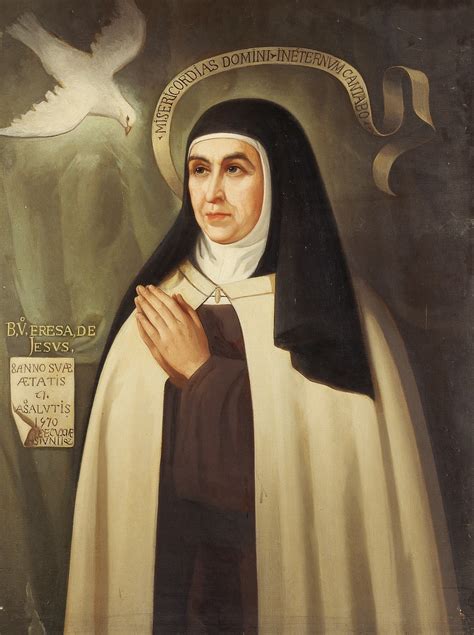
Portrait of Teresa of Ávila by Juan de la Miseria, her contemporary.

The autobiography of (Saint) Teresa of Ávila is a most remarkable book. Its beginning sections on Teresa’s early life feel at once relatable (she recalls her youthful interest in making herself pretty) and utterly alien: she and her brother admired the Christian martyrs so much that in childhood they “agreed to go off to the land of the Moors and beg them, out of love of God, to cut off our heads there”, and felt very disappointed that they could not find a way to do this. (Section 1.4, page 3 of the Kavanaugh-Rodriguez translation) The later sections are the more famous ones, depicting Teresa’s vivid visions of angels.

In the middle, though, the book takes an unexpected detour – nearly a hundred pages – providing instructions for prayer. I don’t believe in Teresa’s God, let alone pray to him, which made it very tempting to skip these chapters. I’m very glad I didn’t, though, because I found important things in them that I recognized as a Buddhist.

Continue reading →

The secret of mindfulness meditation

09 Sunday Mar 2025

Posted by Amod Lele in Emotion, Meditation, Mindfulness, Modernized Buddhism, Psychology

≈ 9 Comments

Tags

Headspace, Robert Sokolove, S.N. Goenka, Śāntideva

One of the things that really surprises me about contemporary mindfulness meditation is how rarely – especially at the beginning – they highlight what, as far as I can tell, is the most beneficial aspect of the practice. It’s not a “secret” in the sense of being concealed away somewhere, just that beginners are rarely told how important it is; I more or less had to figure it out for myself. This holds true for the practices I’m most familiar with – Headspace, Robert Sokolove’s medical mindfulness recording, Goenka vipassanā – but also seems to hold for other forms of modern mindfulness that I’ve listened to recordings of. Because of this, I think it’s easy for a beginner to misinterpret what mindfulness meditation is about.

Headspace’s meditation instructions usually involve focusing your attention on your breath – its inward and outward movement, the way your chest and stomach rise and fall with the breath. (Sokolove’s likewise.) Goenka vipassanā puts more emphasis on repeatedly scanning your attention up and down through your body. But it’s become clear to me that that focus, on the breath or the bodily sensations, is not the point of any of these exercises.

Continue reading →

In praise of the present moment

19 Sunday Nov 2023

Posted by Amod Lele in Anger, Daoism, East Asia, Flourishing, Mahāyāna, Meditation, Mindfulness, Modernized Buddhism, Serenity

≈ 3 Comments

Tags

Andy Puddicombe, autobiography, Brook Ziporyn, drugs, Four Noble Truths, Headspace, Johann Wolfgang von Goethe, John Dunne, Pali suttas, Ron Purser, Śāntideva, Tiantai 天台, Zhiyi

One of the things that helped me realize the need for self-improvement by not-self-improvement was regular practice with the excellent Headspace meditation app, created by a former Tibetan monk named Andy Puddicombe. Headspace is at the epicenter of “McMindfulness”: the app normally charges for access but I get it for free as a work wellness benefit, and this arrangement has made Puddicombe millions of dollars. In turn, the app is a big reason I defend McMindfulness – especially through John Dunne’s hugely helpful distinction between “classical” and “nondual” mindfulness.

That is to say: the core practice in Headspace is noticing your emotions, positive and negative, as they arise, and reacting to them with nonjudgemental acceptance. And you do so, yes, in the present moment. Critics like Ron Purser correctly note that that present-moment focus is not found in classical Indian texts like the Pali suttas or Śāntideva – but Dunne notes that it is found in other premodern Buddhist traditions, like the Tibetan writings of Wangchuk Dorje. And I dare say that that present-moment technique is an improvement: one that does a better job than the classical tradition’s techniques at their shared goal of reducing our suffering.

Continue reading →

On courage

26 Sunday Sep 2021

Posted by Amod Lele in Courage, Early and Theravāda, Fear, Mahāyāna, Meditation, Psychology

≈ 12 Comments

Tags

Andrea Petersen, anxiety, Aristotle, Carmen McLean, gender, Harvey Mansfield, Headspace, John Dunne, John Wayne, Pali suttas, Reinhold Niebuhr, Reshma Saujani, Śāntideva, Siddhattha Gotama (Buddha), Sober Heretic (blogger)

Courage figures prominently in many lists of the virtues. It is a key example for Aristotle of how virtue is a mean: the courageous person is neither cowardly nor rash, but finds an appropriate middle ground. It is among the three key virtues summed up by the Serenity Prayer, in nearly all of its versions. Yet in the 21st century we can be a little suspicious of it. A blogger called the Sober Heretic thinks the Serenity Prayer is wrong to emphasize courage:

The fact that I need courage to change says a lot about what the prayer thinks change is. What does a person normally need courage for? Marching into battle. Jumping out of an airplane. Giving a speech. Facing a life-threatening disease. Courage is necessary when you’re fighting something: an enemy soldier, a virulent pathogen, your own fear. The need for courage says that change is fundamentally combative.

Continue reading →

Emotions are not primarily judgements

07 Sunday Mar 2021

Posted by Amod Lele in Anger, Biology, Early and Theravāda, Emotion, Fear, Human Nature, Meditation, Mindfulness, Practice, Psychology, Serenity

≈ 7 Comments

Tags

anxiety, autobiography, Chrysippus, Four Noble Truths, Headspace, Jonathan Haidt, Martha C. Nussbaum, nonhuman animals, S.N. Goenka, Sigmund Freud

I was struck by two things when I read Martha Nussbaum’s Anger and Forgiveness. On one hand, as I noted previously, I’m excited by Nussbaum’s new, and more Śāntidevan, normative approach to anger; it seems like she and I have moved toward the same position there. On the other, though, I realized that I have moved away from Nussbaum’s general descriptive theory of emotion. Nussbaum articulates this theory at length in Upheavals of Thought, and I don’t think her theory has changed much by the time we get to Anger (she offers a summary of it in the appendix). What has changed, in the roughly fifteen years since I read Upheavals cover to cover, is that I agreed with her theory then, and I no longer do – and reading the short summaries of the position in Anger helped me realize that.

Nussbaum’s theory (derived primarily from the Stoic thinker Chrysippus) is that emotions are fundamentally cognitive judgements of value, with a content directed at an object believed to affect our well-being. So fear, for example, is primarily a judgement that something could be harmful to us in the future; grief is primarily a judgement that something of value has been lost to us. I found this account plausible when I first encountered it. I no longer do.

Continue reading →

Welcome to Love of All Wisdom.

I invite you to leave comments on my blog, even - or especially - if I have no idea who you are. Philosophy is a conversation, and I invite you to join it with me; I welcome all comers (provided they follow a few basic rules). I typically make a new post every Sunday. If you'd like to be notified when a new post is posted, you can get email notifications whenever I add something new via the link further down in this sidebar. You can also follow this blog on Facebook. Or if you use RSS, you can get updates through the RSS feed.

Recent Comments

  • Sandhya Lele on The world of the women’s room
  • Nathan on The world of the women’s room
  • Nathan on In praise of alcohol
  • Amod Lele on Do you need anger for respect and accountability?
  • Nathan on Do you need anger for respect and accountability?

Subscribe by Email

Post Tags

20th century academia Alasdair MacIntyre Aristotle ascent/descent Augustine autobiography Buddhaghosa Canada Confucius conservatism Disengaged Buddhism Engaged Buddhism Evan Thompson expressive individualism Four Noble Truths Friedrich Nietzsche G.W.F. Hegel gender Hebrew Bible identity Immanuel Kant intimacy/integrity justice Karl Marx Ken Wilber law Martha C. Nussbaum modernity music mystical experience nondualism Pali suttas pedagogy Plato race rebirth religion Siddhattha Gotama (Buddha) technology theodicy United States utilitarianism Śaṅkara Śāntideva

Categories

  • African Thought (15)
  • Applied Phil (365)
    • Death (44)
    • Family (53)
    • Food (22)
    • Friends (21)
    • Health (32)
    • Place (35)
    • Play (17)
    • Politics (225)
    • Sex (23)
    • Work (45)
  • Asian Thought (456)
    • Buddhism (330)
      • Early and Theravāda (139)
      • Mahāyāna (140)
      • Modernized Buddhism (100)
    • East Asia (99)
      • Confucianism (61)
      • Daoism (22)
      • Shinto (1)
    • South Asia (147)
      • Bhakti Poets (3)
      • Cārvāka-Lokāyata (5)
      • Epics (16)
      • Jainism (24)
      • Modern Hinduism (44)
      • Nyāya-Vaiśeṣika (6)
      • Sāṃkhya-Yoga (16)
      • Sikhism (1)
      • Vedānta (42)
      • Vedas and Mīmāṃsā (7)
  • Blog Admin (28)
  • Indigenous American Thought (8)
  • Method (275)
    • Metaphilosophy (177)
    • Method and Theory in the Study of Religion (155)
  • Practical Philosophy (423)
    • Action (16)
    • Aesthetics (52)
    • Emotion (189)
      • Anger (39)
      • Attachment and Craving (32)
      • Compassion (9)
      • Despair (7)
      • Disgust (5)
      • Faith (20)
      • Fear (15)
      • Grief (9)
      • Happiness (49)
      • Hope (18)
      • Pleasure (36)
      • Shame and Guilt (10)
    • External Goods (53)
    • Flourishing (100)
    • Foundations of Ethics (124)
    • Karma (44)
    • Morality (78)
    • Virtue (182)
      • Courage (7)
      • Generosity (14)
      • Gentleness (6)
      • Gratitude (12)
      • Honesty (14)
      • Humility (26)
      • Leadership (7)
      • Mindfulness (23)
      • Patient Endurance (30)
      • Self-Discipline (10)
      • Serenity (38)
      • Zest (8)
  • Practice (144)
    • Karmic Redirection (5)
    • Meditation (47)
    • Monasticism (46)
    • Physical Exercise (4)
    • Prayer (16)
    • Reading and Recitation (13)
    • Rites (23)
    • Therapy (11)
  • Theoretical Philosophy (395)
    • Consciousness (22)
    • Deity (76)
    • Epistemology (139)
      • Certainty and Doubt (18)
      • Dialectic (19)
      • Logic (15)
      • Prejudices and "Intuitions" (31)
    • Free Will (18)
    • Hermeneutics (63)
    • Human Nature (34)
    • Metaphysics (115)
    • Philosophy of Language (30)
    • Self (78)
    • Supernatural (54)
    • Truth (62)
    • Unconscious Mind (16)
  • Western Thought (511)
    • Analytic Tradition (104)
    • Christianity (162)
      • Early Factions (8)
      • Eastern Orthodoxy (3)
      • Protestantism (27)
      • Roman Catholicism (61)
    • French Tradition (50)
    • German Tradition (94)
    • Greek and Roman Tradition (123)
      • Epicureanism (25)
      • Neoplatonism (2)
      • Pre-Socratics (6)
      • Skepticism (2)
      • Sophists (8)
      • Stoicism (22)
    • Islam (43)
      • Mu'tazila (2)
      • Salafi (3)
      • Sufism (10)
    • Judaism (38)
    • Natural Science (101)
      • Biology (31)
      • Philosophy of Science (50)
      • Physics and Astronomy (11)
    • Social Science (188)
      • Economics (43)
      • Psychology (83)

Recent Posts

  • The world of the women’s room
  • Do you need anger for respect and accountability?
  • In praise of alcohol
  • Who were the Magi?
  • Answering objections to transracialism

Popular posts

  • One and a half noble truths?
  • Wishing George W. Bush well
  • Do Speculative Realists want us to be Chinese?
  • Why I am not a right-winger
  • On faith in tooth relics

Basic concepts

  • Ascent and Descent
  • Intimacy and integrity
  • Ascent-descent and intimacy-integrity together
  • Perennial questions?
  • Virtuous and vicious means
  • Dialectical and demonstrative argument
  • Chastened intellectualism and practice
  • Yavanayāna Buddhism: what it is
  • Why worry about contradictions?
  • The first philosophy blogger

Personal favourites

  • Can philosophy be a way of life? Pierre Hadot (1922-2010)
  • James Doull and the history of ethical motivation
  • Praying to something you don't believe in
  • What does postmodernism perform?
  • Why I'm getting married

Archives

Search this site

All posts, pages and metadata copyright 2009-2026 Amod Lele unless otherwise noted. Comments copyright 2009-2026 their comment authors. Creative Commons Attribution-NonCommercial-ShareAlike (BY-NC-SA) licence.

Proudly powered by WordPress Theme: Chateau by Ignacio Ricci.