• About me
  • About this blog
  • Comment rules
  • Other writings

Love of All Wisdom

~ Philosophy through multiple traditions

Love of All Wisdom

Author Archives: Amod Lele

My complicated relationship with B.R. Ambedkar

02 Sunday Nov 2025

Posted by Amod Lele in Hermeneutics, Method and Theory in the Study of Religion, Modern Hinduism, Modernized Buddhism, Politics, Sikhism

≈ 7 Comments

Tags

autobiography, B.R. Ambedkar, caste, Four Noble Truths, identity, Maharashtra, Narendra Modi, race

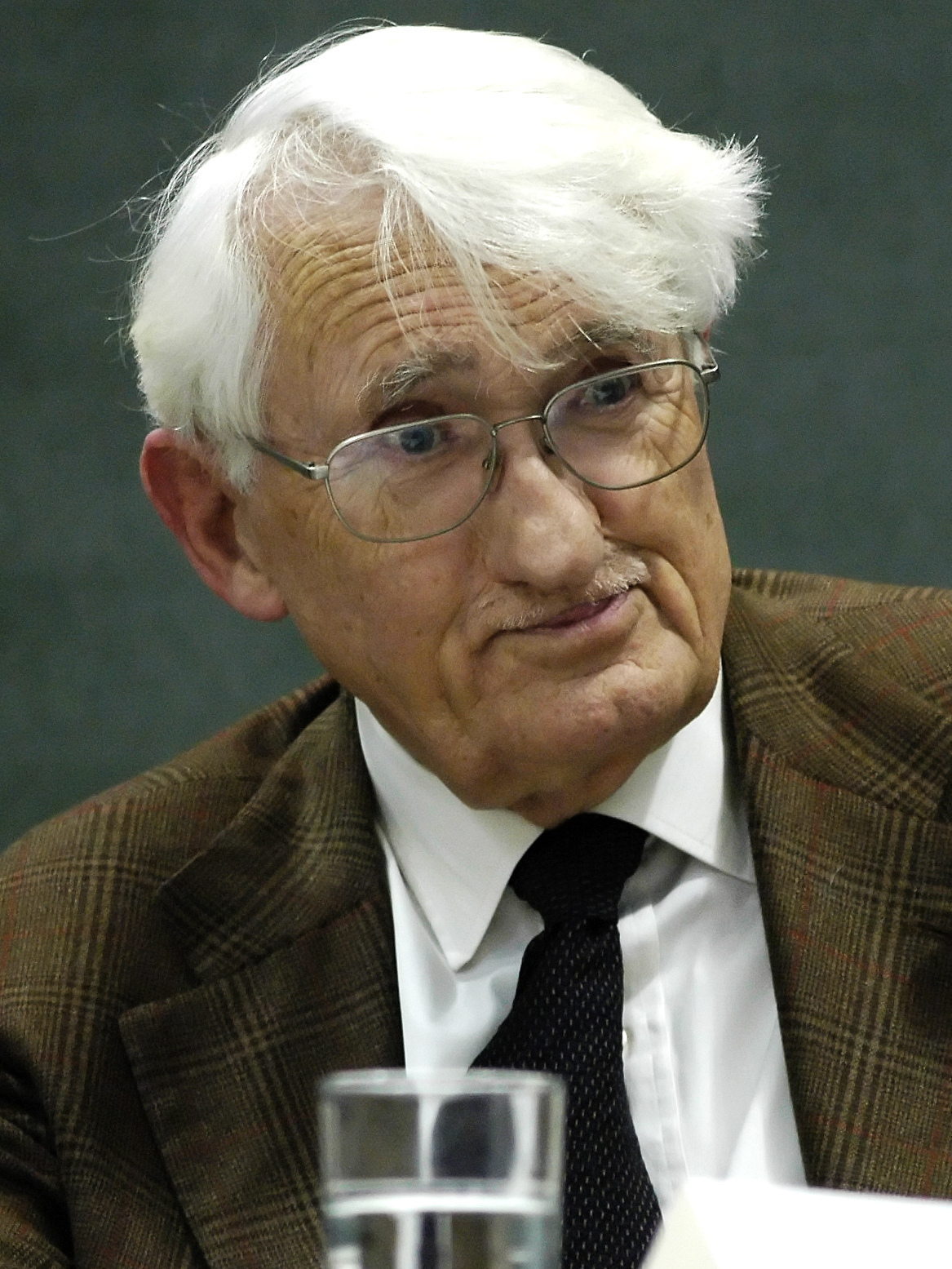
Public-domain image of Ambedkar.

Dr. Ambedkar, the 20th-century leader of the lowest (“Dalit”, formerly “untouchable”) Indian caste groups, might be having a moment. In my Indian philosophy class in 2019, I wanted to have a segment on modern Indian philosophy, so I introduced the students to Gandhi and to Ambedkar as a critic of Gandhi – and was interested to see how the students absolutely loved Ambedkar. This year, I attended a fascinating workshop at Princeton on black Buddhist perspectives, where Ambedkar probably played a larger role than any other figure, even the Buddha himself. I’m glad to see black Americans discovering Ambedkar, since there are such close analogies between American race and Indian caste – already observed by Martin Luther King. A recent Economist article now mentions that even Narendra Modi is trying to proclaim Ambedkar as an ally for his militant Hindu agenda – a claim that should be laughable, given Ambedkar’s clearly expressed hostility to Hinduism, but an understandable attempt given Ambedkar’s huge popularity in India: there are now more statues of Ambedkar than any other Indian political figure, including Nehru, Gandhi and Aśoka.

I find Ambedkar overall a very admirable figure – both his personal story of rising through the ranks intellectually and becoming a leader, and his accomplishments. I also find his approach to caste more sensible than the American approach to race, one that Americans could learn a lot from. My late father admired him greatly. He is also a figure who makes me personally uncomfortable – perhaps in a good way.

Continue reading →

The lost Buddhisms

26 Sunday Oct 2025

Posted by Amod Lele in Buddhism, Early and Theravāda, Mahāyāna, Method and Theory in the Study of Religion, Philosophy of Language, Self, South Asia

≈ 5 Comments

Tags

B.R. Ambedkar, IABS, Künzang Sönam, Laura Guerrero, Mahāvaṃsa, Pudgalavāda, Sri Lanka

One of the first things you’d learn in any Intro to Buddhism course is that most Buddhists alive today are part of the Mahāyāna tradition, in which one aspires to be a bodhisattva (and eventually become a buddha). Mahāyāna is the majority tradition because it’s the one practised in Japan, Korea, most of Vietnam, and China including Taiwan and Tibet. (Tibetans sometimes refer to their tradition as “Vajrayāna”, but they know that that’s still a form of Mahāyāna; there are no non-Mahāyāna Vajrayānists.) The name “Mahāyāna” (translated as “Great Vehicle”) is not in dispute; everybody agrees that that’s the preferred term. That part is easy.

Now here’s a question: what do you call all the other Buddhists?

Your typical intro Buddhism course gets around that question pretty easily, because there’s a simple answer if you’re exclusively talking about Buddhists today, in the modern era. As of about 1850, basically all the non-Mahāyāna Buddhists in the world identified as part of the Theravāda tradition, practised throughout Sri Lanka and mainland Southeast Asia. The only Buddhists who might identify as something else are more recent modernist Buddhists of one stripe or another – hippyish Western Buddhists who don’t want to be pinned down to specifics, or perhaps B.R. Ambedkar’s Navayāna – and they understand they’re doing something new and a little weird. (“Navayāna” means “new yāna”.) In general, it’s pretty reasonable to say that the Buddhism existing in the past thousand years or so has been divided into the two traditions of Mahāyāna and Theravāda.

But go back before that, and things look very different.

Continue reading →

Snakes wrongly grasped: on the psychedelic experiences of Musk and Manson

28 Sunday Sep 2025

Posted by Amod Lele in Certainty and Doubt, Flourishing, Foundations of Ethics, Humility, Mahāyāna, Metaphysics, Self

≈ 1 Comment

Tags

Candrakīrti, Charles Manson, drugs, Elon Musk, Ethan Mills, Jayarāśi, John Hick, Madhyamaka, MAPS, mystical experience, Nāgārjuna, narcissism, Roland Griffiths, Śāntideva

If Nāgārjuna, the great Madhyamaka Buddhist philosopher, is known for anything, it’s his doctrine of the emptiness (śūnyatā) of all things. But in his most famous work, Nāgārjuna warns his audience about emptiness: “Misperceived emptiness ruins a person of dull intelligence, like a snake wrongly grasped.” (MMK XXIV.11) If you know how to pick up a poisonous snake properly, you can move it to a place where it will do less harm, or even milk it to help produce an antidote. But if you don’t, then trying to grasp it will get you bitten and maybe killed. Likewise, if you perceive emptiness wrongly, that’s worse than not perceiving it at all.

If you’re going to try this, you’d better know what you’re doing. Adobe Stock image copyright by kampwit.
Continue reading →

Canadian psychedelic podcast interview

22 Monday Sep 2025

Posted by Amod Lele in Consciousness, Daoism, Deity, Early and Theravāda, Indigenous American Thought, Mahāyāna, Meditation, Metaphysics, Method and Theory in the Study of Religion, Psychology, Roman Catholicism, Self, Supernatural, Vedānta

≈ Comments Off on Canadian psychedelic podcast interview

Tags

autobiography, Buddhaghosa, Canada, drugs, Elon Musk, interview, John Hick, MAPS, Meister Eckhart, mystical experience, nondualism, Osheen Dayal, phenomenology, religion, Roland Griffiths, Śāntideva, Teresa of Ávila, Thailand, Upaniṣads, Zhuangzi

Following up my talk on psychedelics and mysticism, Osheen Dayal of the Canadian branch of MAPS just interviewed me on the same subject for their video podcast. In the interview we talk about a wide range of subjects from my personal Buddhist story through St. Teresa’s angel to Elon Musk. Have a look!

If only Bentham had read the Kāma Sūtra

21 Sunday Sep 2025

Posted by Amod Lele in Aesthetics, Analytic Tradition, Food, Play, Pleasure, Psychology, Sex, South Asia, Zest

≈ 6 Comments

Tags

Daniel Pallies, Jeremy Bentham, Kāma Sūtra, phenomenology

Daniel Pallies, a philosophy postdoc at Lingnan University in Hong Kong, recently wrote a blog post entitled “The inexplicable appeal of spicy food”. Pallies, from his bio, indicates that one of his key interests is the question: “What makes a feeling pleasant, or unpleasant?” And so he is puzzled by a phenomenon that he and I share: we enjoy eating food high in capsaicin, even though the sensation of eating these foods is painful. He adds: “And like most people, I think that pain makes your life worse. All else being equal, your life goes worse for you to the extent that it is painful. So why do I, and lots of other people, eat spicy food?”

Continue reading →

Don’t think about Trump more than you have to

07 Sunday Sep 2025

Posted by Amod Lele in Courage, Fear, Friends, Politics, Psychology, Serenity

≈ 3 Comments

Tags

21st century, Donald Trump, IABS, Reinhold Niebuhr, United States

Last month I had the good fortune to attend a weeklong conference of Buddhism scholars in Leipzig, Germany – a wonderful opportunity in many ways, not least that one gets to be in a world far removed from the current craziness of American politics. So not long afterwards, I set myself the goal of not saying the T-word to anyone during my week there.

I succeeded at that goal, barely. But it was really hard.

Continue reading →

Grief’s complex timing

31 Sunday Aug 2025

Posted by Amod Lele in Death, Family, Friends, Grief

≈ 7 Comments

Tags

Alison Vipond, autobiography, Canada, Claude Vipond, Dave Harkness, Facebook, Jayant Lele, mystical experience

Grief can be more complicated than we often make it out to be. In the wake of my father’s death, several people have reminded me of this point, and they’ve been right – in a way that I know a little too well, because of other experiences with grieving over the past decade.

Continue reading →

Where Buddhists agree on metaphysics

24 Sunday Aug 2025

Posted by Amod Lele in Early and Theravāda, Mahāyāna, Metaphysics, Self, Truth

≈ 7 Comments

Tags

Abhidhamma, Buddhaghosa, Candrakīrti, conventional/ultimate, Dan Arnold, Madhyamaka, Mark Siderits, Milindapañhā, Śāntideva, Tom Tillemans

Buddhists have never agreed on an overall metaphysics. They have long agreed that prajñā – accurately seeing things according to the ultimate truth – is hugely important, but they differ greatly on what that ultimate truth is. The Theravāda Abhidhamma view says everything is ultimately reducible to smaller parts; the Madhyamaka says it’s ultimately just emptiness; the Yogācāra says it’s all mind; Chinese Huayan and Tiantai views have their own trippy takes.

It recently hit me, though, that there’s actually a huge point of metaphysical agreement among all the Buddhist schools: huge enough to mean that this disagreement about the ultimate isn’t what matters most to them. And that’s on the point I discussed last time: namely that what really matters in Buddhist metaphysics isn’t so much the nature of the ultimate. Rather, it’s breaking down the conventional!

Continue reading →

Seeing through conventional reality

17 Sunday Aug 2025

Posted by Amod Lele in Attachment and Craving, Christianity, Deity, Foundations of Ethics, Islam, Mahāyāna, Metaphysics, Truth

≈ 8 Comments

Tags

Augustine, C.S. Lewis, Candrakīrti, conventional/ultimate, existentialism, ibn Sīnā, Madhyamaka, Plato, Śāntideva

While Buddhist schools have many different takes on metaphysics – on what the world really is – they all acknowledge a distinction between two truths, or two levels of reality. That is: there is a conventional truth, the one familiar to us in everyday life where we can fruitfully speak of individual selves or persons and other everyday objects – and another, more ultimate (paramārtha) truth that is distinguished in some respect from the conventional, truer than the conventional. Their widely varying metaphysics mostly have to do with how we understand the ultimate truth, and I’ll talk about that more next week. I want to start this time, though, I want to note a key point that the metaphysical schools share: the importance of breaking down the conventional – or, put another way, of seeing through it.

Continue reading →

This Has Happened Before

06 Wednesday Aug 2025

Posted by Amod Lele in Greek and Roman Tradition, Politics, Sophists

≈ Comments Off on This Has Happened Before

Tags

21st century, Nicholas Thorne, Plato, Thucydides

Plaster cast bust of Thucydides. Photo by shakko, CC-BY-SA licence.

A few years ago I wrote about my old friend Nic Thorne’s book on Thucydides and Plato: how they both address the failure of an old social order and the people who show its inadequacies. In Plato’s work, the nihilistic Sophists Callicles and Thrasymachus are worse people than their more genteel predecessors, but they understand the old order’s failings much better than those predecessors do. That claim strongly suggests parallels to our own chaotic age, but the book leaves those parallels unstated.

Now, I’m happy to report, Thorne has a new “limited-edition” Substack, entitled This Has Happened Before, devoted to making those parallels to our age explicit. What do Thucydides and Plato have to teach us about the 21st century? Check out the Substack. Political views expressed there are his and not mine – we have plenty of areas of disagreement – but I recommend checking it out if you’re interested in lessons that history might give us about our crazy era.

← Older posts
Newer posts →

Welcome to Love of All Wisdom.

I invite you to leave comments on my blog, even - or especially - if I have no idea who you are. Philosophy is a conversation, and I invite you to join it with me; I welcome all comers (provided they follow a few basic rules). I typically make a new post every Sunday. If you'd like to be notified when a new post is posted, you can get email notifications whenever I add something new via the link further down in this sidebar. You can also follow this blog on Facebook. Or if you use RSS, you can get updates through the RSS feed.

Recent Comments

  • Amod Lele on Why teach virtue to a robot
  • Nathan on Why teach virtue to a robot
  • Amod Lele on Why teach virtue to a robot
  • Paul D. Van Pelt on Hiding your ideas in plain sight
  • Nathan on Why teach virtue to a robot

Subscribe to receive Love of All Wisdom by email:

Post Tags

20th century academia Alasdair MacIntyre Aristotle ascent/descent Augustine autobiography Buddhaghosa Canada Confucius conservatism Disengaged Buddhism Engaged Buddhism Evan Thompson expressive individualism Four Noble Truths Friedrich Nietzsche G.W.F. Hegel gender Hebrew Bible identity Immanuel Kant intimacy/integrity justice Karl Marx Ken Wilber law Martha C. Nussbaum modernity music mystical experience nondualism Pali suttas pedagogy Plato race rebirth religion Siddhattha Gotama (Buddha) technology theodicy United States utilitarianism Śaṅkara Śāntideva

Categories

  • African Thought (15)
  • Applied Philosophy (379)
    • Death (44)
    • Family (53)
    • Food (22)
    • Friends (21)
    • Health (33)
    • Place (37)
    • Play (17)
    • Politics (239)
    • Sex (25)
    • Work (48)
  • Asian Thought (459)
    • Buddhism (331)
      • Early and Theravāda (140)
      • Mahāyāna (140)
      • Modernized Buddhism (101)
    • East Asia (101)
      • Confucianism (62)
      • Daoism (22)
      • Shinto (1)
    • South Asia (148)
      • Bhakti Poets (3)
      • Cārvāka-Lokāyata (5)
      • Epics (16)
      • Jainism (24)
      • Modern Hinduism (45)
      • Nyāya-Vaiśeṣika (6)
      • Sāṃkhya-Yoga (16)
      • Sikhism (1)
      • Vedānta (42)
      • Vedas and Mīmāṃsā (7)
  • Blog Admin (28)
  • Indigenous American Thought (8)
  • Method (278)
    • Metaphilosophy (180)
    • Method and Theory in the Study of Religion (155)
  • Practical Philosophy (430)
    • Action (17)
    • Aesthetics (52)
    • Emotion (194)
      • Anger (41)
      • Attachment and Craving (32)
      • Compassion (9)
      • Despair (7)
      • Disgust (5)
      • Faith (20)
      • Fear (15)
      • Grief (9)
      • Happiness (52)
      • Hope (19)
      • Pleasure (37)
      • Shame and Guilt (10)
    • External Goods (55)
    • Flourishing (103)
    • Foundations of Ethics (125)
    • Karma (44)
    • Morality (78)
    • Virtue (186)
      • Courage (7)
      • Generosity (14)
      • Gentleness (6)
      • Gratitude (13)
      • Honesty (15)
      • Humility (27)
      • Leadership (7)
      • Mindfulness (24)
      • Patient Endurance (30)
      • Self-Discipline (10)
      • Serenity (38)
      • Zest (8)
  • Practice (146)
    • Karmic Redirection (5)
    • Meditation (47)
    • Monasticism (47)
    • Physical Exercise (4)
    • Prayer (16)
    • Reading and Recitation (14)
    • Rites (23)
    • Therapy (11)
  • Theoretical Philosophy (402)
    • Consciousness (22)
    • Deity (76)
    • Epistemology (141)
      • Certainty and Doubt (19)
      • Dialectic (21)
      • Logic (15)
      • Prejudices and "Intuitions" (31)
    • Free Will (18)
    • Hermeneutics (66)
    • Human Nature (34)
    • Metaphysics (115)
    • Philosophy of Language (31)
    • Self (78)
    • Supernatural (54)
    • Truth (64)
    • Unconscious Mind (16)
  • Western Thought (524)
    • Analytic Tradition (107)
    • Christianity (162)
      • Early Factions (8)
      • Eastern Orthodoxy (3)
      • Protestantism (27)
      • Roman Catholicism (61)
    • French Tradition (50)
    • German Tradition (97)
    • Greek and Roman Tradition (126)
      • Epicureanism (25)
      • Neoplatonism (2)
      • Pre-Socratics (6)
      • Skepticism (2)
      • Sophists (8)
      • Stoicism (22)
    • Islam (44)
      • Mu'tazila (2)
      • Salafi (3)
      • Sufism (10)
    • Judaism (38)
    • Natural Science (101)
      • Biology (31)
      • Philosophy of Science (50)
      • Physics and Astronomy (11)
    • Social Science (195)
      • Economics (48)
      • Psychology (84)

Recent Posts

  • Why teach virtue to a robot
  • Being marginalized doesn’t make you smarter
  • “The future will belong to the mestiza”
  • Hiding your ideas in plain sight
  • Don’t be an Ugly Canadian

Popular posts

  • One and a half noble truths?
  • Wishing George W. Bush well
  • Do Speculative Realists want us to be Chinese?
  • Why I am not a right-winger
  • On faith in tooth relics

Basic concepts

  • Ascent and Descent
  • Intimacy and integrity
  • Ascent-descent and intimacy-integrity together
  • Perennial questions?
  • Virtuous and vicious means
  • Dialectical and demonstrative argument
  • Chastened intellectualism and practice
  • Yavanayāna Buddhism: what it is
  • Why worry about contradictions?
  • The first philosophy blogger

Personal favourites

  • Can philosophy be a way of life? Pierre Hadot (1922-2010)
  • James Doull and the history of ethical motivation
  • Praying to something you don't believe in
  • What does postmodernism perform?
  • Why I'm getting married

Archives

Search this site

All posts, pages and metadata copyright 2009-2026 Amod Lele unless otherwise noted. Comments copyright 2009-2026 their comment authors. Creative Commons Attribution-NonCommercial-ShareAlike (BY-NC-SA) licence.

Proudly powered by WordPress Theme: Chateau by Ignacio Ricci.