David J. Blacker’s recent Deeper Learning with Psychedelics is a valuable attempt to think through the implications of psychedelics for philosophy and education. One passage in particular caught my imagination: Blacker points out the similarities between a psychedelic experience and René Descartes’s passage of radical doubt.
I’m delighted to be giving a talk at Psychedelic Science 2025, the annual conference of the Multidisciplinary Association of Psychedelic Studies. The conference (June 17-20 in Denver) promises to be really fun and stimulating. If you can make it, I’d love to say hi: registration isn’t cheap, but you can use code SPEAKER15 to get 15% off your registration.
I’m especially excited because my talk is really experimental, the kind of broad comparative work that would have got frowned on when I was in grad school. I’m still aiming to exercise scholarly caution to avoid saying anything false, trying to stay reasonably close to what’s in the texts, but I am writing about multiple thinkers whose source languages (classical Chinese and old German) I don’t know well: something which I think one has to do in order to investigate human cultural commonalities, but which would have raised every eyebrow in my PhD program. It’s the kind of project that an aspiring professor only undertakes after getting tenure; in my case, I can do it because I’m no longer trying for a faculty job.
Recently I wanted to explore a fascinating passage of the Daoist founder Zhuangzi, where the text recommends “sitting in oblivion” or “sitting and forgetting” (zuòwàng 坐忘). That passage bears striking similarities to mystical practices and experiences from around the globe.
To help figure it out, I turned to Sitting in Oblivion by the Daoism scholar Livia Kohn, which shows how “sitting and forgetting” was developed as a practice and taken up at great length by later Daoist thinkers. One passage of Kohn’s particularly struck me:
The most important aspects of the rather extensive Buddhist imports into Daoism for sitting in oblivion include the organizational setting of meditation practice in monastic institutions, the formalized ethical requirement in the taking of precepts and refuge in the Three Treasures, the doctrines of karma and retribution, the five paths of rebirth, and the various layers of hell, as well as the vision of the body-mind in terms of multiple aspects, defilements, hindrances, and purification. (107)
“Rather extensive” indeed! I knew that East Asian Buddhists had drawn a great deal from Daoism – I have sometimes uncharitably described Chan/Zen as “Daoists cosplaying as Buddhists” – but I hadn’t realized how much the influence went in the other direction. Karma, rebirth, meditation, monastic institutions, taking precepts, taking refuge? At that point you sure sound a lot like Buddhists without the name!
When the head of state or government goes rogue, what happens next?
Consider the recent experiences of three countries where the top leader pursued an agenda far more radical than they had campaigned on, in a way that caused widespread panic. In South Korea, Yoon-Suk Yeol attempted to impose martial law, marking an attempted return to something like the country’s past military dictatorship. In the UK, Liz Truss attempted tax cuts so radical that even the business community hated them. In the US, Donald Trump is now attempting something like both: after having been blatantly caught trying to sabotage the election and encouraging a riot that sought to prevent a peaceful transfer of power, now he is not only claiming to be move toward an unconstitutional third term in office, he has also engaged in tariffs so drastic that the market’s reaction to them was even worse than to Truss’s cuts. (Trump is taking as much from the rich as much as Bernie Sanders would – just without giving any of it to the poor.)
But there is an obvious difference between the three cases: Yoon and Truss were removed from power within a few months after their drastic measures, while there is not the slightest sign of any such thing happening to Trump. And that should lead us to ask: why this difference?
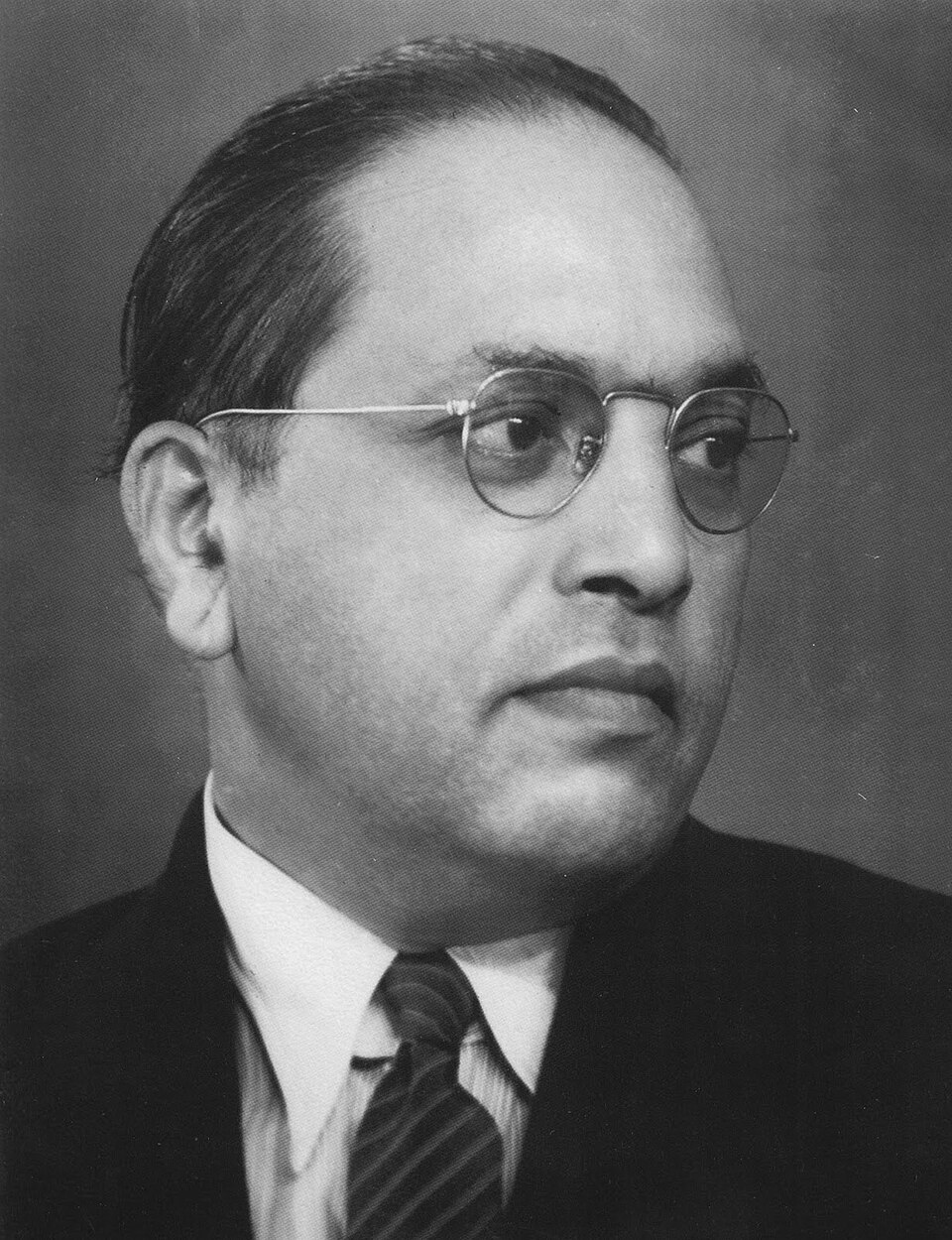
The analogy between Indian caste and American race – an analogy recognized by Martin Luther King, among others – is important for a number of reasons. Not least of these is that when you observe how a different society handles a similar problem, you can see how parochial your own society’s approach might have been.
I was struck by this point in reading the work of B.R. Ambedkar, the famous advocate for the rights of India’s lowest caste groups (formerly called “untouchables” and now called “scheduled caste” or SC, referred to by Ambedkar as Dalit or “oppressed”). The particular work of Ambedkar’s I was reading was a famous undelivered speech entitled Annihilation of Caste.
Early in the first Trump administration, I preached the importance of disengaged Buddhists’ lessons: to refrain from anger, to remind ourselves that some things are more important than politics. I think that that was easier to do the first time round. For in the end, the main thing that distinguished the Trump administration from previous Republican administrations – until the various self-coup attempts at the end of his reign – was its hostile rhetoric. On policy, on running the government, Trump 1.0 was not all that different from a standard garden-variety Republican: the only major controversial piece of legislation he passed was to borrow money and hand it to the rich, just as Reagan and George W. Bush had done before him. Some of the policies that drew the biggest outrage – like putting children in cages – turned out to be the work of previous administrations, including Obama. While Trump’s bark did make the United States a more hostile place for everyone, it nevertheless remained far worse than his bite. That made it a lot easier to preach taking a chill pill.
I don’t think any of that is true this time around. After the election, my hope had been for a second Trump term mostly like the first, probably a little worse. But nothing of the sort has happened. As far as I can tell, Trump has done far more damage in the first month of his second term than he did in three and a half years of his first. The actions of Trump, and his unelected viceroy Elon Musk, have already killed thousands of African recipients denied aid, and wreaked havoc on the world from Ukraine through Canada to here in metropolitan Boston, where nearly everyone I know has had their job redefined – if not lost – as a result of cuts and freezes to science funding.
One of the things that really surprises me about contemporary mindfulness meditation is how rarely – especially at the beginning – they highlight what, as far as I can tell, is the most beneficial aspect of the practice. It’s not a “secret” in the sense of being concealed away somewhere, just that beginners are rarely told how important it is; I more or less had to figure it out for myself. This holds true for the practices I’m most familiar with – Headspace, Robert Sokolove’s medical mindfulness recording, Goenka vipassanā – but also seems to hold for other forms of modern mindfulness that I’ve listened to recordings of. Because of this, I think it’s easy for a beginner to misinterpret what mindfulness meditation is about.
Headspace’s meditation instructions usually involve focusing your attention on your breath – its inward and outward movement, the way your chest and stomach rise and fall with the breath. (Sokolove’s likewise.) Goenka vipassanā puts more emphasis on repeatedly scanning your attention up and down through your body. But it’s become clear to me that that focus, on the breath or the bodily sensations, is not the point of any of these exercises.
Even more ubiquitous in the West than mindfulness meditation, and for a longer period of time, is yoga: specifically meaning the practice of postural stretching exercises, with names like “sun salutation” and “downward dog”. They can be supplemented by breathing exercises and perhaps occasionally meditation, and there is often some element of Sanskrit or philosophy involved, but to a normal English-speaking layperson, the core of what yoga means is the postures. This is the sort of yoga that is sometimes even a competitive sport. Its health benefits are rarely contested; as my own aging body gets less naturally flexible, it’s probably only a matter of time before I sign up with a local yoga studio myself.
Yoga as we know it today. Image copyright Somkiat, Adobe Stock.
Meanwhile, in the classical Sanskrit from which the term is derived, yoga refers to a variety of spiritual practices in which postures play a minor role, if any. Śāntideva uses the term “yogin” to describe people with a greater understanding of reality, with postures never being mentioned in the text. The most famous and influential yoga text, the Yoga Sūtras of Patañjali, says that posture (āsana) is one – just one – of the eight limbs of yoga, and the only thing it specifies about posture is that posture should be “firm and pleasant” (sthirasukham) (YS II.46). There’s no stretching involved here; indeed the text suggests the opposite, that one should be comfortable, likely for meditation. The Yoga Bhāṣya commentary – traditionally included with the original – names several kinds of posture without explaining them; when Vācaspati Miśra’s subcommentary does come to explain them, it shows that they are postures for meditation, ways of placing your feet while you sit. Meditation, in general, plays the largest role in this classical yoga; stretching plays none.
So it’s natural to ask: how exactly did we get from one to the other, from a meditative classical yoga in which stretching plays no role, to a modern yoga in which it plays the primary role? I’ve seen this question asked in surprisingly few places. I wanted to get a deeper understanding of that question, so I thought it would be worth reading Elizabeth De Michelis’s 2005 work with the very promising title A History of Modern Yoga.
A public-domain illustration by Alex-engraver of the chakras and channels, taken from Wikipedia.
Traditional Indian and Tibetan tantric anatomy tells us that in the middle of the human torso there are three channels (nādis or “streams”), one each on the left, middle, and right, and that these proceed vertically upward through a number of circular centres (cakras in standard Sanskrit transliteration, chakras in modern English spelling). This account of the “subtle body” (sūkṣma śarīra) has become popular in modern yoga and other forms of alternative medicine or spirituality.
I don’t believe this account of the subtle body – but not primarily for the obvious reason.
The most important lesson I ever learned was back in Thailand in 1997: that the biggest contributor to my unhappiness wasn’t external problems like being single or unemployed, but my own mental states like craving. Fixing those mental states was a surer path to happiness and reducing suffering.
But the question that has played an ever-increasing role in the three ensuing decades has been: okay, but how? It is one thing to recognize that your craving and anger – or fear or self-pity or shame or other negative emotions – are the main thing keeping you down. It is quite another to do something about them. Our animal natures make those states quite recalcitrant.